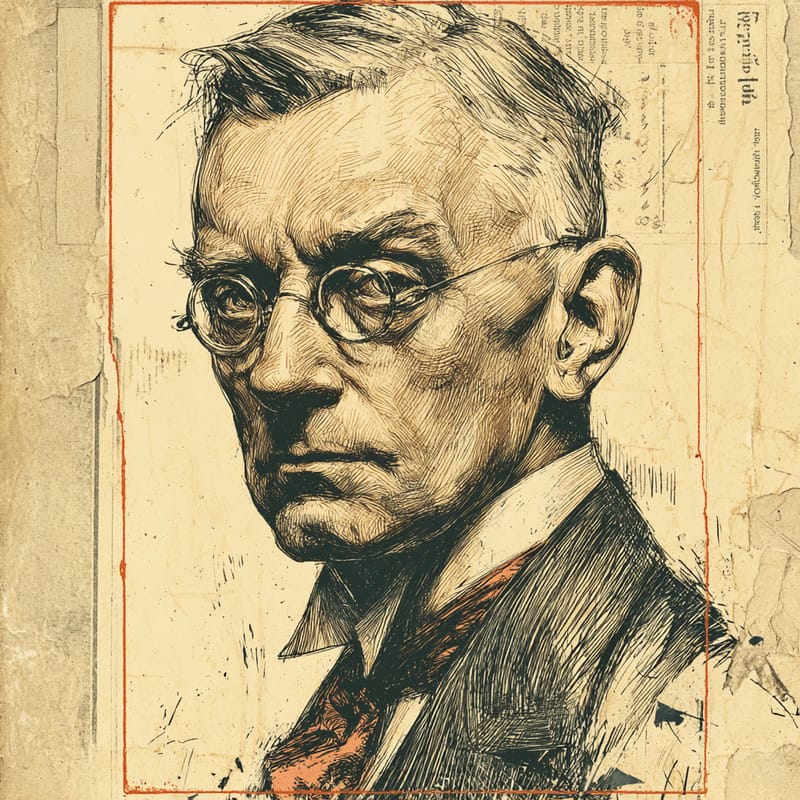
Tage Erlander
23 years of reform
Built the mature Swedish model, term after term.
Heterodox Social DemocratOne of 729 ideologies · enter the Social Democrat hall →- Role
- Prime Minister
- Era
- 1901–1985
- Region
- Sweden
- Social band
- Heterodox
- Placement
- −52 · −22 · +34
§ Where Tage Erlander stands
3 axesErlander built the Swedish model of high taxes, universal benefits and full employment within a privately owned, export-oriented economy. The 1959 ATP reform added earnings-related state pensions to the flat-rate basic pension, and his governments embraced the Rehn–Meidner model of solidaristic wages and active labour-market policy. Industry stayed largely in private hands, steered through taxation, credit policy and cooperation.
A master of consensual democracy, Erlander governed for 23 years through elections, coalition and negotiation, including a coalition with the Farmers' League from 1951 to 1957. His Harpsund democracy brought employers, unions and co-operatives to informal talks at the prime minister's country retreat, and he put the divisive pension question to a referendum in 1957 before settling it in parliament.
Erlander was a steady social moderniser rather than a cultural radical. His idea of the strong society held that growing prosperity required a more active state to secure people's freedom and security, and his governments created the nine-year comprehensive school in 1962 and expanded universities and housing. He weighed Swedish nuclear weapons in the 1950s before turning against them.
How close are you to Tage Erlander?
Three statements, one per axis. Answer them and we’ll drop you on the compass next to them.
§ The story
HistoricalTage Fritiof Erlander (1901–1985) was prime minister of Sweden from 1946 to 1969, an unbroken 23-year tenure, the longest of any Swedish prime minister. Born in Ransäter in Värmland, the son of a schoolteacher, he studied at Lund University, entered parliament in the early 1930s and served as a senior official in the social affairs ministry and then as minister of education. When Per Albin Hansson died suddenly in October 1946, the Social Democrats chose the little-known Erlander, aged 45, as party leader and prime minister.
Erlander turned the Social Democrats' vision of the folkhem, or people's home, into a mature welfare state. His governments introduced universal child allowances, general health insurance, the earnings-related ATP pension, a nine-year comprehensive school and the Million Programme of housing construction. He governed by consensus, consulting business and union leaders at his country residence, Harpsund. He retired undefeated in 1969, a year after winning an absolute majority, and was succeeded by his protégé Olof Palme.
Notable for
- 01Record continuous tenure
- 02Universal pension reform
- 03The 'strong society'
Key works & moments
- 1946Succeeds Per Albin Hansson as Social Democratic leader and prime minister, aged 45.
- 1948Universal child allowances take effect, a cornerstone of the welfare state.
- 1957Puts pension reform to a referendum; his coalition with the Farmers' League collapses.
- 1959The earnings-related ATP pension passes the Riksdag by a single vote.
- 1962Parliament creates the nine-year comprehensive school.
- 1969Retires after winning an absolute majority in 1968; Olof Palme succeeds him.
§ Minds closest to Tage Erlander
All minds →

§ Also in the Social Democrat hall
Enter the hall →§ Common questions
4 answersWhat was Tage Erlander's political ideology?
Tage Erlander was the architect of the mature Swedish welfare state: on the 99ideologies three-axis compass, a Heterodox Social Democrat. Economically he sat left of centre (−52), expanding universal benefits, earnings-related pensions and full-employment policy within a privately owned economy. On governance he was a consensual parliamentary democrat (−22) who governed through negotiation with unions and business. Socially he was a steady, progressive moderniser (+34) who built comprehensive schools and mass housing without seeking cultural confrontation.
Was Tage Erlander left-wing or right-wing?
Left of centre. Erlander led Sweden's Social Democrats for 23 years and expanded the welfare state more than any other Swedish leader, financed by high taxes. Yet he governed pragmatically, leaving industry in private hands, cooperating with employers through the Harpsund talks and sharing power with the agrarian Farmers' League in the 1950s, which makes him a consensus-builder of the democratic left rather than a socialist radical.
What was the ATP pension reform?
ATP, the general supplementary pension, was the earnings-related state pension that Erlander's government added to Sweden's flat-rate basic pension. The issue split Swedish politics: a 1957 referendum offered three competing options, the coalition with the Farmers' League collapsed, and after an early election in 1958 the bill passed the Riksdag in 1959 by a single vote when a Liberal member abstained. The victory secured Social Democratic dominance and won the party lasting support among white-collar workers.
Which minds are closest to Tage Erlander?
On the 99ideologies three-axis compass, the minds closest to Tage Erlander are Bruno Kreisky (98% alike), Jawaharlal Nehru (98% alike) and Norman Thomas (97% alike). The furthest is Adam Sutler (11% alike).