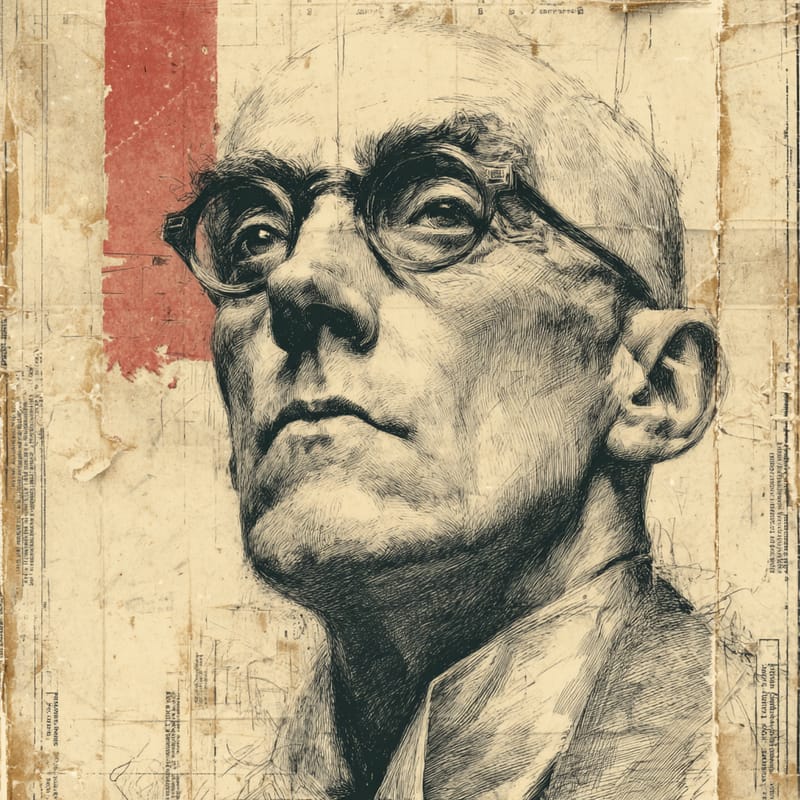
Norman Thomas
America's perennial socialist
Six campaigns; many ideas later adopted by the New Deal.
Reformist Social DemocratOne of 729 ideologies · enter the Social Democrat hall →- Role
- Socialist leader
- Era
- 1884–1968
- Region
- United States
- Social band
- Reformist
- Placement
- −54 · −24 · +40
§ Where Norman Thomas stands
3 axesThomas called for public ownership of key industries, banks and natural resources combined with a robust welfare floor of unemployment insurance, old-age pensions, public housing and an end to child labour, a programme set out in his book America's Way Out (1931). Unlike revolutionary Marxists he envisaged gradual, democratic socialisation alongside co-operatives and private enterprise, and in later life he placed less weight on nationalisation.
Thomas was a democratic socialist who rejected revolution and dictatorship, breaking early with the American Communists and condemning Stalin's show trials. A pacifist and civil libertarian, he helped found the American Civil Liberties Union in 1920 and in 1942 publicly opposed the internment of Japanese Americans when few other national figures would.
Thomas was progressive on civil rights and civil liberties. He backed the interracial Southern Tenant Farmers' Union in the 1930s, denounced lynching and segregation, and wrote a 1923 defence of conscientious objectors, drawing on his brother's imprisonment for refusing military service. His Protestant social conscience coloured his socialism, and in old age he spoke out against the Vietnam War.
How close are you to Norman Thomas?
Three statements, one per axis. Answer them and we’ll drop you on the compass next to them.
§ The story
HistoricalNorman Mattoon Thomas (1884–1968) was an American socialist leader and six-time presidential candidate. The son of a Presbyterian minister in Marion, Ohio, he graduated from Princeton and Union Theological Seminary and served as a pastor in the poor immigrant neighbourhoods of East Harlem, where poverty turned him towards socialism. His Christian pacifism led him to oppose the First World War, and in 1918 he joined the Socialist Party, becoming its leading figure after the death of Eugene Debs in 1926.
Thomas ran for president on the Socialist ticket in every election from 1928 to 1948, winning his largest vote, about 880,000, in 1932. Many of his platforms' demands, such as unemployment insurance, old-age pensions and public works, were enacted in Franklin Roosevelt's New Deal, which drew away much of his support. A co-founder of the American Civil Liberties Union, he condemned the wartime internment of Japanese Americans and opposed both fascism and Soviet communism. His campaign against American entry into the Second World War before Pearl Harbor was the most criticised stand of his career.
Notable for
- 01Six presidential campaigns
- 02Co-founded the ACLU's milieu
- 03Pacifist and civil-rights advocate
Key works & moments
- 1918Joins the Socialist Party and edits the new pacifist journal The World Tomorrow.
- 1920Helps found the American Civil Liberties Union.
- 1928Runs for president as the Socialist candidate, the first of six campaigns.
- 1932Wins about 880,000 votes, his best presidential result, in the depths of the Depression.
- 1942Publicly condemns the internment of Japanese Americans.
- 1948Makes his sixth and final run for the presidency.
§ Minds closest to Norman Thomas
All minds →

§ Also in the Social Democrat hall
Enter the hall →§ Common questions
4 answersWhat was Norman Thomas's political ideology?
Norman Thomas was a democratic socialist: on the 99ideologies three-axis compass, a Reformist Social Democrat. Economically he sat left of centre (−54), calling for public ownership of key industries alongside unemployment insurance, pensions and public housing. On governance he was a pacifist and civil libertarian (−24) who helped found the ACLU and rejected dictatorship of every kind. Socially he was progressive (+40), backing civil rights, conscientious objectors and Japanese Americans facing internment.
Was Norman Thomas left-wing or right-wing?
Left-wing. Thomas led the Socialist Party of America for four decades and wanted key industries brought under public ownership, which placed him well to the left of the Democratic Party. He was, however, a democratic and fiercely anti-communist socialist who rejected revolution, defended civil liberties for all and worked through elections, so he belongs to the social-democratic rather than the revolutionary left.
Did the New Deal adopt Norman Thomas's ideas?
In part. The Socialist platforms Thomas ran on in 1928 and 1932 called for unemployment insurance, old-age pensions, public works, the abolition of child labour and shorter working hours, many of which became law under Franklin Roosevelt, notably in the Social Security Act of 1935 and the Fair Labor Standards Act of 1938. Thomas argued, however, that the New Deal had rescued capitalism rather than replaced it, since basic industries stayed in private hands, and he kept running against Roosevelt.
Which minds are closest to Norman Thomas?
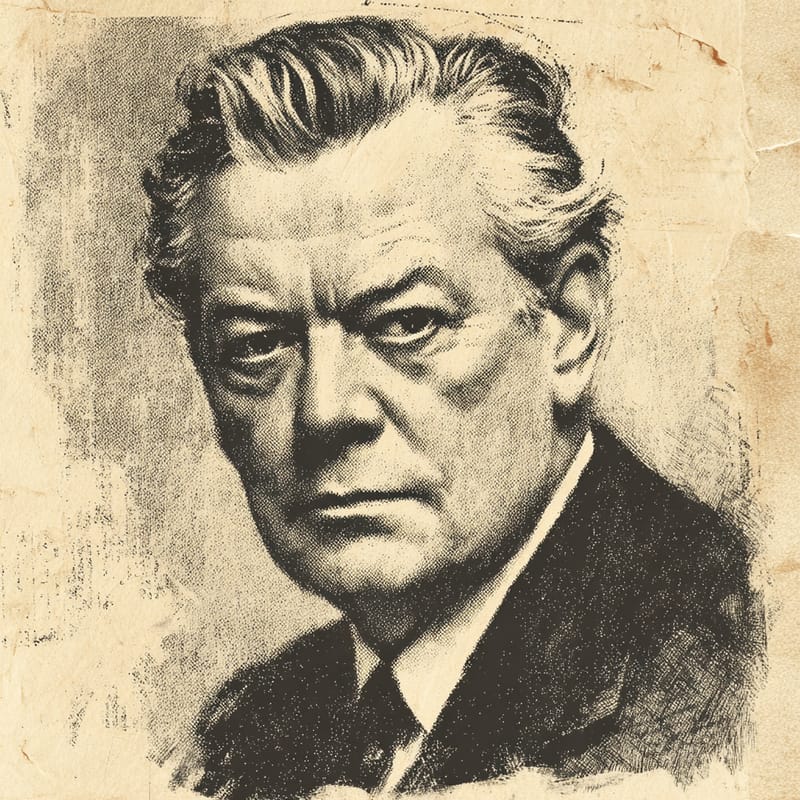
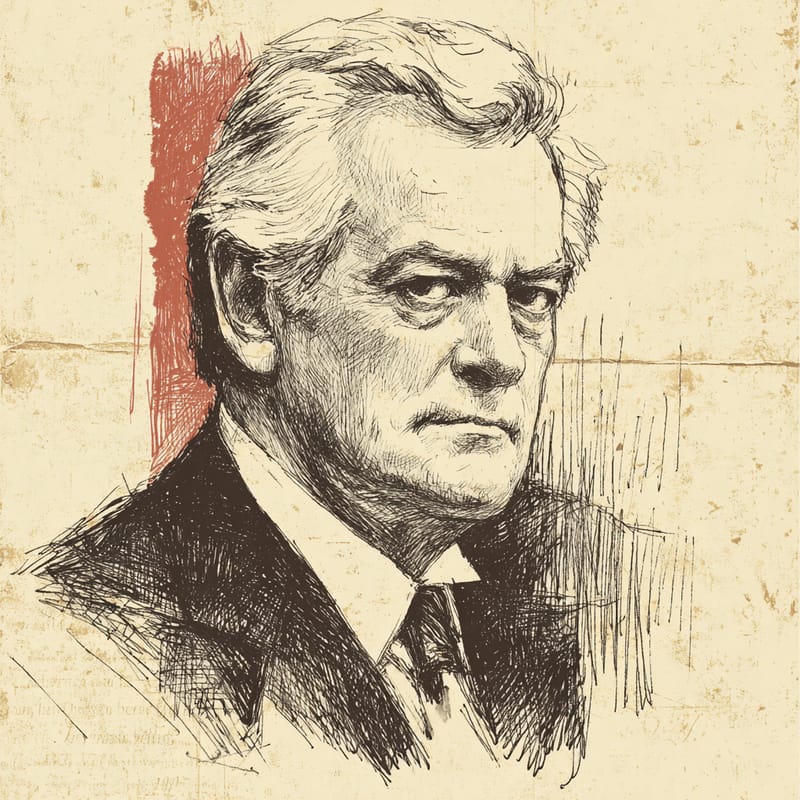
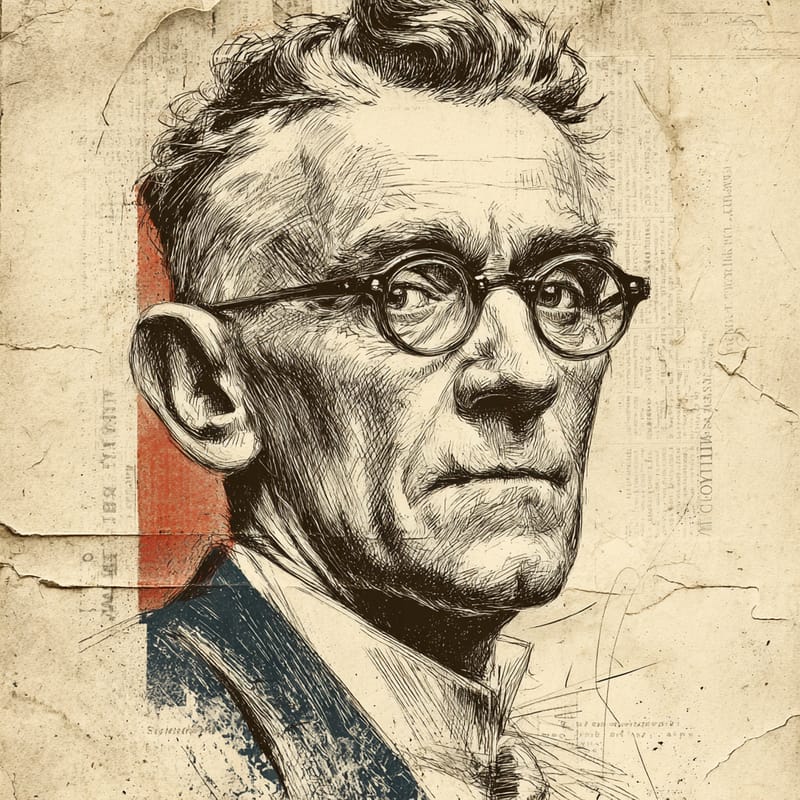
On the 99ideologies three-axis compass, the minds closest to Norman Thomas are Tage Erlander (97% alike), Bruno Kreisky (97% alike) and Léon Blum (96% alike). The furthest is Adam Sutler (9% alike).