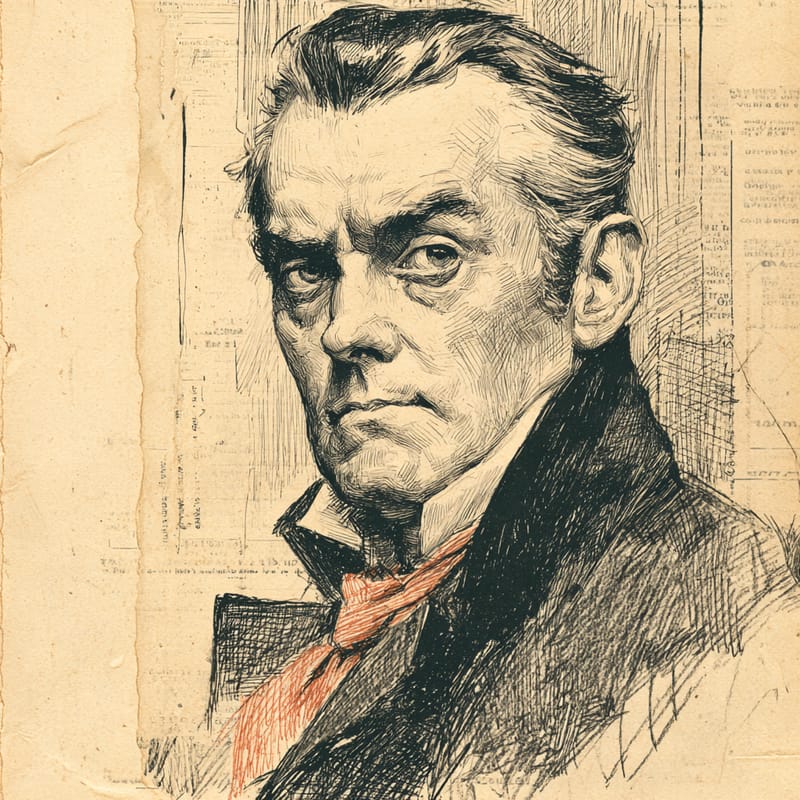
François Mitterrand
The Left in power
Reform, then pragmatic accommodation with markets.
Heterodox Social DemocratOne of 729 ideologies · enter the Social Democrat hall →- Role
- President
- Era
- 1916–1996
- Region
- France
- Social band
- Heterodox
- Placement
- −44 · −20 · +28
§ Where François Mitterrand stands
3 axesMitterrand came to power promising a break with capitalism: the nationalisation law of February 1982 brought major industrial groups and dozens of banks into state ownership, and his government created a wealth tax and cut the retirement age to 60. The limit came in March 1983, when he kept the franc in the European Monetary System and accepted austerity, a turn that reconciled French socialism with the market.
Mitterrand dispersed power more than his Gaullist predecessors: the Defferre decentralisation laws of 1982 gave elected regional and departmental councils executive authority, the State Security Court was abolished in 1981 and private local radio was legalised that year. Yet he ran a highly personal presidency, and an anti-terrorist cell at the Élysée illegally tapped the telephones of journalists and lawyers in the mid-1980s.
Socially his presidency was markedly progressive: the law of 9 October 1981, steered through by Robert Badinter, abolished the death penalty, a 1982 law equalised the age of consent for homosexual and heterosexual acts, and a law of December 1982 made social security reimburse abortion. A one-off regularisation in 1981–82 also gave legal status to many undocumented migrants.
How close are you to François Mitterrand?
Three statements, one per axis. Answer them and we’ll drop you on the compass next to them.
§ The story
HistoricalFrançois Mitterrand (1916–1996) was president of France from 1981 to 1995, the longest tenure of the Fifth Republic. Raised in a conservative Catholic family in Jarnac, he was captured as a soldier in 1940, escaped, worked in Vichy's service for former prisoners of war and then joined the Resistance. Under the Fourth Republic he held many ministries, including interior and justice. He opposed de Gaulle's 1958 constitution, forced him into a runoff in 1965, took over the new Socialist Party at Épinay in 1971 and won the presidency at his third attempt in 1981.
His first government nationalised major industrial groups and banks, created a wealth tax, lowered the retirement age to 60 and abolished the death penalty. In March 1983, with the franc under pressure, he chose Europe over his programme and turned to austerity, later championing the 1992 Maastricht Treaty. He twice shared power with right-wing prime ministers, in 1986–88 and 1993–95. His record was clouded by the 1985 sinking of Greenpeace's Rainbow Warrior by French agents, illegal wiretapping by an Élysée cell, support for Rwanda's government before the 1994 genocide and revelations about his Vichy past and hidden cancer.
Notable for
- 01Abolished the death penalty
- 02Major nationalisations of 1981
- 03Deepened European integration
Key works & moments
- 1964Publishes Le Coup d'État permanent, attacking de Gaulle's Fifth Republic as personal rule.
- 1971Takes control of the new Socialist Party at the Épinay congress.
- 1981Elected president; the death penalty is abolished that October.
- 1983Turns to austerity to keep the franc in the European Monetary System.
- 1986Begins the first cohabitation, with Jacques Chirac as prime minister.
- 1992Wins the referendum on the Maastricht Treaty by a narrow margin.
In their own words
“Nationalism is war!”
§ Minds closest to François Mitterrand
All minds →

§ Also in the Social Democrat hall
Enter the hall →§ Common questions
4 answersWhat was François Mitterrand's political ideology?
François Mitterrand was a democratic socialist who governed as a pragmatic social democrat: on the 99ideologies three-axis compass, a Heterodox Social Democrat. Economically he sits left of centre (−44), having nationalised banks and industry in 1981–82 before turning to austerity and European integration in 1983. On governance he was a democrat who decentralised power (−20), and socially he was progressive (+28), abolishing the death penalty and equalising the age of consent.
Was François Mitterrand left-wing or right-wing?
Left-wing as president, though his path there was unusual. In the 1930s he moved in nationalist right-wing circles, and his early career included service to the Vichy regime, but from the 1960s he united the left, signed a common programme with the Communists in 1972 and became the Fifth Republic's first Socialist president. In office he moderated after 1983, embracing the market and European integration, which leaves him a social democrat rather than a revolutionary socialist.
Did François Mitterrand collaborate with Vichy?
He served the Vichy regime before joining the Resistance. After escaping from a German prisoner-of-war camp, Mitterrand worked in 1942 for Vichy's agency for former prisoners of war and received the Francisque, the regime's decoration, while building a resistance network of former prisoners; he met de Gaulle in Algiers in late 1943. The full extent of his Vichy years became public in 1994 through Pierre Péan's book Une jeunesse française, along with his long friendship with René Bousquet, Vichy's police chief.
Which minds are closest to François Mitterrand?
On the 99ideologies three-axis compass, the minds closest to François Mitterrand are Jens Stoltenberg (98% alike), Jawaharlal Nehru (97% alike) and Clement Attlee (97% alike). The furthest is Adam Sutler (15% alike).