
Ludwig Erhard
Prosperity for all
The social market economy.
Welfare CapitalistOne of 729 ideologies · enter the Welfare Capitalist hall →- Role
- Chancellor
- Era
- 1897–1977
- Region
- Germany
- Social band
- Centre (no modifier)
- Placement
- +11 · −18 · −12
§ Where Ludwig Erhard stands
3 axesErhard's freeing of prices in June 1948, his Act against Restraints of Competition of 1957 and his defence of a stable currency put him clearly on the market side. But the social market economy he championed operated within a social framework, including the 1952 law compensating refugees, and he spread ownership through people's share issues in Preussag in 1959 and Volkswagen in 1961, though he opposed Adenauer's 1957 pension reform.
A liberal democrat in the ordoliberal tradition, Erhard held that the state's role was to set and enforce the rules of competition, not to direct the economy, and he backed the independence of the Bundesbank, established in 1957. As chancellor from 1963 he governed in coalition with the Free Democrats through the Bundestag, and he stepped down when that coalition collapsed in 1966.
Erhard's outlook was that of the Protestant Franconian middle class: self-reliance, thrift and family, with mass prosperity rather than cultural change as the cure for class conflict, the theme of Wohlstand für Alle (1957). He governed within the Christian Democratic consensus on family and religion, and in 1965 he scorned critical intellectuals, dismissing the playwright Rolf Hochhuth as a Pinscher, a small yapping dog.
How close are you to Ludwig Erhard?
Three statements, one per axis. Answer them and we’ll drop you on the compass next to them.
§ The story
HistoricalLudwig Erhard (1897–1977) was West Germany's minister of economics from 1949 to 1963 and its chancellor from 1963 to 1966. Born in Fürth, Bavaria, he was badly wounded in the First World War, earned a doctorate in economics under Franz Oppenheimer in Frankfurt and spent the interwar years at a market-research institute in Nuremberg. As director of economic administration for the combined American and British zones, he used the currency reform of June 1948 to scrap most price controls on his own initiative, a gamble widely credited with starting West Germany's recovery.
Under Konrad Adenauer he became the face of the social market economy and the Wirtschaftswunder, the economic miracle of the 1950s, setting out his creed in Wohlstand für Alle (Prosperity for All, 1957) and pushing through the 1957 law against restraints of competition. He succeeded Adenauer as chancellor in 1963 but proved a weak party manager; after a recession and a budget dispute led the Free Democrats to quit his coalition in October 1966, he resigned and was replaced by Kurt Georg Kiesinger's grand coalition. Historians also credit the miracle to Marshall aid, refugee labour and the Korean War boom.
Notable for
- 01The German 'Wirtschaftswunder'
- 02'Prosperity for All'
- 03Social market economy
Key works & moments
- 1948Abolishes most price controls alongside the currency reform that introduces the Deutsche Mark.
- 1949Becomes West Germany's first minister of economics under Konrad Adenauer.
- 1957Publishes Wohlstand für Alle; the Bundestag passes his law against cartels.
- 1961Volkswagen's partial privatisation sells people's shares to small investors.
- 1963Succeeds Konrad Adenauer as chancellor.
- 1966Resigns as chancellor after the Free Democrats leave his coalition.
§ Minds closest to Ludwig Erhard
All minds →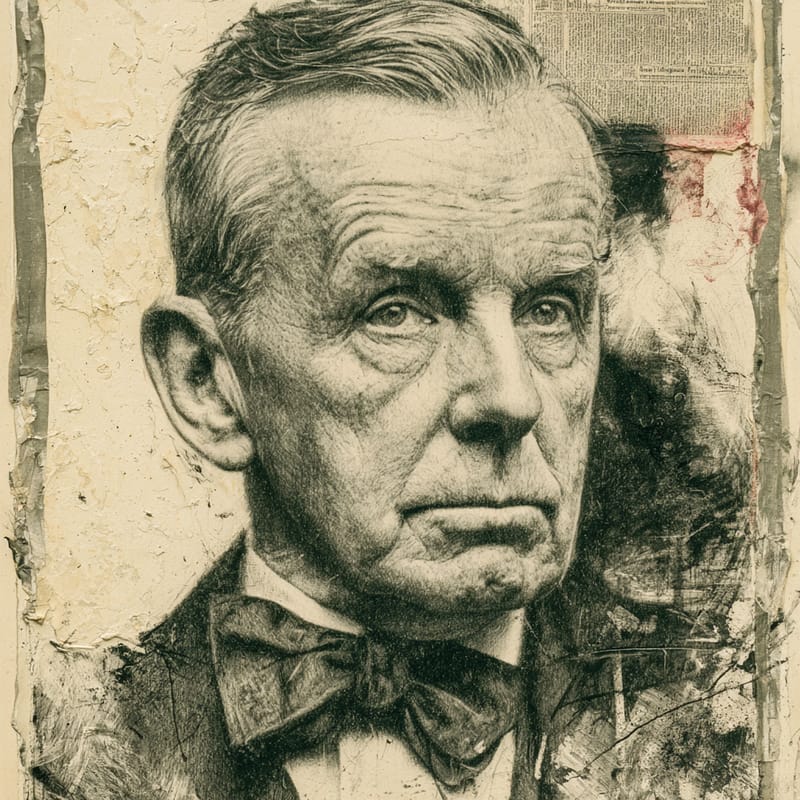



§ Also in the Welfare Capitalist hall
Enter the hall →§ Common questions
4 answersWhat was Ludwig Erhard's political ideology?
Ludwig Erhard was an ordoliberal and the political father of the social market economy: on the 99ideologies three-axis compass, a Welfare Capitalist. Economically he sits on the market side of the centre (+11), freeing prices and fighting cartels while accepting a social framework. On governance he was a liberal democrat (−18) who wanted the state to set rules rather than direct the economy, and socially he leaned mildly traditional (−12), rooted in the Christian Democratic, middle-class values of post-war West Germany.
Was Ludwig Erhard left-wing or right-wing?
Centre-right. Erhard served Konrad Adenauer's Christian Democratic governments and championed free prices, competition and sound money against the planning favoured by the Social Democrats of his day. Yet he was no laissez-faire purist: his social market economy accepted social insurance, refugee compensation and wider property ownership as the price of a stable free society. That mix of market liberalism and social responsibility places him in the moderate centre-right of European politics.
Did Ludwig Erhard create the German economic miracle?
He was its symbol and an important cause, but not the only one. In June 1948, as the Allies introduced the Deutsche Mark, Erhard abolished most price controls, and goods quickly returned to the shops. Over the next decade he defended competition and a stable currency as economics minister. Historians also stress Marshall Plan aid, the Allied-designed currency reform, millions of skilled refugee workers, the 1953 London debt agreement and the surge in demand during the Korean War.
Which minds are closest to Ludwig Erhard?
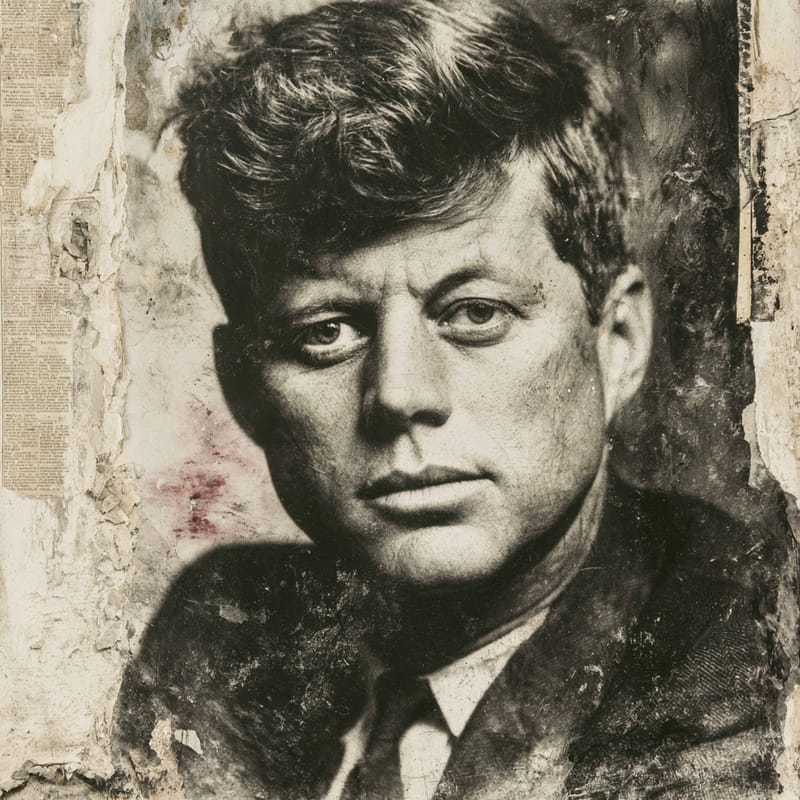
On the 99ideologies three-axis compass, the minds closest to Ludwig Erhard are Lester B. Pearson (93% alike), Wilhelm Röpke (92% alike) and John F. Kennedy (90% alike). The furthest is Pol Pot (29% alike).