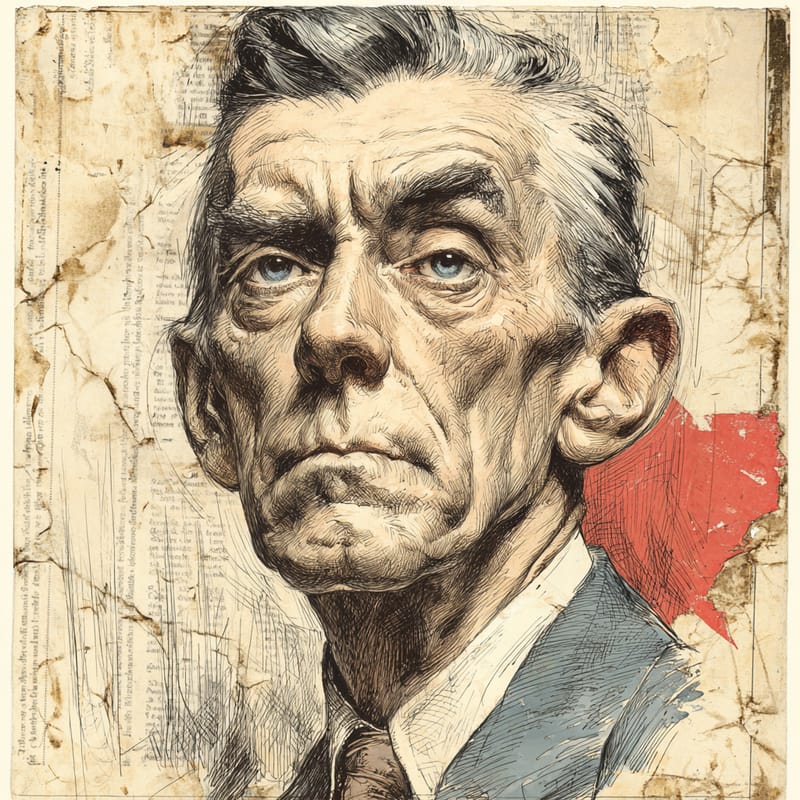
John Kenneth Galbraith
The affluent society
Private wealth, public squalor.
Reformist Welfare CapitalistOne of 729 ideologies · enter the Welfare Capitalist hall →- Role
- Economist
- Era
- 1908–2006
- Region
- Canada / US
- Social band
- Reformist
- Placement
- −8 · −24 · +42
§ Where John Kenneth Galbraith stands
3 axesGalbraith accepted the market economy but argued that large corporations planned production and shaped demand through advertising, as he set out in The New Industrial State (1967). In The Affluent Society (1958) he called for shifting resources from private consumption to public services, and he defended wage and price controls, having run wartime price controls himself. He never sought to socialise industry, which keeps him near the centre.
Galbraith was a liberal democrat who worked within the Democratic Party as adviser, speechwriter and, from 1961 to 1963, John F. Kennedy's ambassador to India. In American Capitalism (1952) he presented countervailing power, the organised strength of unions, farm groups and large retailers, as a democratic check on corporate power, and he opposed the Vietnam War, backing Eugene McCarthy's insurgent campaign in 1968.
Galbraith used bestselling books to press the moral case against poverty and inequality. The Affluent Society (1958) argued that poverty persisted amid plenty and coined the phrase the conventional wisdom for the ideas that blocked reform, and The Culture of Contentment (1992) attacked a comfortable majority that voted against the interests of the poor, positions that made him a hero to liberals and a target for conservatives.
How close are you to John Kenneth Galbraith?
Three statements, one per axis. Answer them and we’ll drop you on the compass next to them.
§ The story
HistoricalJohn Kenneth Galbraith (1908–2006) was a Canadian-born American economist and one of the most widely read economists of the twentieth century. Raised on a farm in southern Ontario, he studied agriculture at the Ontario Agricultural College in Guelph and agricultural economics at Berkeley, joined Harvard as an instructor in 1934 and became a US citizen in 1937. During the Second World War he ran price controls at the Office of Price Administration and later served as a director of the US Strategic Bombing Survey, before writing for Fortune and returning to Harvard in 1949.
Galbraith's ironic, accessible books, among them American Capitalism (1952), The Great Crash, 1929 (1955), The Affluent Society (1958) and The New Industrial State (1967), reached a mass readership and challenged his profession's faith in competitive markets. An adviser to Adlai Stevenson, John F. Kennedy and Lyndon Johnson, he served as Kennedy's ambassador to India, broke with Johnson over Vietnam and presented the BBC television series The Age of Uncertainty in 1977. Many economists dismissed his work as more literary than rigorous, but he received the Presidential Medal of Freedom twice, in 1946 and 2000.
Notable for
- 01'The Affluent Society'
- 02'The New Industrial State'
- 03Adviser to Democratic presidents
Key works & moments
- 1941Takes charge of wartime price controls at the Office of Price Administration.
- 1952Publishes American Capitalism, introducing the idea of countervailing power.
- 1958The Affluent Society contrasts private affluence with neglected public services.
- 1961Appointed John F. Kennedy's ambassador to India, serving until 1963.
- 1967The New Industrial State argues that large corporations plan production and shape demand.
- 1977Presents The Age of Uncertainty, a BBC television history of economic ideas.
In their own words
“Politics is not the art of the possible. It consists in choosing between the disastrous and the unpalatable.”
§ Minds closest to John Kenneth Galbraith
All minds →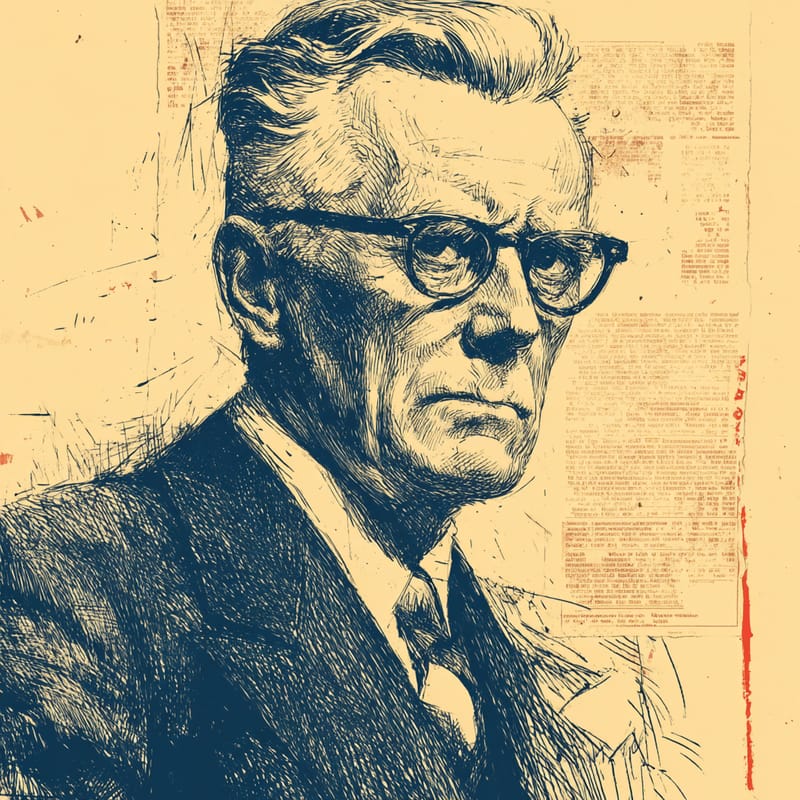


§ Also in the Welfare Capitalist hall
Enter the hall →§ Common questions
4 answersWhat was John Kenneth Galbraith's political ideology?
John Kenneth Galbraith was an American Keynesian liberal: on the 99ideologies three-axis compass, a Reformist Welfare Capitalist. Economically he sits close to the centre (−8), accepting the market economy while demanding more public investment and checks on corporate power. On governance he was a liberal democrat (−24) who worked through the Democratic Party and opposed the Vietnam War, and socially he was progressive (+42), arguing that affluent societies must confront poverty and the neglect of the public sphere.
Was John Kenneth Galbraith left-wing or right-wing?
Left of centre, as an American liberal rather than a socialist. Galbraith advised Democratic presidents, called for higher public spending and wage and price controls, opposed the Vietnam War and criticised corporate power and advertising. But he accepted private enterprise and markets as the basis of the economy and never advocated public ownership of industry, which is why he is usually classed as a welfare-state liberal in the Keynesian tradition rather than as a man of the socialist left.
What is the main argument of The Affluent Society?
That rich societies such as post-war America had solved the old problem of producing enough but still behaved as if scarcity ruled. Galbraith argued that advertising manufactured the very wants that production then satisfied, which he called the dependence effect, while public services such as schools, parks and sanitation were starved, leaving private affluence amid public squalor. He urged a better social balance through higher public spending, financed if necessary by sales taxes, and attention to the poverty that persisted amid plenty.
Which minds are closest to John Kenneth Galbraith?
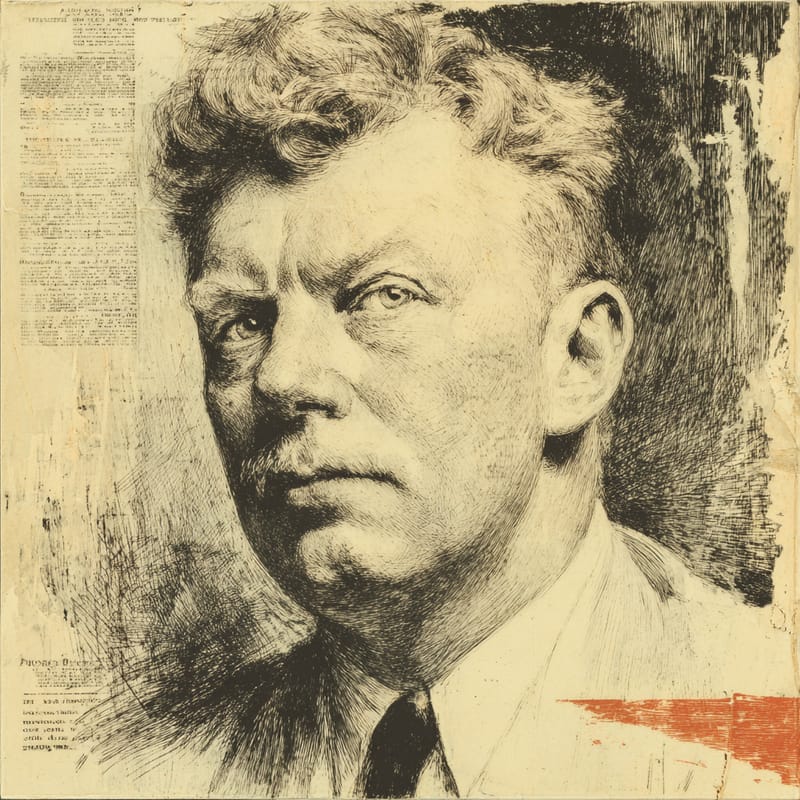
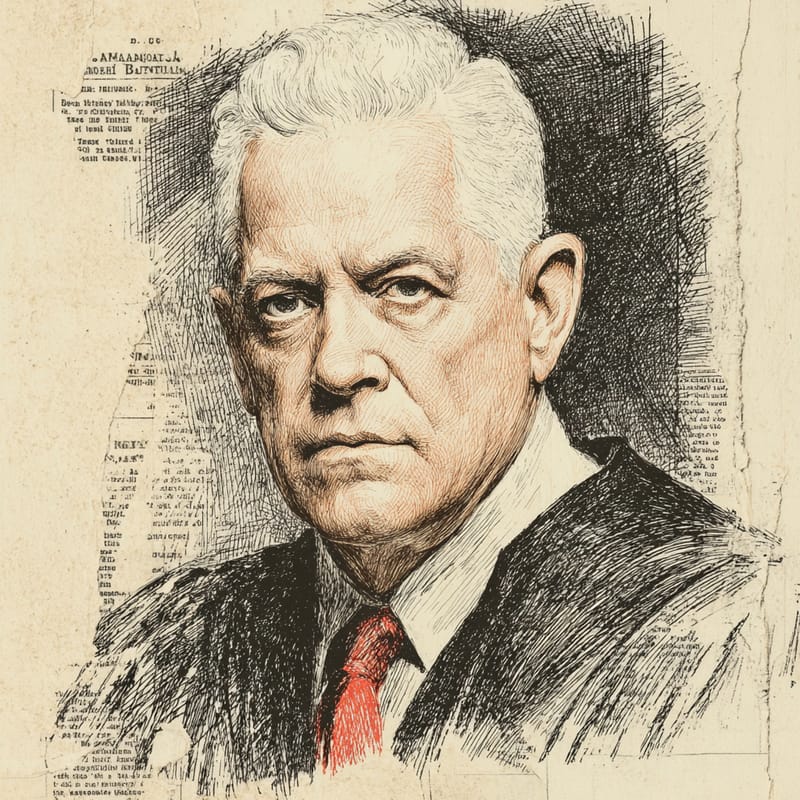
On the 99ideologies three-axis compass, the minds closest to John Kenneth Galbraith are Gunnar Myrdal (98% alike), Walter Reuther (98% alike) and Earl Warren (96% alike). The furthest is Adam Sutler (19% alike).