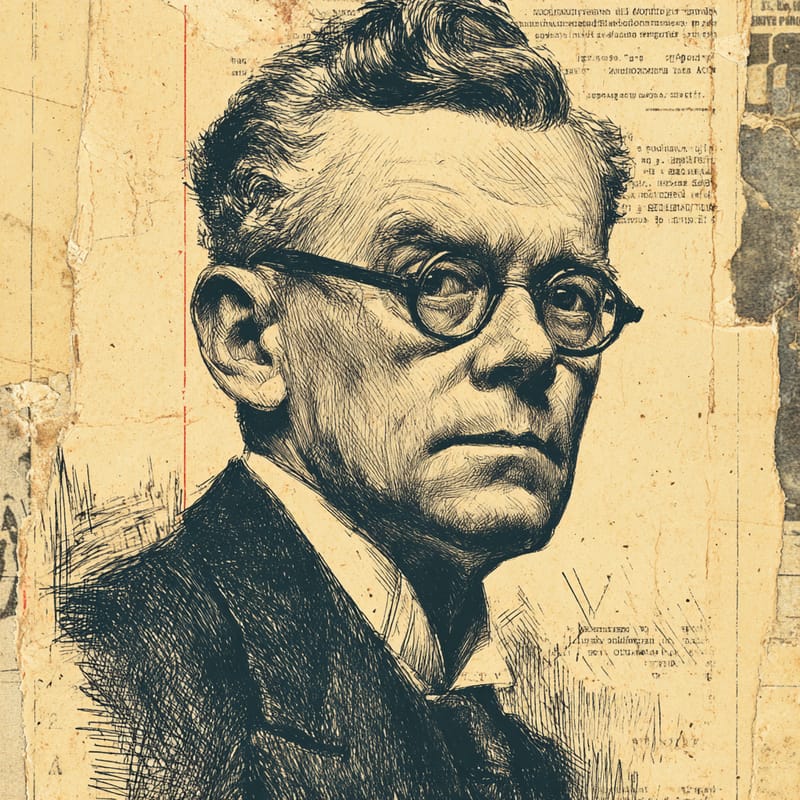
Wilhelm Röpke
The humane economy
Markets on a moral foundation.
Rooted Liberal CapitalistOne of 729 ideologies · enter the Liberal Capitalist hall →- Role
- Economist
- Era
- 1899–1966
- Region
- Germany / Switzerland
- Social band
- Rooted
- Placement
- +30 · −20 · −15
§ Where Wilhelm Röpke stands
3 axesRöpke defended the price system and competition against planning, but rejected laissez-faire for letting monopolies and cartels hollow out the market. In The Social Crisis of Our Time (1942) and Civitas Humana (1944) he asked the state to police competition and spread property widely, and a 1950 report written at Konrad Adenauer's request defended Erhard's market course against its critics.
A liberal democrat and federalist, Röpke distrusted the centralised mass state, which he blamed for both fascism and communism, and admired Switzerland's cantonal decentralisation. He paid for his convictions in 1933, when the Nazis removed him from his Marburg chair, and after the war he preferred broad free trade to the more centralised European Economic Community created in 1957.
Röpke was a cultural conservative who feared that industrial massification and urban proletarian life were eroding family, faith and community. A Humane Economy, first published in German in 1958, praised peasants, artisans and small towns and argued that markets depend on moral reserves they cannot themselves produce, a theme that won him admirers among post-war American conservatives such as Russell Kirk.
How close are you to Wilhelm Röpke?
Three statements, one per axis. Answer them and we’ll drop you on the compass next to them.
§ The story
HistoricalWilhelm Röpke (1899–1966) was a German economist and a leading figure of ordoliberalism. A veteran of the First World War, he became a professor at Jena in 1924 at the age of 24, sat on the government's Brauns Commission on unemployment in 1930–31 and taught at Marburg until the Nazis removed him in 1933 for his open opposition. He went into exile, teaching at Istanbul University and from 1937 at the Graduate Institute of International Studies in Geneva, where he stayed until his death.
Röpke's books of the 1940s, above all The Social Crisis of Our Time (1942), called for a third way between laissez-faire and collectivism: competitive markets protected by a strong legal framework and embedded in a decentralised society of small property owners. He helped found the Mont Pelerin Society in 1947 and championed Ludwig Erhard's 1948 lifting of price controls in West Germany. His last years were marked by bitter quarrels within the society and by essays defending apartheid South Africa, which historians have since criticised for their racial arguments.
Notable for
- 01'A Humane Economy'
- 02Intellect behind ordoliberalism
- 03Shaped the social market economy
Key works & moments
- 1924Becomes professor of economics at the University of Jena, aged 24.
- 1933Removed from his Marburg chair by the Nazi regime; leaves Germany for Istanbul University.
- 1938Takes part in the Walter Lippmann Colloquium in Paris, a founding moment of neoliberalism.
- 1942Publishes The Social Crisis of Our Time, setting out his liberal third way.
- 1947Helps found the Mont Pelerin Society with Friedrich Hayek and others.
- 1958Publishes Jenseits von Angebot und Nachfrage, translated into English as A Humane Economy.
§ Minds closest to Wilhelm Röpke
All minds →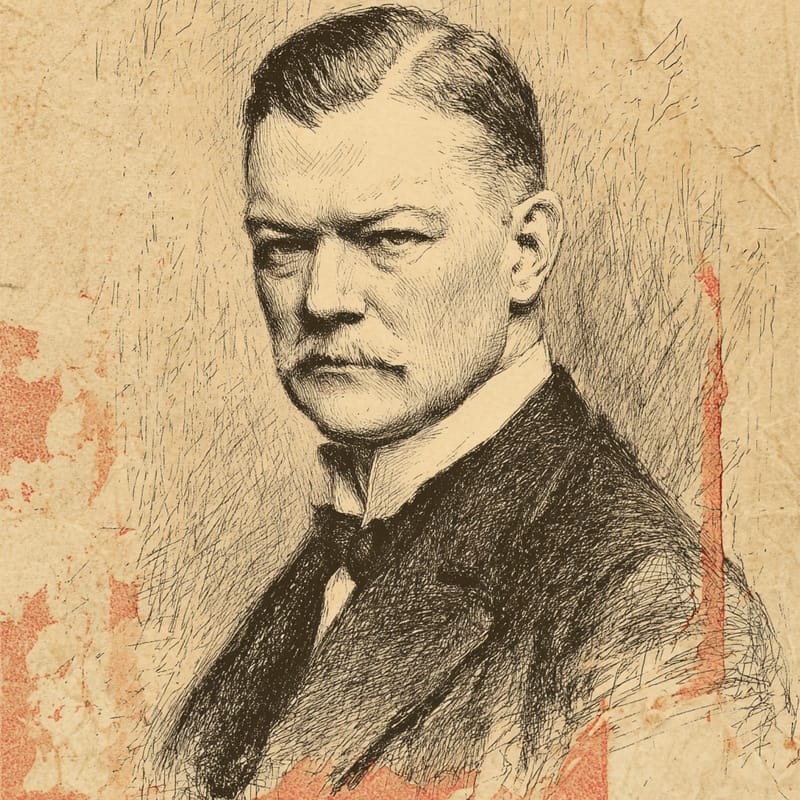
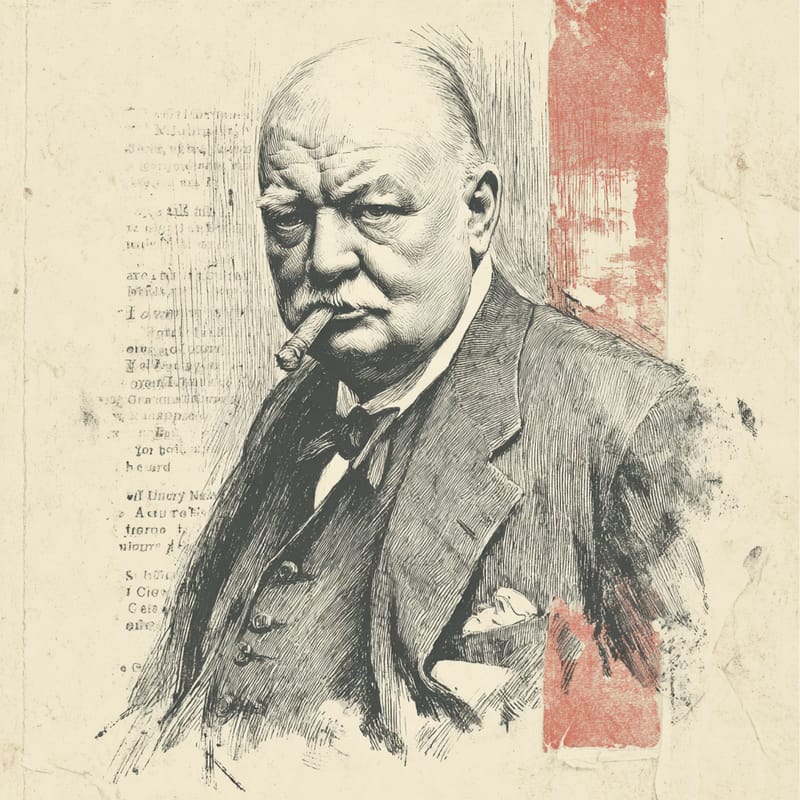
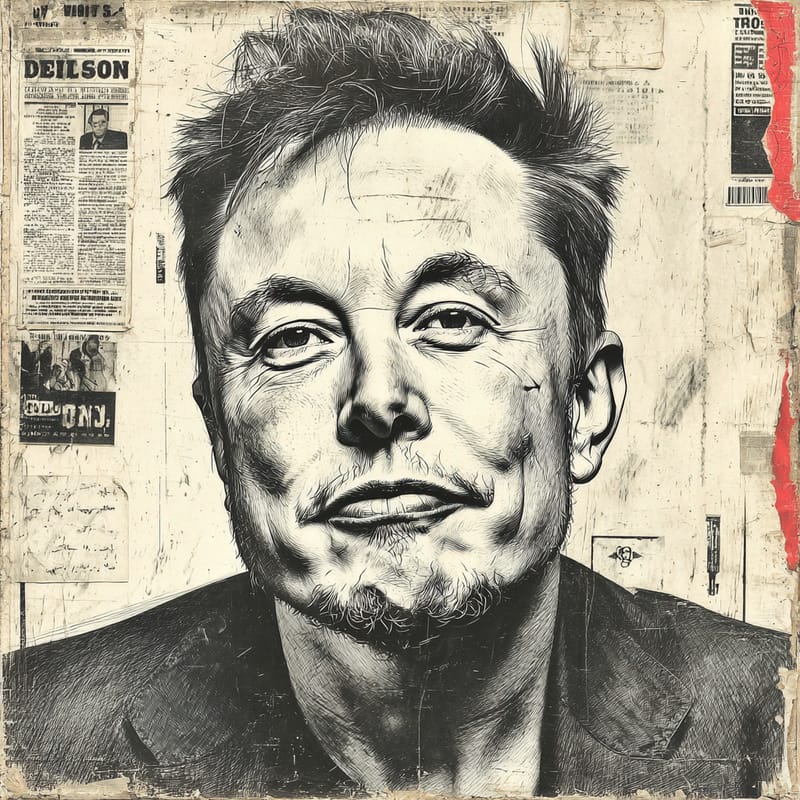


§ Also in the Liberal Capitalist hall
Enter the hall →§ Common questions
4 answersWhat was Wilhelm Röpke's political ideology?
Wilhelm Röpke was an ordoliberal economist who sought a humane third way between laissez-faire and collectivism: on the 99ideologies three-axis compass, a Rooted Liberal Capitalist. Economically he sat on the market side of centre (+30), defending competition and free prices but asking the state to break up monopolies and spread property. On governance he leaned libertarian (−20), a decentralist and federalist, and socially he was moderately traditional (−15), anxious to protect family, faith and small communities from mass society.
Was Wilhelm Röpke left-wing or right-wing?
Right of centre, though not in the laissez-faire mould. Röpke defended private property and the market against socialism and planning, which places him on the right economically, and his cultural conservatism, distrust of mass society and admiration for rural and small-town life reinforce that. But he criticised monopoly capitalism and unrestrained laissez-faire, wanted a strong legal order to protect competition and opposed Nazism from the start, so he belongs to the liberal-conservative centre-right of post-war Germany rather than to the radical right.
Was Wilhelm Röpke the father of the social market economy?
He was one of its intellectual fathers rather than its architect. The term social market economy was coined by Alfred Müller-Armack in the 1940s and the policy was carried out by Ludwig Erhard from 1948, but Röpke's wartime books supplied much of its philosophy: competition guarded by law, widely spread property and a moral order beneath the market. In 1950, at Chancellor Konrad Adenauer's request, he wrote a report defending Erhard's reforms against critics who blamed them for rising unemployment and prices.
Which minds are closest to Wilhelm Röpke?
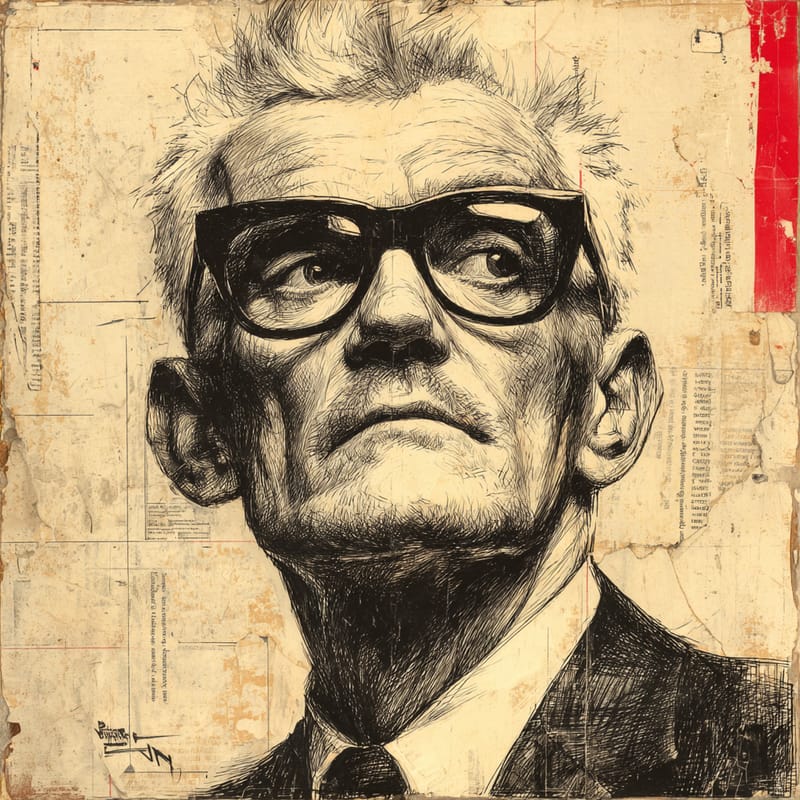
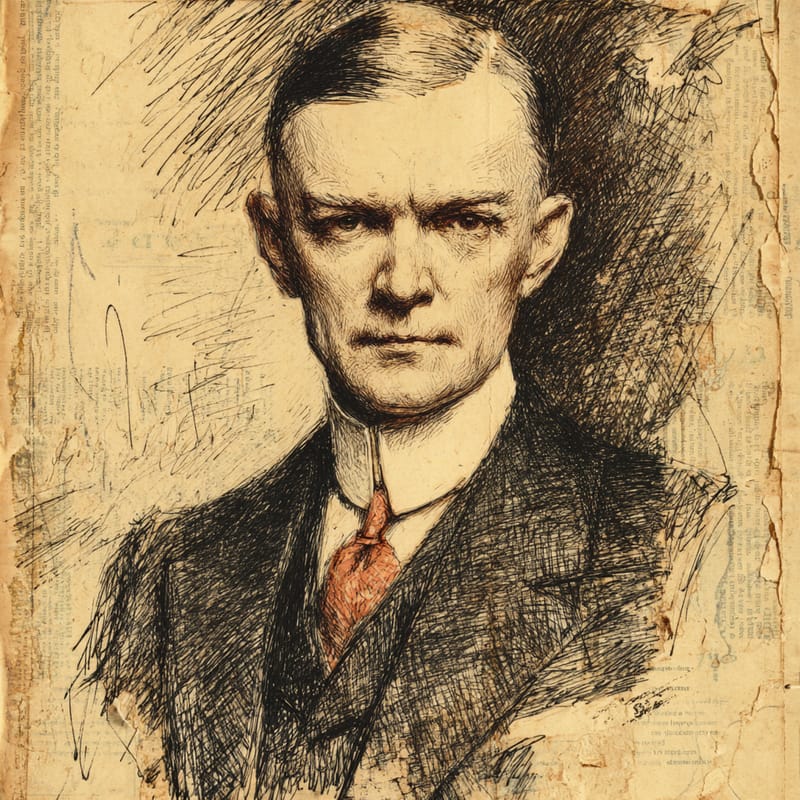
On the 99ideologies three-axis compass, the minds closest to Wilhelm Röpke are Herbert Hoover (97% alike), Barry Goldwater (95% alike) and Calvin Coolidge (94% alike). The furthest is Pol Pot (23% alike).