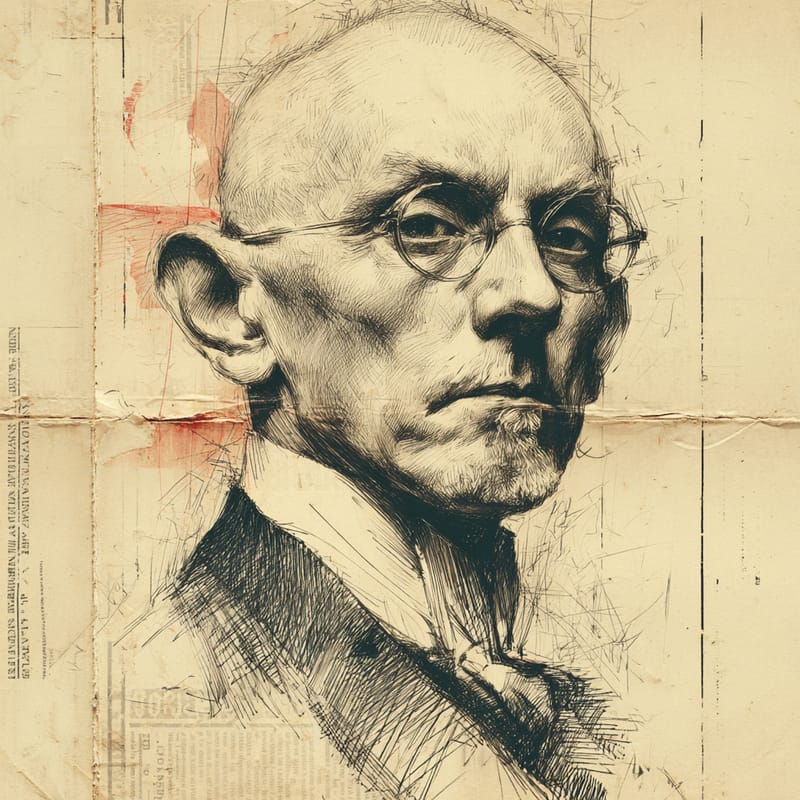
Frank Chodorov
The single tax meets liberty
Georgist and proto-libertarian.
Heterodox GeorgismOne of 729 ideologies · enter the Georgism hall →- Role
- Writer
- Era
- 1887–1966
- Region
- United States
- Social band
- Heterodox
- Placement
- +28 · −54 · +15
§ Where Frank Chodorov stands
3 axesChodorov accepted Henry George's argument that land rent belongs to the community and long held it to be the only legitimate public revenue. Everything else he left to free exchange, and The Income Tax: Root of All Evil (1954) argued that the Sixteenth Amendment of 1913 gave the state a claim on every citizen's earnings. That blend of Georgism and laissez-faire puts him firmly on the market side.
Chodorov saw the state as an organised predator, a view drawn from Franz Oppenheimer and Albert Jay Nock and developed in The Rise and Fall of Society (1959). He opposed the New Deal, conscription and American entry into the Second World War, and he preferred education to party politics as a route to change, founding the Intercollegiate Society of Individualists in 1953.
Chodorov was an individualist rather than a cultural conservative: he wanted the state out of private conduct as well as private business, and his secular, Georgist outlook owed nothing to religious traditionalism. But he campaigned alongside conservatives against the New Deal and communism, and in One Is a Crowd (1952) he defended the individual against mass society, which leaves him only slightly on the progressive side.
How close are you to Frank Chodorov?
Three statements, one per axis. Answer them and we’ll drop you on the compass next to them.
§ The story
HistoricalFrank Chodorov (1887–1966) was an American writer and editor, born Fishel Chodorowsky in New York City to Russian-Jewish immigrants. After graduating from Columbia University in 1907 he worked in business and teaching until reading Henry George's Progress and Poverty made him a lifelong single-taxer. From 1937 to 1942 he directed the Henry George School of Social Science in New York and edited its journal, The Freeman, until his opposition to American entry into the Second World War cost him the post.
Chodorov then became one of the founders of the postwar libertarian right. His largely one-man newsletter analysis (1944–51), his editing at Human Events and his 1954 book The Income Tax: Root of All Evil attacked the New Deal state, conscription and foreign intervention. In 1953 he founded the Intercollegiate Society of Individualists, with the young William F. Buckley Jr. as its first president, and he influenced Murray Rothbard and a generation of conservative and libertarian activists.
Notable for
- 01'The Income Tax: Root of All Evil'
- 02Led the Henry George School
- 03Old-right individualism
Key works & moments
- 1937–42Directs the Henry George School of Social Science and edits its journal, The Freeman.
- 1944Launches analysis, a monthly individualist newsletter he writes largely alone.
- 1953Founds the Intercollegiate Society of Individualists, with William F. Buckley Jr. as first president.
- 1954Publishes The Income Tax: Root of All Evil.
- 1959Publishes The Rise and Fall of Society, contrasting voluntary society with the predatory state.
- 1962Publishes his memoir, Out of Step.
§ Minds closest to Frank Chodorov
All minds →

§ Also in the Georgism hall
Enter the hall →§ Common questions
4 answersWhat was Frank Chodorov's political ideology?
Frank Chodorov was an Old Right individualist who combined Henry George's land theory with radical opposition to the state: on the 99ideologies three-axis compass, an adherent of Heterodox Georgism. Economically he sat firmly on the market side (+28), backing free exchange and a tax on land rent while condemning the income tax. On governance he was strongly anti-statist (−54). Socially he leaned only slightly progressive (+15), an individualist who wanted the state out of private life.
Was Frank Chodorov left-wing or right-wing?
Right-wing in the American sense, though from its libertarian wing. Chodorov fought the New Deal, the income tax and communism and helped build the postwar conservative movement, founding the student society that gave William F. Buckley Jr. an early platform. But his roots were in Henry George's radical land reform, and his opposition to war, conscription and state power put him at odds with the Cold War conservatism that followed. He is best seen as a founder of modern American libertarianism.
Why did Frank Chodorov oppose the income tax?
Because he believed it made the state a partner in every citizen's earnings. In The Income Tax: Root of All Evil (1954) Chodorov argued that the Sixteenth Amendment of 1913 abandoned the principle that a person owns what they produce, gave Washington a growing claim on private income and financed the expansion of federal power and foreign wars. As a Georgist, he contrasted it with a land-value tax, which he thought took only what the community had created, and he urged repeal of the amendment rather than reform.
Which minds are closest to Frank Chodorov?
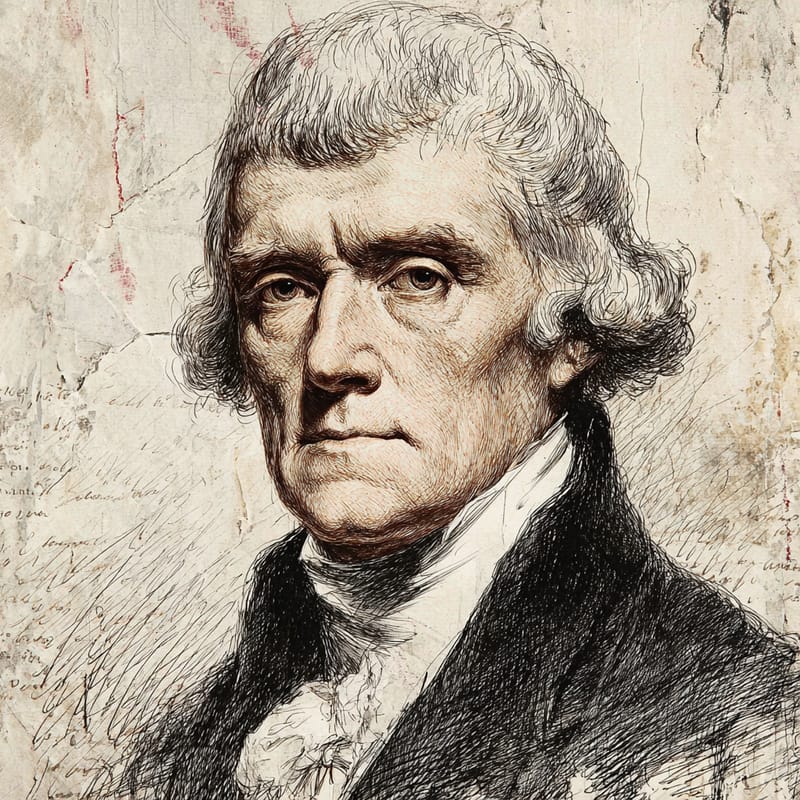
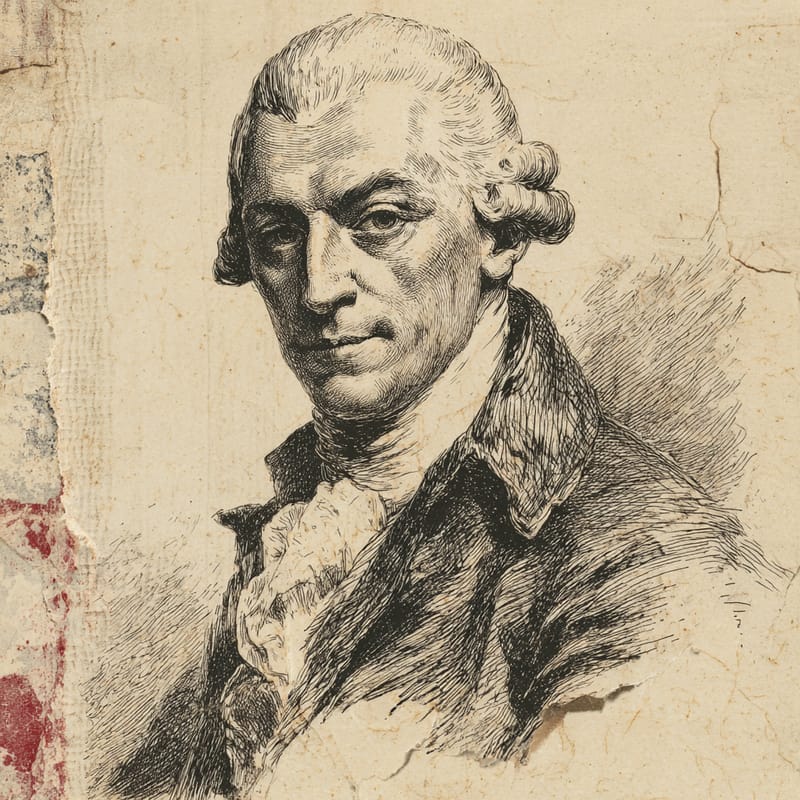
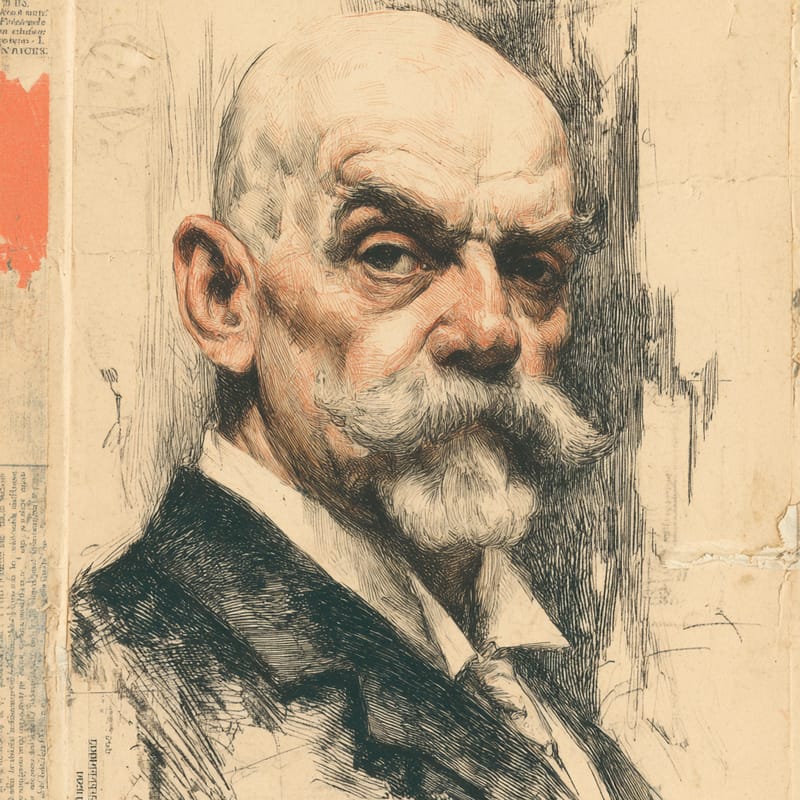
On the 99ideologies three-axis compass, the minds closest to Frank Chodorov are Mason Gaffney (93% alike), Wilhelm von Humboldt (93% alike) and Fred Foldvary (92% alike). The furthest is Pol Pot (18% alike).