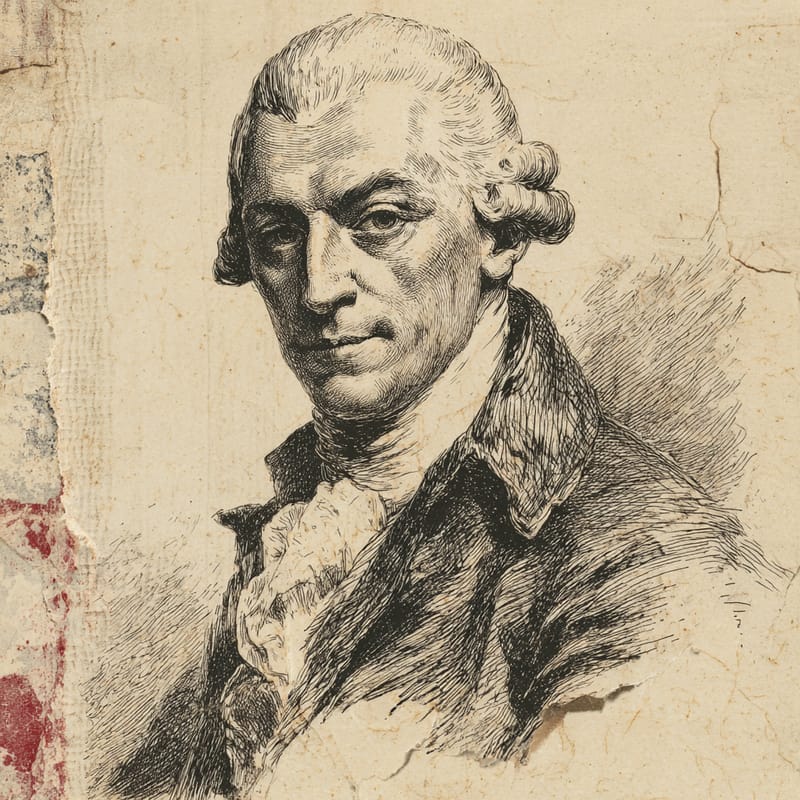
Adam Smith
The invisible hand
Free exchange, limited government, moral sympathy.
Classical LiberalOne of 729 ideologies · enter the Classical Liberal hall →- Role
- Moral philosopher & economist
- Era
- 1723–1790
- Region
- Scotland
- Social band
- Centre (no modifier)
- Placement
- +50 · −45 · +10
§ Where Adam Smith stands
3 axesSmith argued in The Wealth of Nations (1776) that the division of labour and free exchange, guided as if by an invisible hand, create wealth more surely than the mercantile system of tariffs, bounties and chartered monopolies like the East India Company. Yet he accepted a legal ceiling on interest and the Navigation Acts for defence, and insisted that no society flourishes while most of its members are poor.
Book V of The Wealth of Nations confines the sovereign to three duties: defence, the administration of justice and certain public works and institutions that private enterprise would not supply. Smith distrusted concentrated power, whether in governments granting privileges or in merchants who, he warned, combine to raise prices, and he favoured a system of natural liberty under impartial law.
Smith was an Enlightenment moderate rather than a radical. The Theory of Moral Sentiments (1759) grounded morality in sympathy and the judgement of an impartial spectator, and The Wealth of Nations backed parish schools for the poor and argued against slavery. His warm account of the death of his sceptical friend David Hume, published in 1777, drew clerical anger, but Smith avoided open religious controversy.
How close are you to Adam Smith?
Three statements, one per axis. Answer them and we’ll drop you on the compass next to them.
§ The story
HistoricalAdam Smith (1723–1790) was a Scottish moral philosopher and economist, born in Kirkcaldy, Fife. He studied at Glasgow under Francis Hutcheson and at Balliol College, Oxford, and in 1752 became professor of moral philosophy at Glasgow, where he published The Theory of Moral Sentiments (1759). After touring France as tutor to the young Duke of Buccleuch, meeting Quesnay and Turgot, he spent a decade writing An Inquiry into the Nature and Causes of the Wealth of Nations (1776), then served as a commissioner of customs in Edinburgh from 1778.
The Wealth of Nations explained prosperity through the division of labour, free exchange and the accumulation of capital, and its attack on mercantilism, monopolies and trade restrictions made it the founding text of classical economics. Later generations turned Smith into an emblem of laissez-faire, but he also defended public education, roads and defence, warned that merchants conspire against the public and grounded commercial society in moral sympathy. His friendship with David Hume placed him at the centre of the Scottish Enlightenment.
Notable for
- 01'The Wealth of Nations' (1776)
- 02'The Theory of Moral Sentiments'
- 03Founded classical economics
Key works & moments
- 1759Publishes The Theory of Moral Sentiments.
- 1764–66Tours France as tutor to the Duke of Buccleuch, meeting Quesnay and Turgot.
- 1776Publishes An Inquiry into the Nature and Causes of the Wealth of Nations.
- 1778Appointed a commissioner of customs in Scotland.
- 1787Elected Rector of the University of Glasgow.
- 1790Dies in Edinburgh after having most of his unpublished manuscripts burned.
In their own words
“It is not from the benevolence of the butcher, the brewer, or the baker, that we expect our dinner, but from their regard to their own interest.”
“People of the same trade seldom meet together, even for merriment and diversion, but the conversation ends in a conspiracy against the public, or in some contrivance to raise prices.”
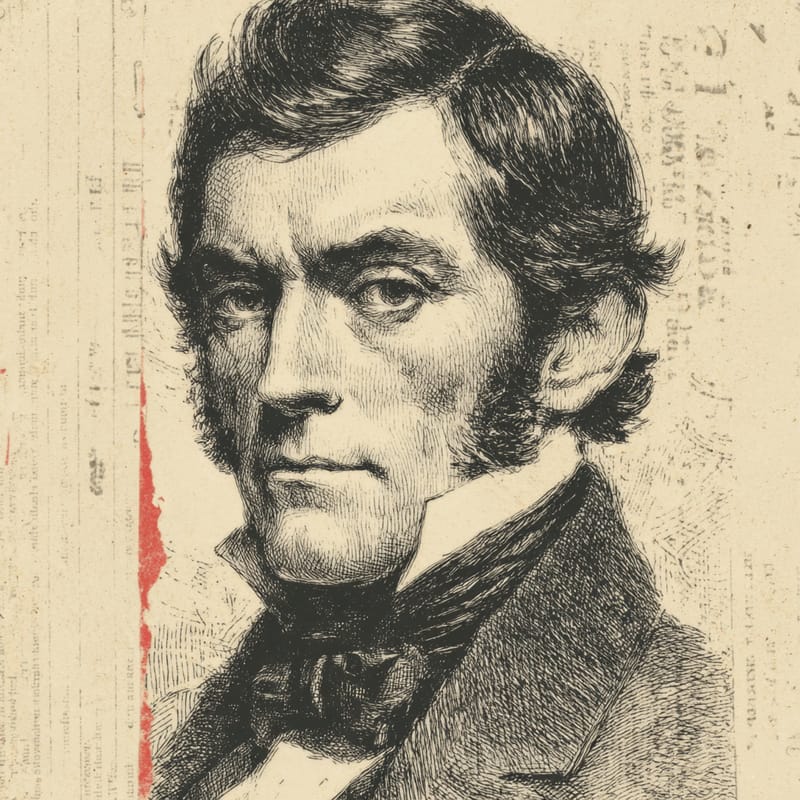
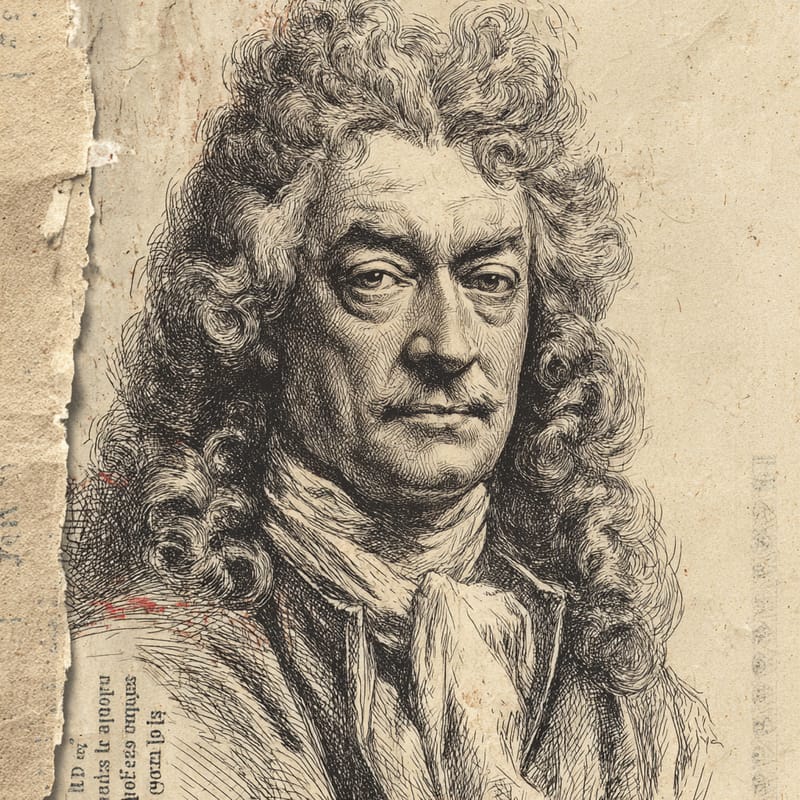
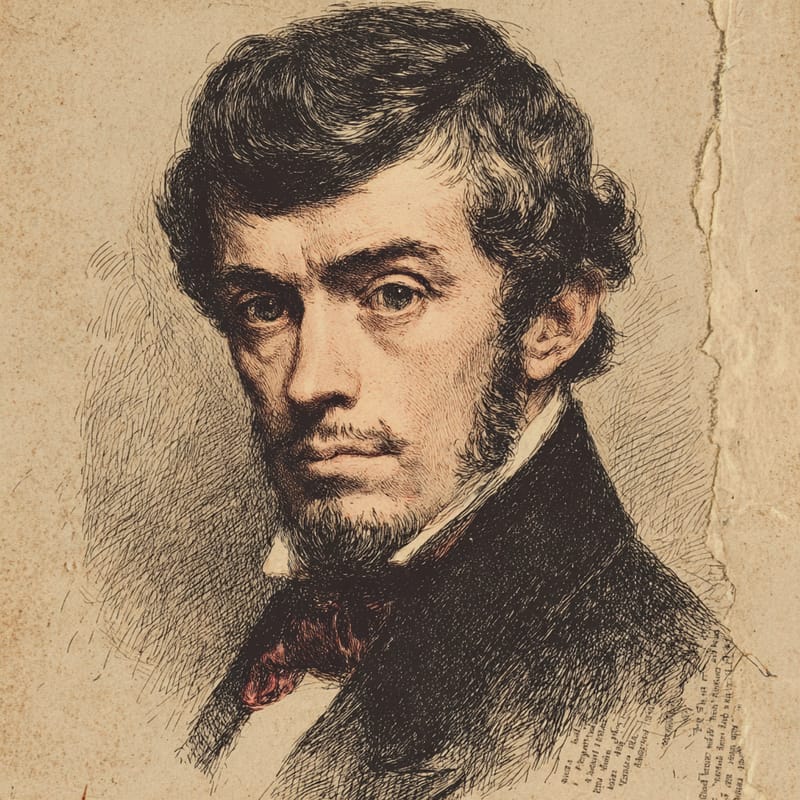
§ Minds closest to Adam Smith
All minds →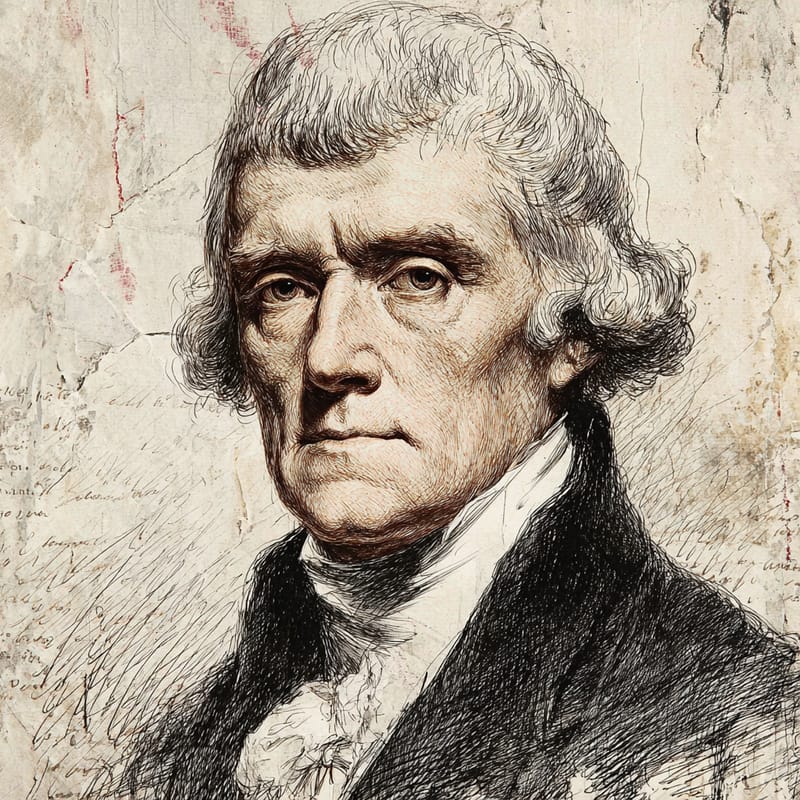

§ Also in the Classical Liberal hall
Enter the hall →§ Common questions
4 answersWhat was Adam Smith's political ideology?
Adam Smith was a classical liberal and a founder of economic liberalism: on the 99ideologies three-axis compass, a Classical Liberal. Economically he sat clearly on the market side (+50), championing free trade and the division of labour against mercantilist privilege while accepting public works and education. On governance he favoured limited government (−45), confined to defence, justice and essential public institutions. Socially he was close to the centre (+10), an Enlightenment moderate who grounded ethics in moral sympathy.
Was Adam Smith left-wing or right-wing?
Neither, since the labels were born in revolutionary France only a year before his death, but both sides claim him. Free-market conservatives and libertarians cite his case for free trade and his suspicion of government direction of the economy. The left points to his sympathy for labourers, his support for public education and his warnings that merchants and manufacturers conspire against the public. On the site's axes he is a market-leaning, limited-government liberal near the social centre, not a doctrinaire advocate of laissez-faire.
Did Adam Smith believe in laissez-faire?
Mostly, but not absolutely. Smith argued for a system of natural liberty in which individuals pursue their own interest within the law, and he attacked tariffs, bounties and monopolies. He never used the phrase laissez-faire, however, and The Wealth of Nations defends state roles that strict free-marketeers reject: public works, schooling for the poor, a legal ceiling on interest rates and the Navigation Acts for national defence. He also warned that businessmen lobby for privileges against the public interest, a passage still quoted across the political spectrum.
Which minds are closest to Adam Smith?
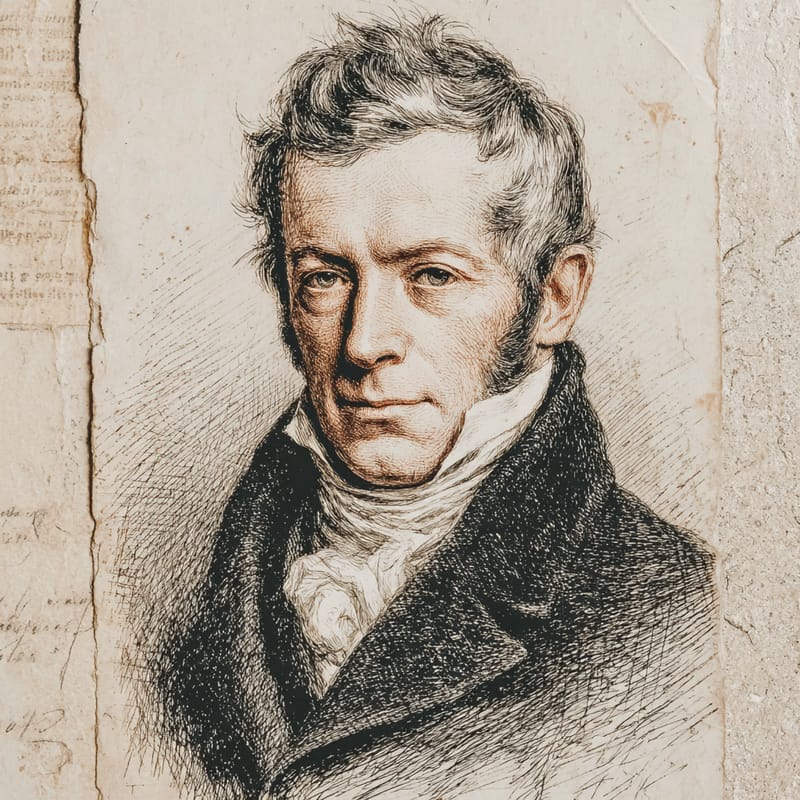
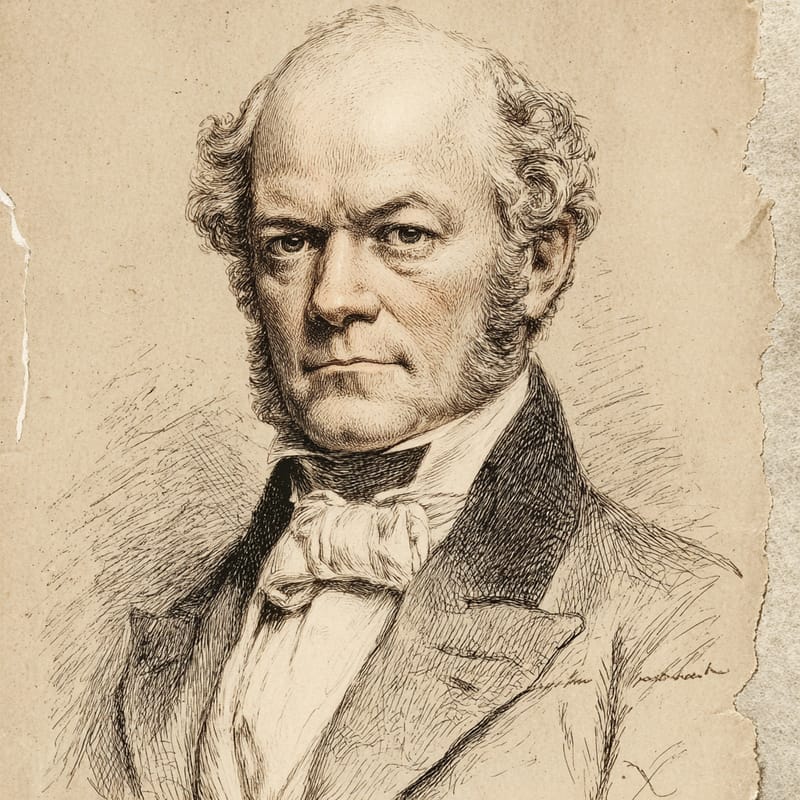
On the 99ideologies three-axis compass, the minds closest to Adam Smith are Thomas Jefferson (97% alike), Wilhelm von Humboldt (97% alike) and Richard Cobden (96% alike). The furthest is Pol Pot (14% alike).