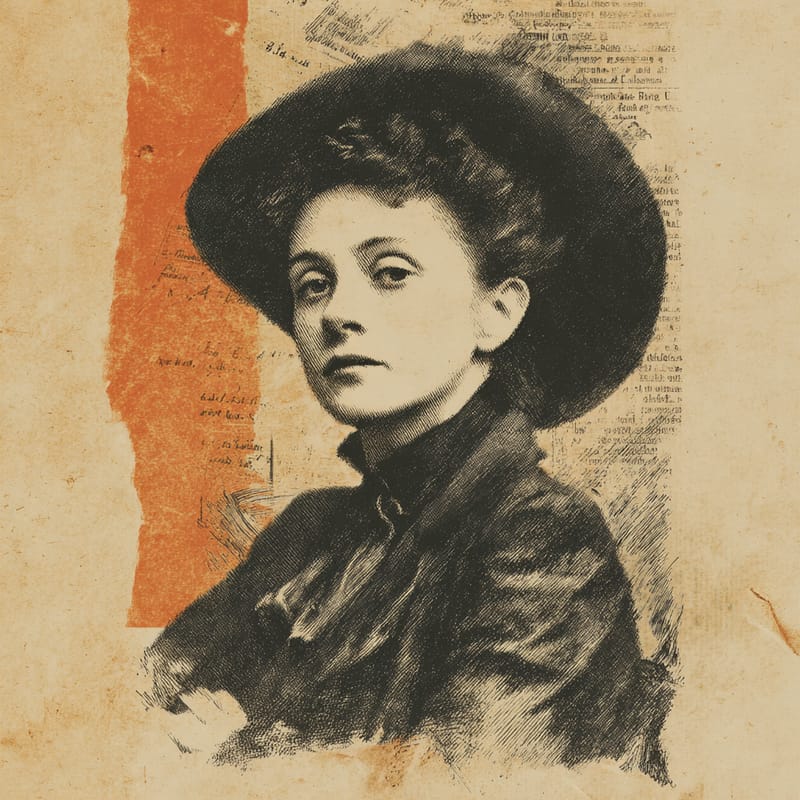
Frances Perkins
Engineered Social Security
The New Deal's quiet, decisive social architect.
Heterodox Social DemocratOne of 729 ideologies · enter the Social Democrat hall →- Role
- Secretary of Labor
- Era
- 1880–1965
- Region
- United States
- Social band
- Heterodox
- Placement
- −42 · −22 · +16
§ Where Frances Perkins stands
3 axesPerkins took office having asked Roosevelt to back unemployment insurance, old-age pensions, a minimum wage, maximum hours and an end to child labour, and she delivered most of it through the Social Security Act of 1935 and the Fair Labor Standards Act of 1938. She built social insurance within capitalism rather than replacing it, and her hoped-for national health insurance was dropped, so she stops well short of socialism.
Perkins worked through democratic institutions, from New York's Factory Investigating Commission to Congress, persuading legislators with evidence rather than decree. She defended due process for immigrants, disbanding the Labor Department's notorious Section 24 deportation squads in 1933 and delaying deportation proceedings against Harry Bridges in 1938, a stand that brought an impeachment resolution against her the following year.
Perkins was a reformer in public and a devout, reserved Episcopalian in private. Like many social feminists of her generation she opposed the Equal Rights Amendment, fearing it would wipe out protective labour laws for women, yet as the first woman in the cabinet she became a symbol of women's advance, and the 1938 Fair Labor Standards Act's curbs on child labour reflected her moral reformism.
How close are you to Frances Perkins?
Three statements, one per axis. Answer them and we’ll drop you on the compass next to them.
§ The story
HistoricalFrances Perkins (1880–1965) was US secretary of labor from 1933 to 1945 and the first woman to serve in a presidential cabinet. Born in Boston and educated at Mount Holyoke College and Columbia University, she became a social reformer in New York, lobbying for shorter working hours as secretary of the New York Consumers' League. After witnessing the Triangle Shirtwaist Factory fire of 1911, which killed 146 garment workers, she investigated factory conditions for the state and later served Governor Franklin Roosevelt as New York's industrial commissioner.
As Roosevelt's labor secretary throughout his presidency, Perkins chaired the Committee on Economic Security that drafted the Social Security Act of 1935, and she championed the Fair Labor Standards Act of 1938, which set a federal minimum wage and maximum hours and curbed child labour. Conservatives attacked her for delaying the deportation of the radical longshore leader Harry Bridges, and a 1939 impeachment resolution against her was rejected by the House Judiciary Committee. She later served on the US Civil Service Commission, wrote The Roosevelt I Knew (1946) and taught at Cornell until her death.
Notable for
- 01Authored the Social Security Act
- 02First female U.S. cabinet member
- 03Minimum wage and the 40-hour week
Key works & moments
- 1910Becomes executive secretary of the New York Consumers' League, lobbying for shorter working hours.
- 1911Witnesses the Triangle Shirtwaist Factory fire, which kills 146 garment workers in New York.
- 1929Appointed New York State industrial commissioner by Governor Franklin Roosevelt.
- 1933Becomes US secretary of labor, the first woman in a presidential cabinet.
- 1935Her committee's plan becomes the Social Security Act, signed on 14 August.
- 1938The Fair Labor Standards Act sets a federal minimum wage and curbs child labour.
§ Minds closest to Frances Perkins
All minds →



§ Also in the Social Democrat hall
Enter the hall →§ Common questions
4 answersWhat was Frances Perkins's political ideology?
Frances Perkins was a progressive reformer and New Deal liberal: on the 99ideologies three-axis compass, a Heterodox Social Democrat. Economically she sits left of centre (−42), as the architect of Social Security, unemployment insurance and the federal minimum wage within a capitalist economy. On governance she was a democratic reformer (−22) who defended due process, and socially she was moderately progressive (+16), a pioneering woman in power who remained devout and personally reserved.
Was Frances Perkins left-wing or right-wing?
Left of centre by American standards. Perkins was a New Deal Democrat who built the core of the US welfare state, from Social Security to minimum-wage law, and conservatives in Congress attacked her as soft on radicals during the Harry Bridges affair. But she was a reformer rather than a socialist: she sought to make capitalism humane and secure through social insurance and labour standards, and she worked with business leaders as well as unions.
Did Frances Perkins create Social Security?
She was one of its chief architects. Perkins made old-age and unemployment insurance part of her conditions for joining Roosevelt's cabinet, and in 1934 she chaired the Committee on Economic Security, which drafted the legislation. Roosevelt signed the Social Security Act on 14 August 1935. Congress narrowed her plans, excluding agricultural and domestic workers, and national health insurance was dropped, but the act created the federal old-age pension and the federal-state unemployment insurance system.
Which minds are closest to Frances Perkins?
On the 99ideologies three-axis compass, the minds closest to Frances Perkins are Clement Attlee (98% alike), Bob Hawke (97% alike) and Hjalmar Branting (97% alike). The furthest is Adam Sutler (18% alike).