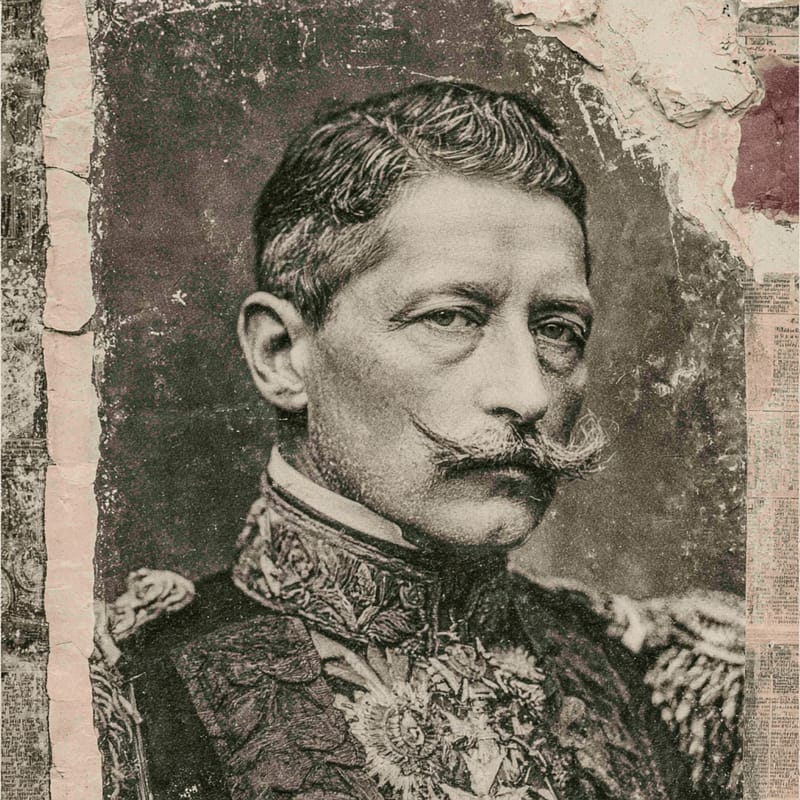
Kaiser Wilhelm II
Kaiser Wilhelm II ruled the German Empire from 1888 until his abdication at the end of World War I in November 1918. He inherited Bismarck's carefully-balanced Reich and rapidly destabilised it: dismissing Bismarck in 1890, pursuing an aggressive naval buildup that triggered an arms race with Britain, alienating Russia by letting the Reinsurance Treaty lapse, and championing 'Weltpolitik' — Germany's pursuit of world-power status through colonies and a blue-water fleet. His personal interventions in foreign policy (the Daily Telegraph affair, the Tangier crisis, the blank-cheque to Austria-Hungary in 1914) repeatedly inflamed European tensions and helped pull the continent into total war. Industrial Germany continued to expand under his reign, and his government tolerated parliamentary politics so long as it didn't constrain the crown. After the empire's defeat he fled to the Netherlands, where he lived in private exile at Huis Doorn until his death in 1941.

Two minutes, three axes, 729 named ideologies — and your own affinity score with every mind on this page.
Take the quiz →Visit the Constitutional Monarchist hall