
Reza Shah Pahlavi
Modernise by decree
State industry, royal command.
Rooted State CapitalistOne of 729 ideologies · enter the State Capitalist hall →- Role
- Shah
- Era
- 1878–1944
- Region
- Iran
- Social band
- Rooted
- Placement
- +32 · +74 · −30
§ Where Reza Shah Pahlavi stands
3 axesReza Shah built a state-led capitalist economy. The Trans-Iranian Railway, completed in 1938, was financed through state monopoly taxes on tea and sugar rather than foreign loans, Bank Melli opened in 1928, and a 1931 law gave the state a monopoly on foreign trade while state factories turned out textiles, sugar and cement. Private property was secure, and the shah himself became the country's largest landowner.
He ruled as an absolute monarch behind a constitutional façade. The Majlis survived, but its members were in effect chosen by the court; newspapers were censored, parties withered and opponents were imprisoned, exiled or died in custody. The 1925 conscription law and army campaigns against the Bakhtiari, Qashqai, Kurdish and Arab tribes ended regional autonomy and placed much of the countryside under military control.
His social programme served crown and nation rather than individual liberty. He grounded his rule in pre-Islamic Persian monarchy, took the dynastic name Pahlavi, asked foreign governments to call the country Iran from 1935 and founded a language academy that year to purge Arabic loanwords. The 1928 dress law and the 1936 unveiling decree imposed Western dress by police order, while women gained schooling but no vote.
How close are you to Reza Shah Pahlavi?
Three statements, one per axis. Answer them and we’ll drop you on the compass next to them.
§ The story
HistoricalReza Shah Pahlavi (1878–1944) founded Iran's Pahlavi dynasty and ruled as shah from 1925 to 1941. Born in Mazandaran, he enlisted young in the Persian Cossack Brigade and rose to command it, then led the February 1921 coup that made him army commander and minister of war. Prime minister from 1923, he engineered parliament's deposition of the Qajar dynasty in 1925 and was crowned in 1926, after briefly considering a republic on the Turkish model.
Reza Shah built a centralised modern state: a conscript army, a national bureaucracy, secular courts and codes, the Trans-Iranian Railway and the University of Tehran. He also broke tribal autonomy, muzzled the press and parliament, imprisoned critics and amassed vast private estates; his former court minister Abdolhossein Teymourtash died in prison in 1933. The shooting of protesters at Mashhad's Goharshad Mosque in 1935 and his 1936 ban on the veil left lasting clerical hostility. When Britain and the Soviet Union invaded in 1941 he abdicated for his son and died in exile in Johannesburg.
Notable for
- 01Founded the Pahlavi dynasty
- 02Trans-Iranian Railway
- 03State-led industrialisation
Key works & moments
- 1921Leads Cossack troops into Tehran in the February coup and becomes army commander.
- 1925Parliament deposes the Qajar dynasty; a constituent assembly proclaims him shah.
- 1927Construction begins on the Trans-Iranian Railway, completed in 1938 without foreign loans.
- 1934Founds the University of Tehran, Iran's first modern university.
- 1936Decrees the forcible unveiling of women on 8 January.
- 1941Abdicates in favour of his son after the Anglo-Soviet invasion of Iran.
§ Minds closest to Reza Shah Pahlavi
All minds →
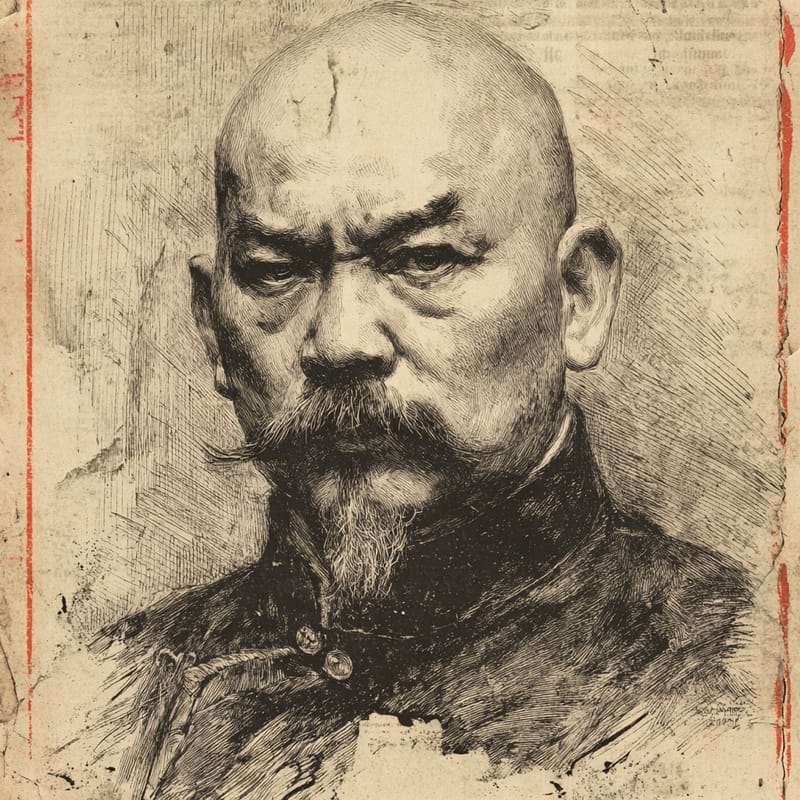
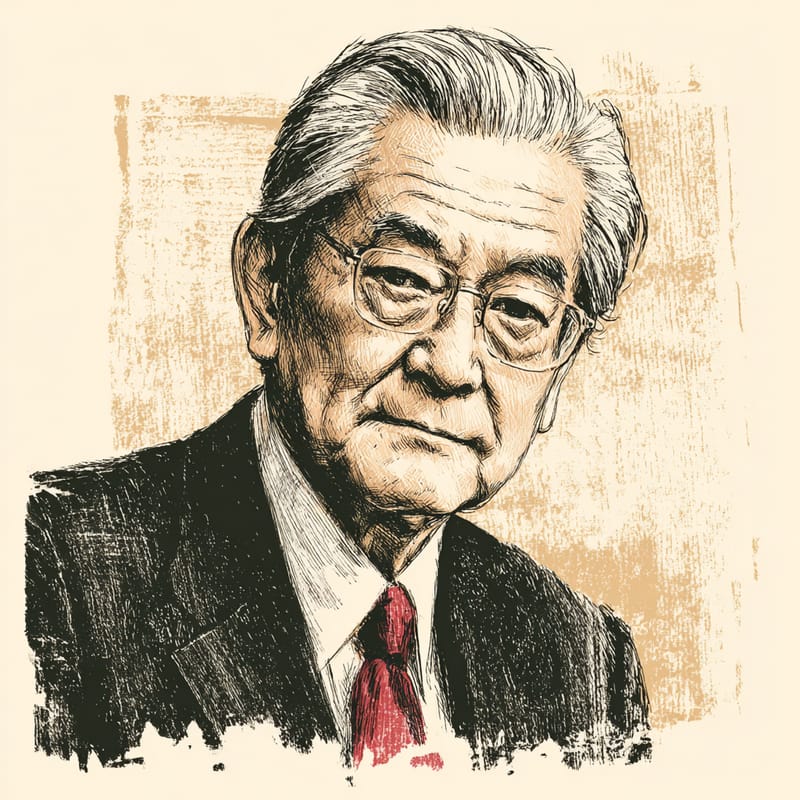

§ Also in the State Capitalist hall
Enter the hall →§ Common questions
4 answersWhat was Reza Shah Pahlavi's political ideology?
Reza Shah was an authoritarian nationalist moderniser who built industry and infrastructure through the state: on the 99ideologies three-axis compass, a Rooted State Capitalist. Economically he sat moderately on the market side (+32), protecting private property while the state ran monopolies, railways and factories. On governance he was strongly authoritarian (+74), an absolute monarch behind a constitutional façade, and socially mildly traditional (−30), grounding his rule in Persian monarchy and nationalism even as he imposed Western dress.
Was Reza Shah left-wing or right-wing?
Right-wing in the sense of a nationalist, monarchist strongman, though his methods borrowed from developmental statism. He founded a dynasty, defended property, became Iran's largest landowner and outlawed communist activity in 1931. At the same time his state monopolies and secularising reforms resembled Atatürk's programme in Turkey, and they angered the clergy who later led the opposition to his son. He fits the category of authoritarian state-builder better than either side of the left-right divide.
Why was Reza Shah forced to abdicate?
Because Britain and the Soviet Union invaded Iran in August 1941. After Germany attacked the Soviet Union, the Allies wanted a secure supply route to the Soviets through Iran and demanded the expulsion of German nationals; Reza Shah's declared neutrality and close economic ties with Germany made them see him as unreliable. His army collapsed within days, and on 16 September 1941 he abdicated in favour of his son, Mohammad Reza, and was sent into exile, dying in Johannesburg in 1944.
Which minds are closest to Reza Shah Pahlavi?
On the 99ideologies three-axis compass, the minds closest to Reza Shah Pahlavi are The Party-Corporation (archetype) (98% alike), Friedrich List (95% alike) and Józef Piłsudski (94% alike). The furthest is Emma Goldman (5% alike).