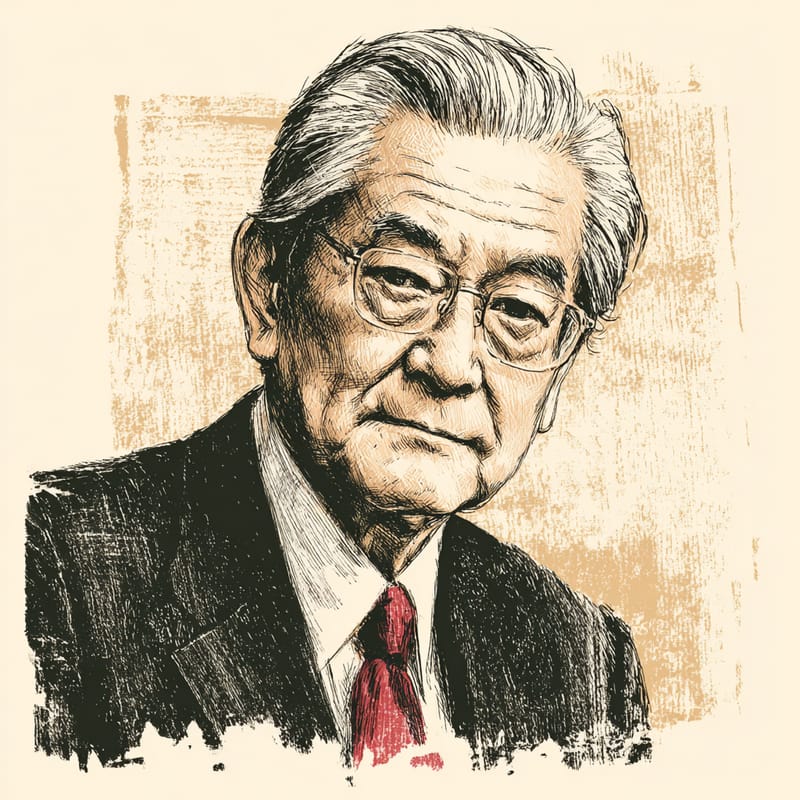
Emperor Akihito
The symbol emperor
Reconciliation within a pacifist constitution.
Traditional Constitutional MonarchistOne of 729 ideologies · enter the Constitutional Monarchist hall →- Role
- Emperor
- Era
- b. 1933
- Region
- Japan
- Social band
- Traditional
- Placement
- +42 · +64 · −48
§ Where Emperor Akihito stands
3 axesAs a symbol without powers related to government, Akihito had no economic role; under the Imperial House Economy Law of 1947 even the court's budget is set by the Diet. His reign spanned a turning point in Japan's market economy, from the collapse of the asset-price bubble in 1990–91 through the long stagnation that followed, and the throne stood as a symbol of continuity over that capitalist order.
Akihito's place on the side of authority reflects the throne itself: an office inherited through the male line, sanctified by Shinto rites such as the Daijōsai he performed in 1990, and closed to election or popular choice. He kept scrupulously within Article 4 of the 1947 Constitution, which denies the emperor powers related to government, so that even his retirement required a one-off law passed by the Diet in 2017.
Akihito upheld imperial tradition, presiding over the court's Shinto rituals and a male-only succession fixed by the 1947 Imperial House Law, while humanising the monarchy. He married a commoner, raised his children at home rather than handing them to court tutors, and used his 2001 birthday press conference to note the Korean ancestry of an eighth-century emperor's mother, recorded in the chronicle Shoku Nihongi.
How close are you to Emperor Akihito?
Three statements, one per axis. Answer them and we’ll drop you on the compass next to them.
§ The story
HistoricalAkihito (born 1933) was Emperor of Japan from 1989 to 2019, reigning in the Heisei era. The eldest son of Emperor Hirohito, he was a boy during the Second World War, was tutored after it by the American Quaker Elizabeth Gray Vining and represented Japan at Queen Elizabeth II's coronation in 1953. In 1959 he married Michiko Shōda, the first commoner to marry a Japanese crown prince, and he succeeded his father on 7 January 1989.
Akihito was the first emperor to ascend the throne as a constitutional symbol, and he defined that role through travel and gestures of consolation and remorse. He became the first Japanese emperor to visit China, in 1992, prayed at Second World War battlefields from Saipan to Palau, knelt to speak with evacuees after disasters such as the 2011 Tōhoku earthquake and tsunami, and expressed deep remorse over the war in 2015. Citing his age, he signalled his wish to retire in 2016, and in 2019 he became the first emperor to abdicate since 1817.
Notable for
- 01Postwar 'symbol' monarchy
- 02Reconciliation diplomacy
- 03First modern abdication
Key works & moments
- 1953Represents Japan at Queen Elizabeth II's coronation in London.
- 1959Marries Michiko Shōda, the first commoner to wed a Japanese crown prince.
- 1989Succeeds Emperor Hirohito on 7 January, opening the Heisei era.
- 1992Becomes the first Japanese emperor to visit China.
- 2016A televised video message signals his wish to step down.
- 2019Abdicates on 30 April, the first emperor to do so since 1817.
§ Minds closest to Emperor Akihito
All minds →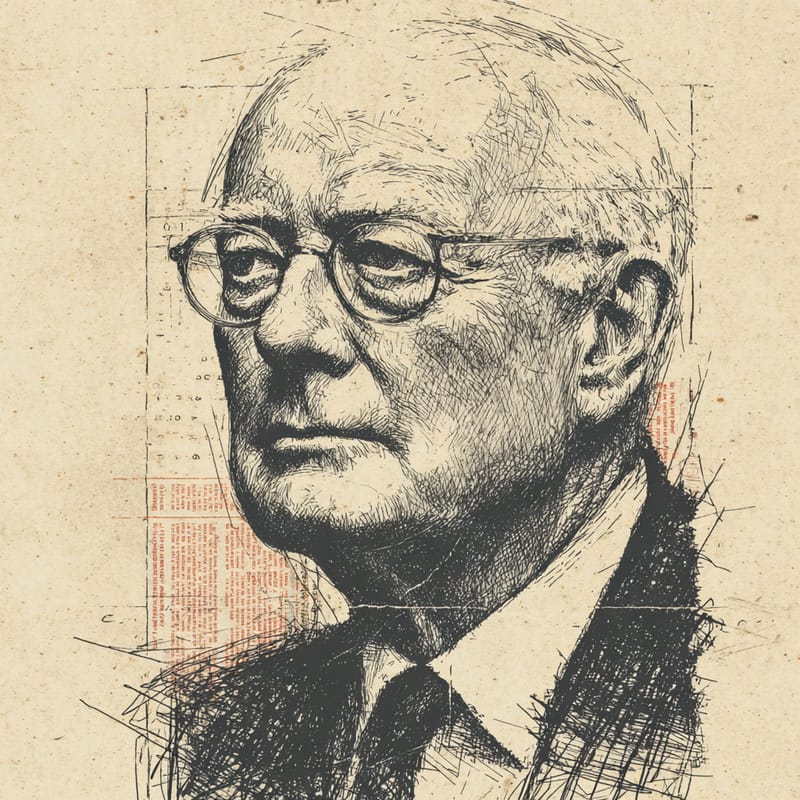

§ Also in the Constitutional Monarchist hall
Enter the hall →§ Common questions
4 answersWhat is Emperor Akihito's political ideology?
As a constitutional symbol Akihito stays out of party politics, but his reign embodied a pacifist, reconciliatory form of traditional monarchy: on the 99ideologies three-axis compass, a Traditional Constitutional Monarchist. Economically he sits on the market side (+42), as the symbol of a market democracy. On governance he leans toward authority (+64), reflecting the hereditary, ritual nature of the Chrysanthemum Throne, and socially he is traditional (−48), upholding Shinto rites and male-line succession while humanising the monarchy.
Is Emperor Akihito left-wing or right-wing?
Neither: the 1947 Constitution bars the emperor from political power, and Akihito has never endorsed a party. His instincts, however, cut across Japan's political divide. His devotion to imperial ritual and dynastic continuity aligns with the traditionalist right, while his repeated expressions of remorse for the war, his visits to wartime battlefields across Asia and the Pacific and his praise for the postwar constitution won him admirers on the centre-left and some unease among nationalists who prefer a less apologetic monarchy.
Why did Emperor Akihito abdicate?
Because of age and declining health. In a televised video message in August 2016 he said he feared that his weakening strength would make it difficult to carry out his duties as the symbol of the state with his whole being. The Imperial House Law made no provision for abdication, so the Diet passed a one-time special law in June 2017. He stepped down on 30 April 2019, his son Naruhito became emperor the next day, and Akihito took the title of emperor emeritus.
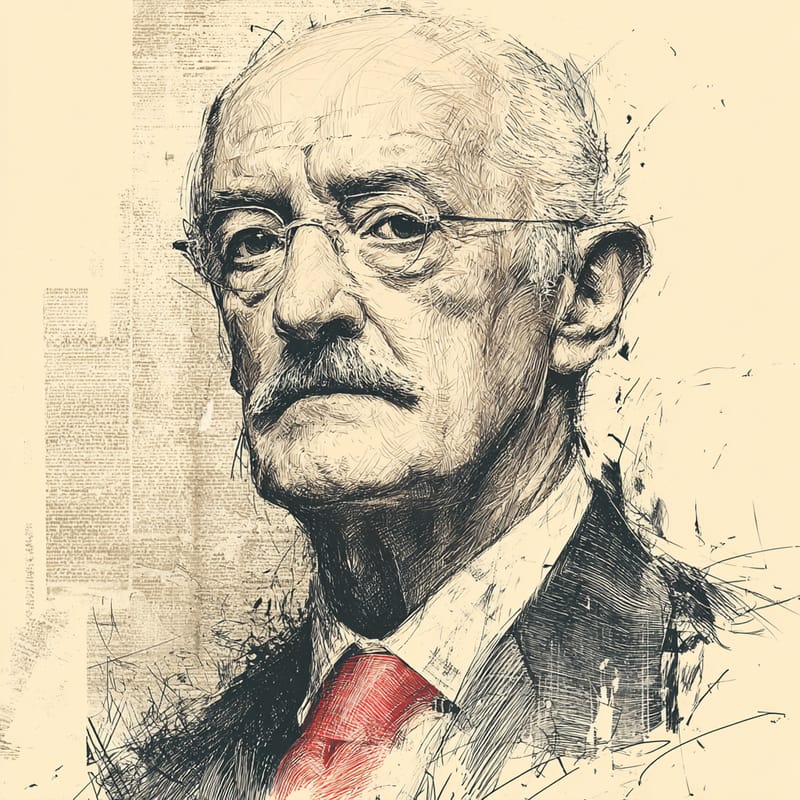
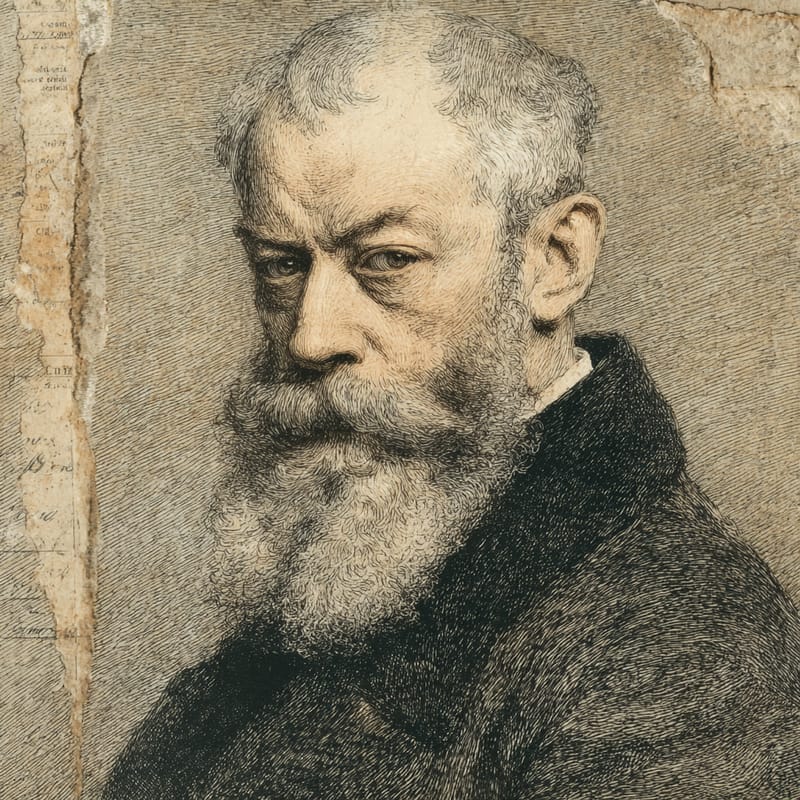
Which minds are closest to Emperor Akihito?
On the 99ideologies three-axis compass, the minds closest to Emperor Akihito are Baudouin of Belgium (99% alike), Juan Carlos I (96% alike) and Walter Bagehot (96% alike). The furthest is Emma Goldman (2% alike).