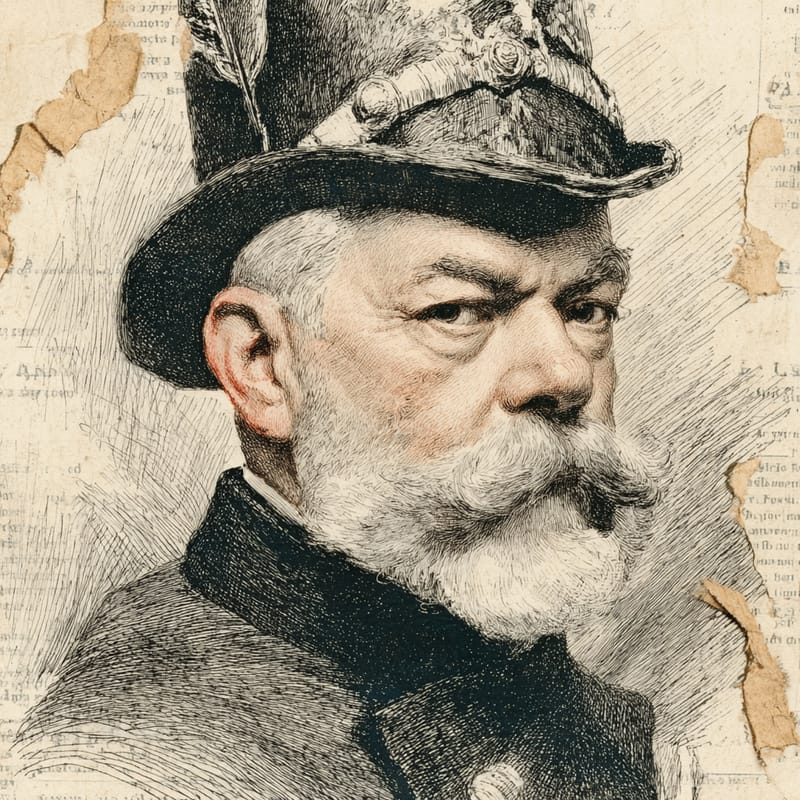
Otto von Bismarck
The Iron Chancellor
Crown, realpolitik, and the first welfare state.
Traditional Constitutional MonarchistOne of 729 ideologies · enter the Constitutional Monarchist hall →- Role
- Chancellor
- Era
- 1815–1898
- Region
- Germany
- Social band
- Traditional
- Placement
- +48 · +75 · −55
§ Where Otto von Bismarck stands
3 axesBismarck governed a capitalist economy and was no socialist, but he accepted a strong role for the state. He turned to protection with the 1879 tariff on iron and grain, oversaw the nationalisation of most Prussian railways from 1879, and created the world's first national social insurance system: health insurance in 1883, accident insurance in 1884 and old-age and disability pensions in 1889, partly to draw workers away from socialism.
Bismarck believed that the great questions were settled by power, not parliaments. From 1862 to 1866 he collected taxes and funded the army without an approved budget, defying the Prussian parliament, and the 1871 imperial constitution made the chancellor answerable to the emperor rather than the Reichstag. The Anti-Socialist Laws of 1878–90 banned socialist meetings and newspapers, though he did grant universal male suffrage for Reichstag elections.
Bismarck was a Protestant monarchist who defended throne, army and aristocracy against liberalism and socialism. His Kulturkampf, including the May Laws of 1873, subordinated the Catholic Church to the state less from secularism than from distrust of a loyalty that crossed borders, and his government expelled tens of thousands of Poles without German citizenship from Prussia in 1885–86. He branded Catholics, socialists and Poles as enemies of the empire.
How close are you to Otto von Bismarck?
Three statements, one per axis. Answer them and we’ll drop you on the compass next to them.
§ The story
HistoricalOtto Eduard Leopold von Bismarck (1815–1898) was the statesman who unified Germany. A Prussian Junker from Schönhausen, he made his name as an arch-conservative in the revolutionary year 1848, served as Prussia's envoy to the German Confederation, St Petersburg and Paris, and was appointed minister-president of Prussia in 1862 to break a parliamentary deadlock over army reform. Through wars against Denmark in 1864, Austria in 1866 and France in 1870–71 he forged the German Empire, proclaimed at Versailles in January 1871, and served as its chancellor until 1890.
As chancellor Bismarck built a conservative order around the Prussian crown, fighting the Catholic Church in the Kulturkampf and outlawing socialist organisations under the Anti-Socialist Laws of 1878, while pioneering health, accident and old-age insurance to bind workers to the state. Abroad he kept the peace after 1871 through a web of alliances and hosted the Congress of Berlin in 1878 and the Berlin Conference on Africa in 1884–85. Dismissed by the young Wilhelm II in 1890, he retired to Friedrichsruh, where he criticised his successors until his death.
Notable for
- 01Unified Germany
- 02Invented the welfare state
- 03Master of realpolitik
Key works & moments
- 1862Appointed Prussian minister-president; delivers his iron and blood speech to the budget committee.
- 1866Defeats Austria in the Austro-Prussian War, excluding it from German affairs.
- 1871The German Empire is proclaimed at Versailles on 18 January; he becomes chancellor.
- 1878Passes the first Anti-Socialist Law and hosts the Congress of Berlin.
- 1883Introduces compulsory health insurance, the first pillar of German social insurance.
- 1890Forced to resign by Kaiser Wilhelm II.
In their own words
“The great questions of the day will not be decided by speeches and majority resolutions – that was the great mistake of 1848 and 1849 – but by iron and blood.”
§ Minds closest to Otto von Bismarck
All minds →

§ Also in the Constitutional Monarchist hall
Enter the hall →§ Common questions
4 answersWhat was Otto von Bismarck's political ideology?
Bismarck was a conservative monarchist and pragmatist, the master of Realpolitik: on the 99ideologies three-axis compass, a Traditional Constitutional Monarchist. Economically he sat on the market side (+48), keeping capitalism while adding tariffs, state railways and social insurance. On governance he was strongly authoritarian (+75), defending a crown-centred constitution and suppressing socialists, and socially he was firmly traditional (−55), a Protestant Junker loyal to throne, army and aristocracy.
Was Otto von Bismarck left-wing or right-wing?
Right-wing. Bismarck was a conservative who built his career fighting liberals, the Catholic Centre Party and the socialists. His social insurance laws are sometimes cited as evidence of left-wing leanings, but he designed them, alongside the Anti-Socialist Laws, to weaken the Social Democrats and tie workers to the monarchy. He also introduced universal male suffrage for the Reichstag in 1867 and 1871, expecting rural voters to back the crown. He was a pragmatic conservative rather than a reactionary.
Did Bismarck invent the welfare state?
He created its first national model, though not the whole idea. Between 1883 and 1889 his government introduced compulsory health insurance, accident insurance and old-age and disability pensions, funded by contributions from workers and employers with state support, something no country had done before on a national scale. Bismarck's aim was conservative: to win workers away from the Social Democrats, whom he was suppressing under the Anti-Socialist Laws. Contribution-based social insurance is still called the Bismarckian model.
Which minds are closest to Otto von Bismarck?
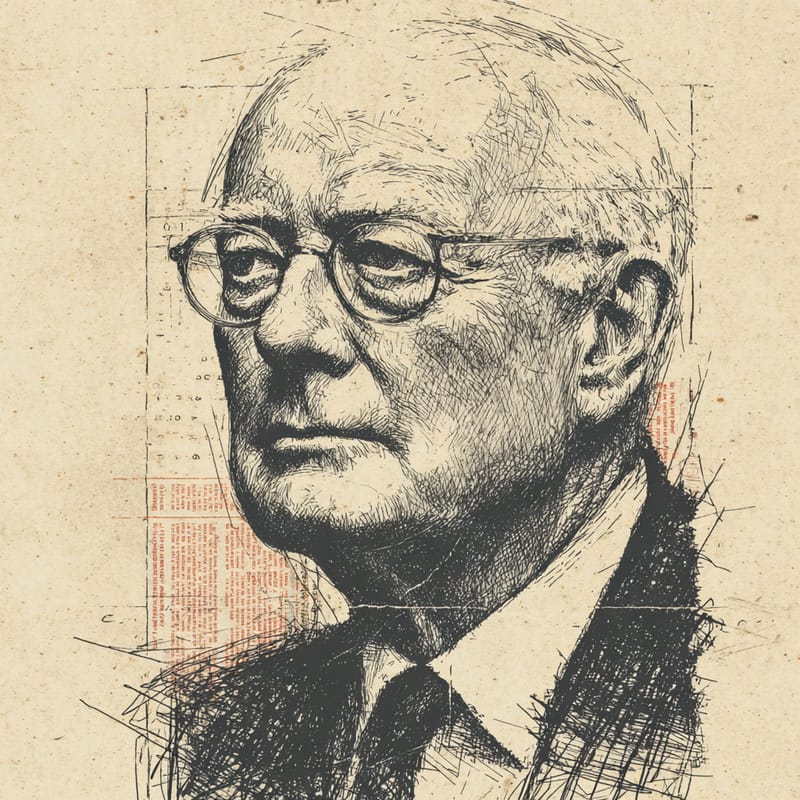
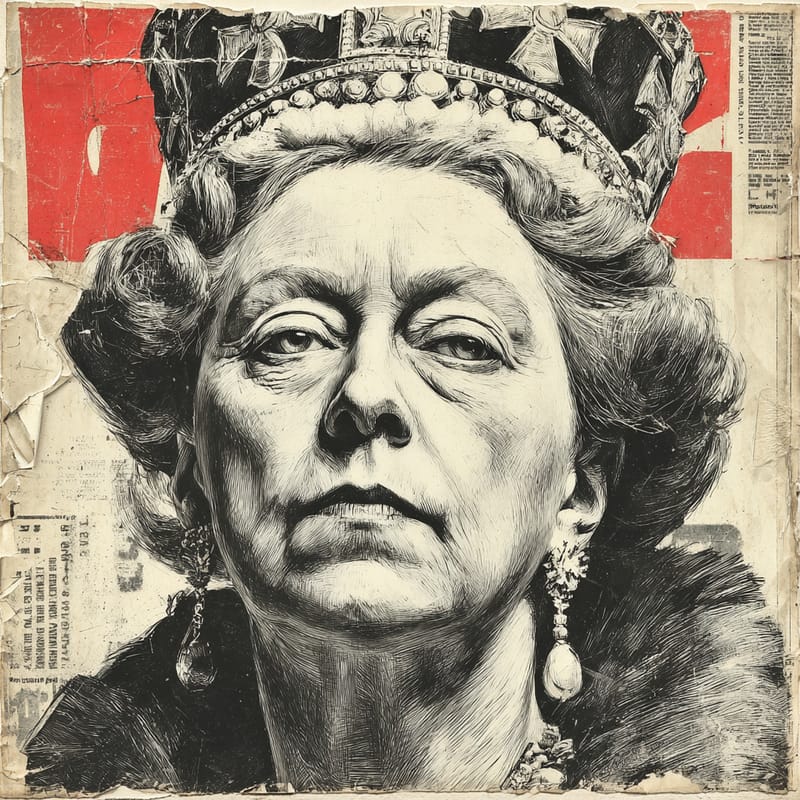
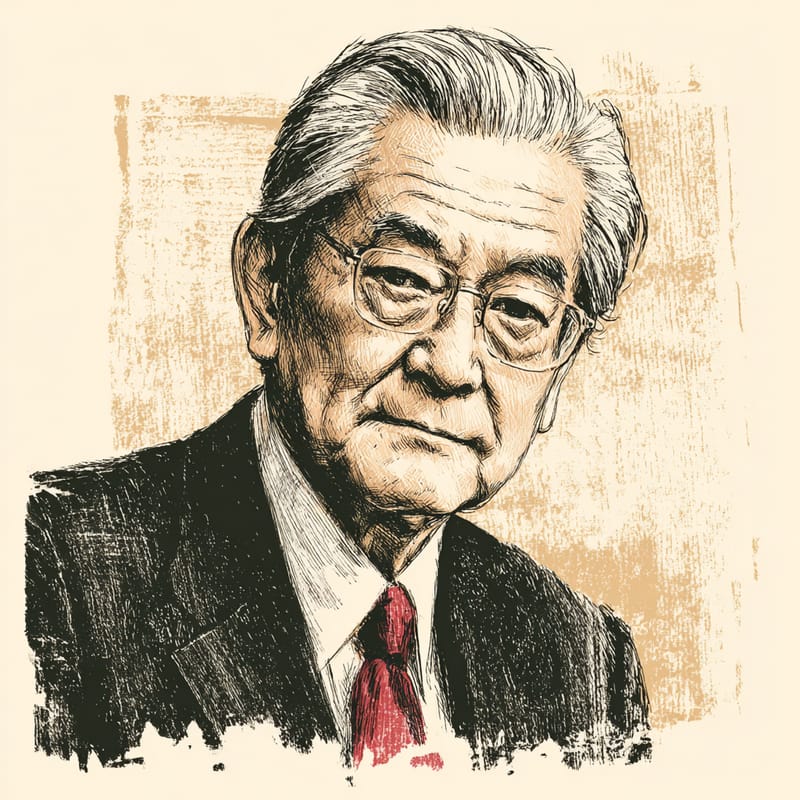
On the 99ideologies three-axis compass, the minds closest to Otto von Bismarck are King Régis (illustrative) (100% alike), Rama VI (Vajiravudh) (98% alike) and Bhumibol Adulyadej (97% alike). The furthest is Emma Goldman (0% alike).