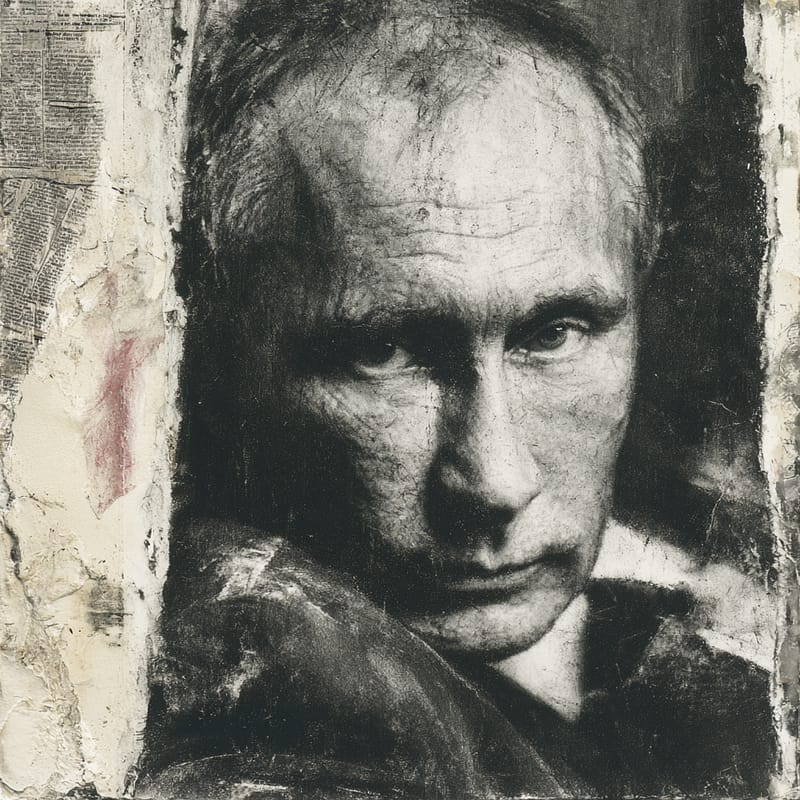
Vladimir Putin
State CapitalistOne of 729 ideologies · enter the State Capitalist hall →- Role
- —
- Era
- —
- Region
- —
- Social band
- Centre (no modifier)
- Placement
- +25 · +75 · 0
§ Where Vladimir Putin stands
3 axesPutin's Russia is a market economy steered by the state. He kept the privatised economy and introduced a 13 per cent flat income tax in 2001, but the Yukos case of 2003–04 handed the core of Russia's largest private oil company to state-owned Rosneft, and a 2008 law restricted foreign ownership in strategic sectors. State giants such as Gazprom and Rostec anchor the system.
Putin has steadily concentrated power. Direct election of regional governors was abolished in 2004, the 2012 foreign-agents law and the 2015 law on undesirable organisations constrained civil society, and 2020 constitutional amendments reset his presidential term count, permitting two further terms that could run to 2036. Independent media were closed or driven abroad after 2022, and opposition leader Alexei Navalny died in an Arctic penal colony in 2024.
Putin has made traditional values a pillar of state ideology. A 2013 law banned so-called propaganda of non-traditional sexual relations to minors and was extended to all ages in 2022, and the 2020 constitutional amendments defined marriage as the union of a man and a woman and referred to faith in God. His government has cultivated a close alliance with the Russian Orthodox Church.
How close are you to Vladimir Putin?
Three statements, one per axis. Answer them and we’ll drop you on the compass next to them.
§ The story
HistoricalVladimir Vladimirovich Putin (born 1952) is a Russian politician who has dominated his country since 1999. A KGB foreign-intelligence officer posted to Dresden in East Germany in the late 1980s, he entered politics in St Petersburg under the reformist mayor Anatoly Sobchak, moved to Moscow in 1996 and rose with unusual speed: director of the FSB security service in 1998, prime minister in August 1999 and acting president when Boris Yeltsin resigned on 31 December 1999. He was president from 2000 to 2008, prime minister from 2008 to 2012 and president again from 2012.
Putin rebuilt central authority after the turmoil of the 1990s: he brought national television under state control, saw the oil magnate Mikhail Khodorkovsky jailed in 2003 and presided over an oil-fuelled rise in living standards. Abroad Russia moved from cautious co-operation with the West to confrontation: war with Georgia in 2008, the annexation of Crimea in 2014 and, in February 2022, the full-scale invasion of Ukraine, the largest war in Europe since 1945. In 2023 the International Criminal Court issued a warrant for his arrest over the alleged deportation of Ukrainian children.
Key works & moments
- 1985–90Serves as a KGB officer in Dresden, East Germany.
- 1999Appointed prime minister in August; becomes acting president when Yeltsin resigns on 31 December.
- 2003Yukos chief Mikhail Khodorkovsky is arrested; the company's main assets later pass to state-owned Rosneft.
- 2007At the Munich Security Conference, denounces a US-dominated unipolar world order.
- 2014Russia annexes Crimea from Ukraine after an internationally unrecognised referendum.
- 2022Orders the full-scale invasion of Ukraine on 24 February.
In their own words
“Above all, we should acknowledge that the collapse of the Soviet Union was a major geopolitical disaster of the century.”
§ Minds closest to Vladimir Putin
All minds →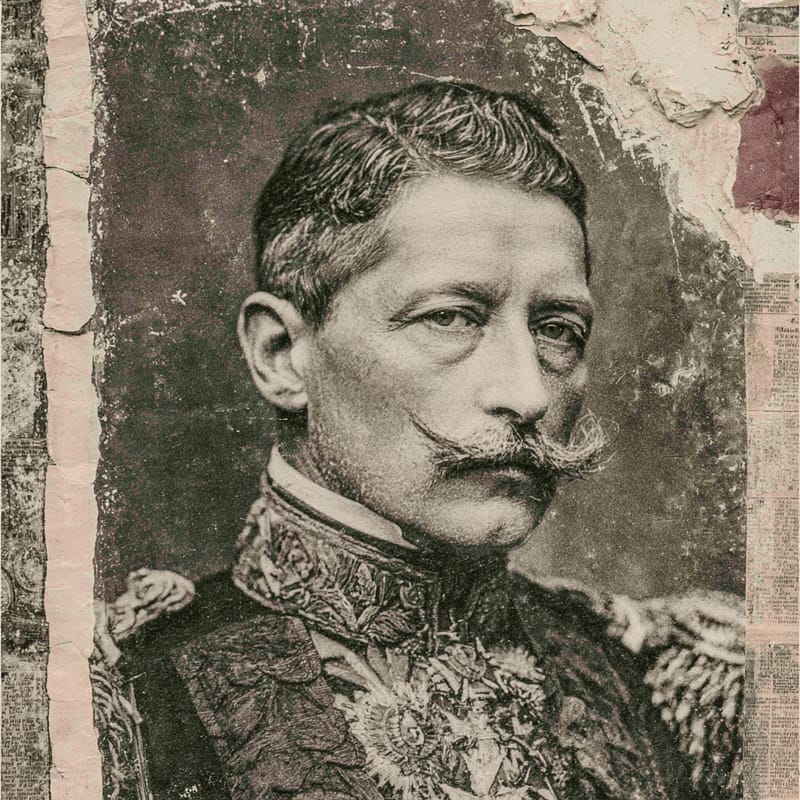


§ Also in the State Capitalist hall
Enter the hall →§ Common questions
4 answersWhat is Vladimir Putin's political ideology?
Putin is a nationalist conservative presiding over a state-dominated market economy: on the 99ideologies three-axis compass, a State Capitalist. Economically he sits moderately on the market side (+25), keeping private enterprise and a flat income tax while the state controls energy and defence champions. On governance he is strongly authoritarian (+75), having centralised power and curbed the opposition and independent media. Socially he champions traditional values and the Orthodox Church, codified in the 2020 constitutional amendments.
Is Vladimir Putin left-wing or right-wing?
Mostly right-wing in the contemporary sense, though not a free-market conservative. His social agenda of traditional values, Orthodox Christianity, restrictions on LGBT expression and assertive nationalism sits firmly on the right, and he has kept capitalism and a flat income tax. Yet heavy state ownership of strategic industries, nostalgia for Soviet power and anti-Western rhetoric attract some admirers on the left. The constant is a strong, centralised state: governance, more than economics, defines his politics.
Is Vladimir Putin a communist?
No. Putin belonged to the Soviet Communist Party until it was banned in 1991, as was usual for KGB officers, but he has governed as a capitalist and a nationalist. He kept the privatised economy, introduced a flat tax and has blamed Lenin for creating the Soviet republics that later broke away, including Ukraine. What he values in the Soviet past is state power and great-power status rather than Marxist economics, which is why he called the Soviet collapse a geopolitical disaster.
Which minds are closest to Vladimir Putin?
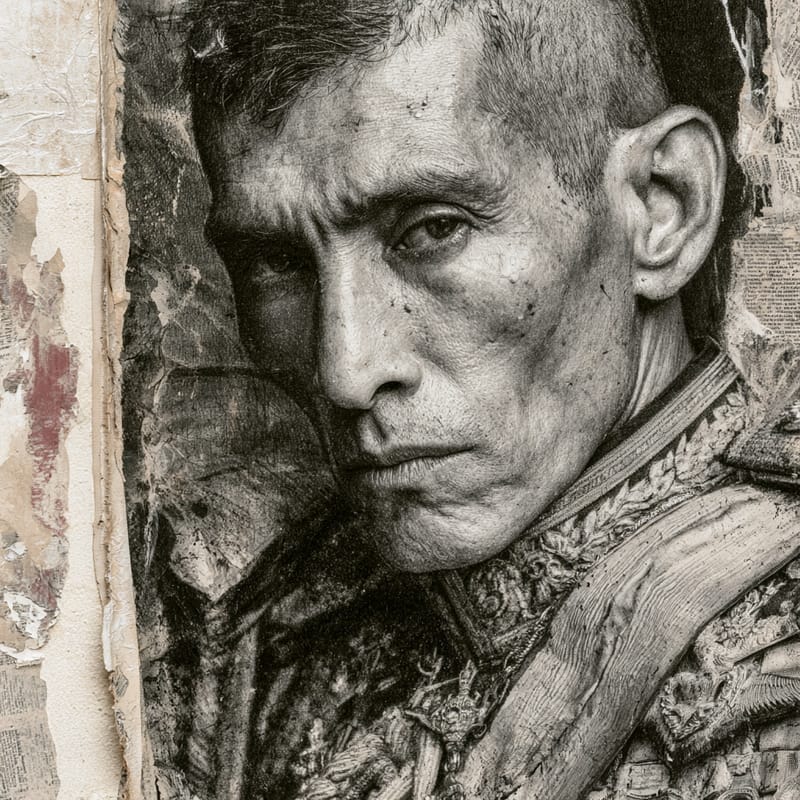
On the 99ideologies three-axis compass, the minds closest to Vladimir Putin are Xi Jinping (100% alike), Kaiser Wilhelm II (90% alike) and King Maha Vajiralongkorn (90% alike). The furthest is Emma Goldman (11% alike).