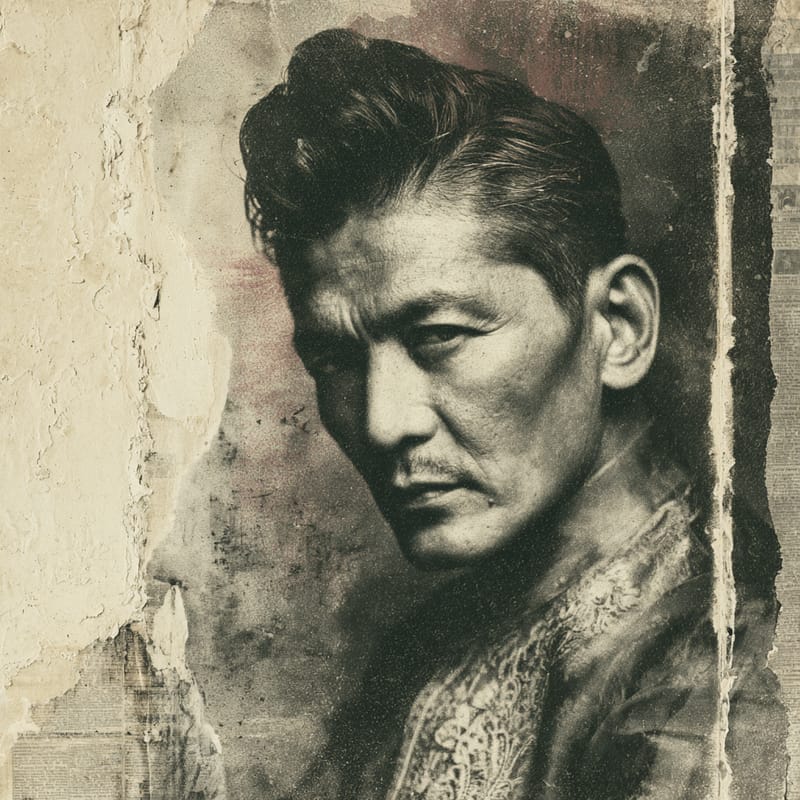
Ferdinand Marcos
Right-Wing NationalistOne of 729 ideologies · enter the Right-Wing Nationalist hall →- Role
- —
- Era
- —
- Region
- —
- Social band
- Centre (no modifier)
- Placement
- +50 · +50 · 0
§ Where Ferdinand Marcos stands
3 axesMarcos maintained a capitalist, pro-business economy open to foreign investment and borrowing, which places him firmly on the right. His 1972 Presidential Decree 27 promised land to rice and corn tenants but left sugar and coconut plantations untouched, while monopolies in those crops were handed to close allies, a system critics call crony capitalism. Foreign debt grew many times over during his rule.
Marcos turned an elected presidency into a dictatorship. Proclamation 1081 of September 1972 placed the country under martial law, Congress was closed, and a new constitution ratified in 1973 through show-of-hands citizens' assemblies let him rule by decree. Martial law was formally lifted in 1981, but he kept his decree powers until the People Power Revolution of February 1986.
Marcos presented martial law as the birth of a 'New Society' (Bagong Lipunan) of discipline, national pride and order, and his regime promoted official nationalism through state-controlled media and the grand cultural projects of his wife, Imelda. It censored newspapers, broadcasters and artists. Yet it also promoted state family planning through the Commission on Population, set up in 1969.
How close are you to Ferdinand Marcos?
Three statements, one per axis. Answer them and we’ll drop you on the compass next to them.
§ The story
HistoricalFerdinand Emmanuel Edralin Marcos (1917–1989) was president of the Philippines from 1965 to 1986, ruling as a dictator under martial law from 1972. A lawyer from Ilocos Norte, he was convicted as a student of the 1935 killing of his father's political rival but won acquittal on appeal in 1940. He claimed to have been a highly decorated wartime guerrilla, claims later shown to be largely fabricated, and rose through the House and Senate before winning the presidency as the Nacionalista Party candidate in 1965.
Marcos became the first Philippine president elected to a second full term in 1969 and in September 1972 declared martial law, citing communist insurgency and unrest; he then ruled by decree, jailed opponents and silenced the press. Human rights groups documented thousands of extrajudicial killings and tens of thousands of cases of torture and arbitrary detention. The assassination of opposition leader Benigno Aquino Jr in 1983 and a fraudulent snap election in 1986 triggered the People Power Revolution, which forced him into exile in Hawaii. His family's plunder of public funds is estimated in the billions of dollars.
Key works & moments
- 1965Elected president of the Philippines, defeating the incumbent Diosdado Macapagal.
- 1969Becomes the first Philippine president re-elected to a second full term.
- 1972Declares martial law with Proclamation 1081, closes Congress and arrests opposition leaders.
- 1973A new constitution, ratified by show of hands in citizens' assemblies, extends his rule.
- 1983Opposition leader Benigno Aquino Jr is shot dead on arrival at Manila airport.
- 1986Ousted by the People Power Revolution after a fraudulent snap election; flees to Hawaii.
§ Minds closest to Ferdinand Marcos
All minds →


§ Also in the Right-Wing Nationalist hall
Enter the hall →§ Common questions
4 answersWhat was Ferdinand Marcos's political ideology?
Ferdinand Marcos was an authoritarian nationalist who ruled through martial law and crony capitalism: on the 99ideologies three-axis compass, a Right-Wing Nationalist. Economically he sat clearly on the right (+50), keeping a pro-business economy open to foreign capital while handing monopolies to allies. On governance he was strongly authoritarian (+50), ruling by decree from 1972 to 1986. On social questions (an axis the site leaves unrated for him) he promoted a disciplined, nationalist 'New Society' enforced through censorship.
Was Ferdinand Marcos left-wing or right-wing?
Right-wing. Marcos justified martial law as a defence against communist insurgency, aligned closely with the United States in the Cold War, and protected private wealth, especially that of his allies. He used nationalist and developmental language and staged a limited land reform, but his regime suppressed strikes, student movements and the left alongside liberal opponents. Historians generally classify it as a right-wing personal dictatorship marked by kleptocracy.
Why did Ferdinand Marcos declare martial law?
Officially, to save the republic from a communist rebellion, Muslim separatism and a wave of bombings and street violence, which he blamed on the New People's Army and its allies. Most historians, however, see the decisive motive as power: the 1935 constitution barred him from seeking a third term in 1973, and martial law let him close Congress, jail rivals such as Benigno Aquino Jr and secure a new constitution that kept him in office until his overthrow in 1986.
Which minds are closest to Ferdinand Marcos?
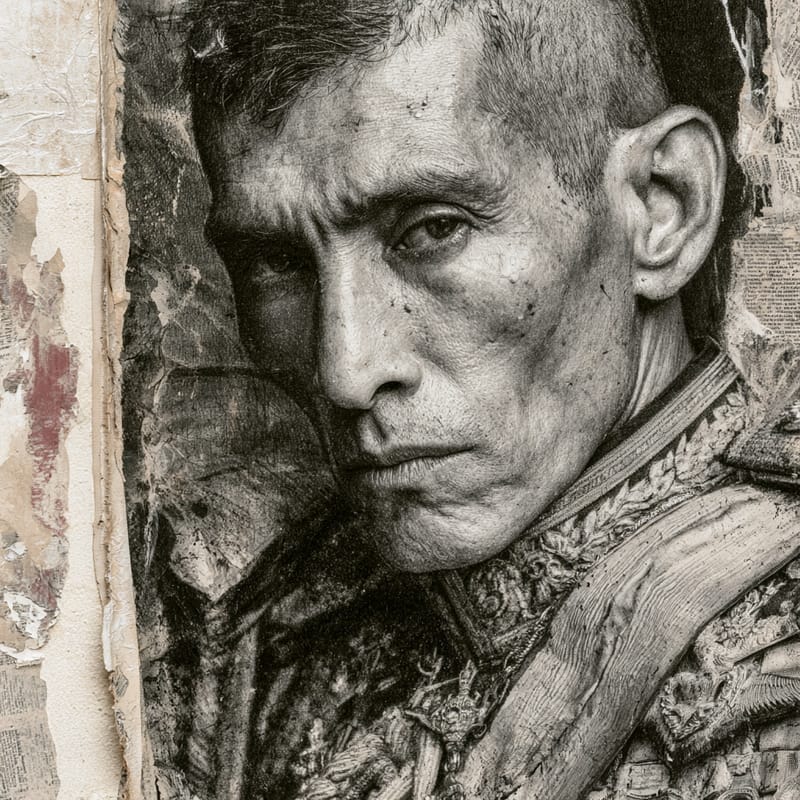
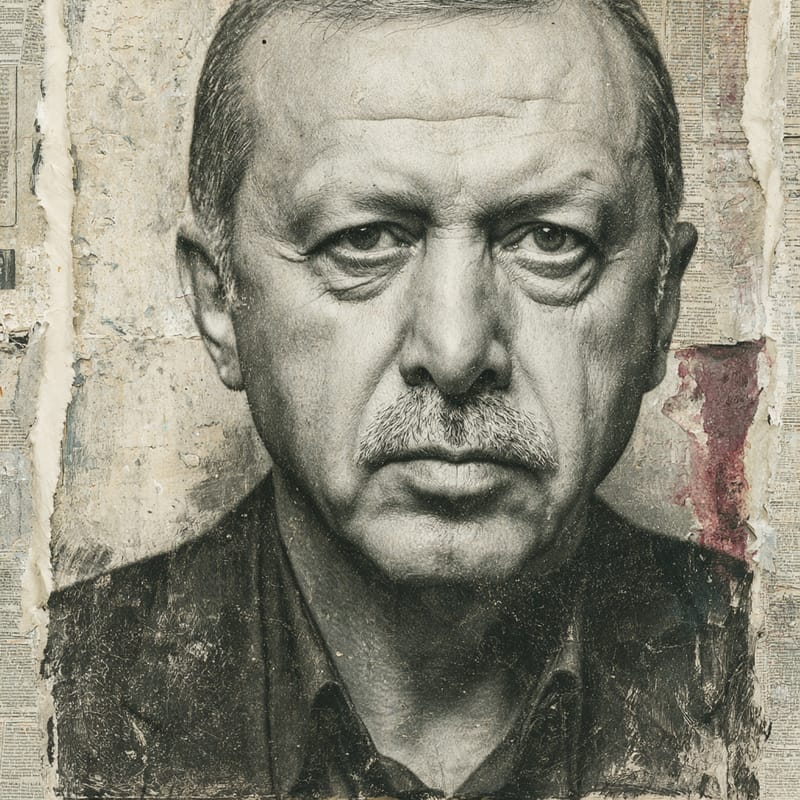
On the 99ideologies three-axis compass, the minds closest to Ferdinand Marcos are Daniel François Malan (90% alike), Ian Smith (90% alike) and Kaiser Wilhelm II (90% alike). The furthest is Emma Goldman (12% alike).