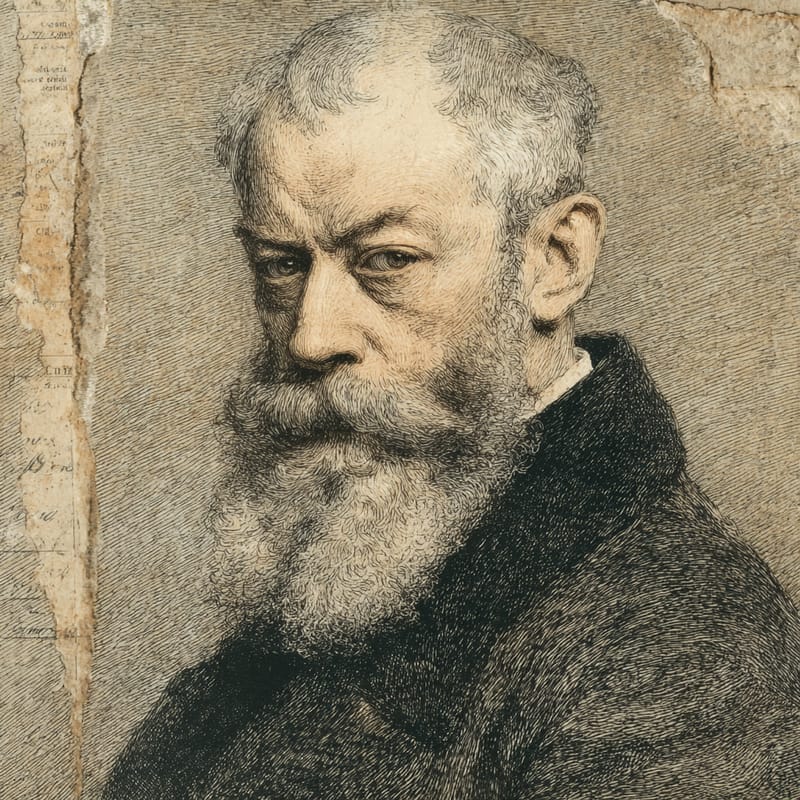
Walter Bagehot
The dignified and the efficient
Theorised the modern constitutional crown.
Traditional Constitutional MonarchistOne of 729 ideologies · enter the Constitutional Monarchist hall →- Role
- Constitutional theorist
- Era
- 1826–1877
- Region
- United Kingdom
- Social band
- Traditional
- Placement
- +52 · +64 · −45
§ Where Walter Bagehot stands
3 axesBagehot was a Victorian free-trade liberal. As editor of The Economist from 1861 he championed free trade, sound money and limited government, and Lombard Street (1873) analysed the London money market and argued that in a crisis the Bank of England should act as lender of last resort, lending freely at a high rate against good security. He accepted the market order as the engine of progress.
Bagehot valued strong, stable government resting on popular deference. The English Constitution (1867) praised Britain as a deferential nation in which the masses revered the visible monarchy while an educated elite governed through the cabinet, and his 1852 letters from Paris defended Louis Napoleon's coup of December 1851 as a restoration of order. He was wary of extending the vote and feared rule by an uneducated majority.
Bagehot's social outlook was conservative within Victorian liberalism. He believed that habit, custom and reverence held societies together, a theme of Physics and Politics (1872), which applied ideas of natural selection to nations, and he defended the monarchy precisely because it appealed to sentiment rather than reason. Mystery, he argued, was essential to the crown's hold on ordinary people.
How close are you to Walter Bagehot?
Three statements, one per axis. Answer them and we’ll drop you on the compass next to them.
§ The story
HistoricalWalter Bagehot (1826–1877) was an English banker, journalist and political theorist. Born in Langport, Somerset, the son of a banker, he studied at University College London, qualified for the bar without practising and then joined the family bank. In 1858 he married Eliza Wilson, daughter of James Wilson, the founder of The Economist, and after Wilson's death in 1860 he took charge of the paper, editing it from 1861 until his own death.
Bagehot's The English Constitution (1867) remains the classic account of how Victorian Britain was actually governed: real power lay with the cabinet, drawn from the Commons majority, while the monarchy and the Lords supplied the dignified theatre that commanded popular loyalty. His Lombard Street (1873) set out the doctrine that a central bank should lend freely in a panic, which central bankers still invoke. Politically he was a cautious Liberal who feared mass democracy, defended Louis Napoleon's coup of 1851 and never succeeded in entering Parliament.
Notable for
- 01'The English Constitution'
- 02The dignified/efficient distinction
- 03Shaped The Economist
Key works & moments
- 1852Publishes letters from Paris defending Louis Napoleon's coup of December 1851.
- 1858Marries Eliza Wilson, daughter of The Economist's founder James Wilson.
- 1861Becomes editor of The Economist, a post he holds until his death.
- 1867Publishes The English Constitution, separating the dignified and efficient parts of government.
- 1872Publishes Physics and Politics, applying evolutionary ideas to political societies.
- 1873Lombard Street sets out the Bank of England's role as lender of last resort.
In their own words
“To state the matter shortly, the sovereign has, under a constitutional monarchy such as ours, three rights—the right to be consulted, the right to encourage, the right to warn.”
“We must not let in daylight upon magic.”
§ Minds closest to Walter Bagehot
All minds →

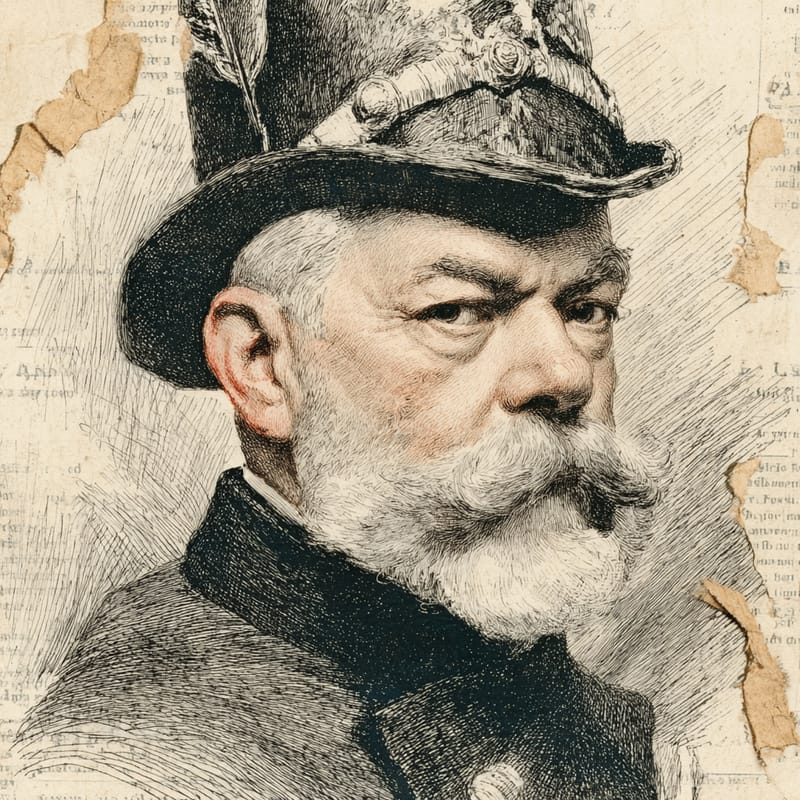
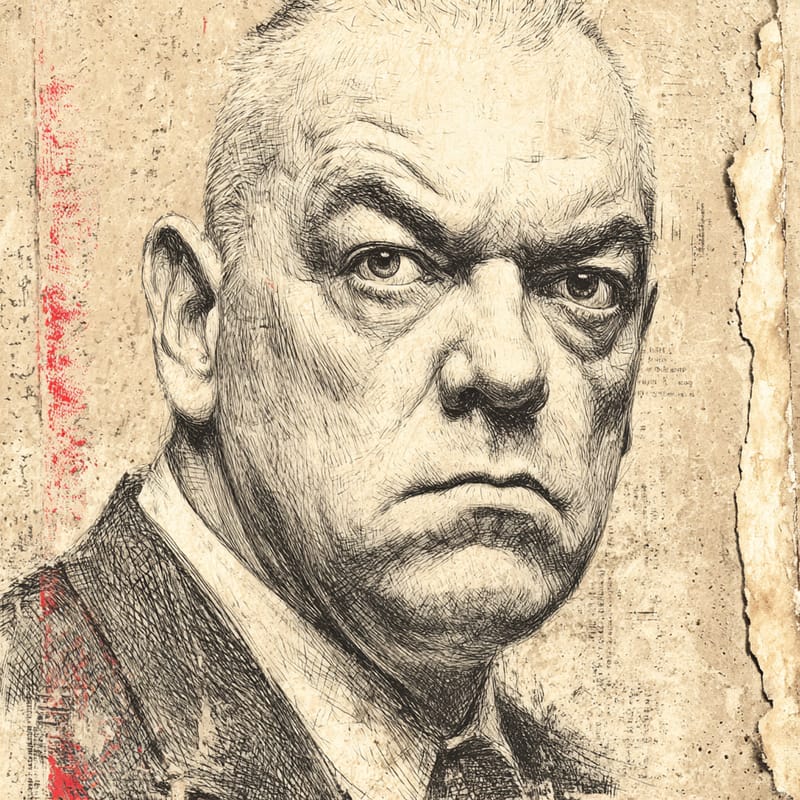

§ Also in the Constitutional Monarchist hall
Enter the hall →§ Common questions
4 answersWhat was Walter Bagehot's political ideology?
Bagehot was a Victorian liberal with a conservative temperament and the leading theorist of Britain's constitutional monarchy: on the 99ideologies three-axis compass, a Traditional Constitutional Monarchist. Economically he sat on the market side (+52), a free-trader and editor of The Economist. On governance he leaned toward order and authority (+64), prizing deference to a dignified crown and wary of mass democracy, and socially he was traditional (−45), believing that custom and reverence hold societies together.
Was Walter Bagehot left-wing or right-wing?
By the standards of his day he was a moderate Liberal, but most of his positions read as centre-right now. He backed free trade, sound money and limited government and stood for Parliament as a Liberal, yet he distrusted the working-class vote, defended Louis Napoleon's coup and valued the monarchy as a way of managing popular sentiment. His name lives on in The Economist's column on British politics, which is called Bagehot.
What did Walter Bagehot mean by the dignified and efficient parts of the constitution?
Bagehot divided the British constitution into two parts. The dignified parts, chiefly the monarchy and the House of Lords, excite and preserve the reverence of the population and so secure its obedience. The efficient parts, above all the cabinet, which he described as a committee of the legislature chosen to be the executive, actually govern. The genius of the system, he argued in The English Constitution (1867), was that the visible crown absorbed popular loyalty while real power passed quietly to ministers answerable to the Commons.
Which minds are closest to Walter Bagehot?
On the 99ideologies three-axis compass, the minds closest to Walter Bagehot are Juan Carlos I (96% alike), Baudouin of Belgium (96% alike) and Emperor Akihito (96% alike). The furthest is Emma Goldman (0% alike).