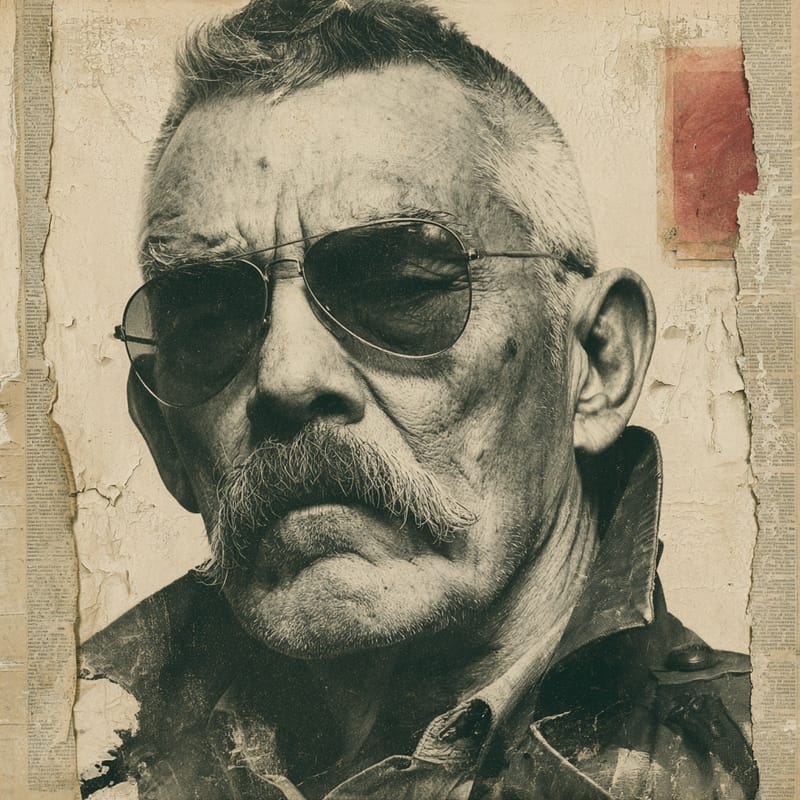
Daniel Ortega
SocialistOne of 729 ideologies · enter the Socialist hall →- Role
- —
- Era
- —
- Region
- —
- Social band
- Centre (no modifier)
- Placement
- −75 · +25 · 0
§ Where Daniel Ortega stands
3 axesOrtega's Sandinistas confiscated the Somoza family's vast holdings in 1979, nationalised banks, mining and foreign trade and carried out an agrarian reform under a 1981 law, while leaving much of the economy in private hands. Since 2007 he has paired Venezuelan oil aid through the ALBA bloc and programmes such as Zero Hunger with a pragmatic pact with big business and an IMF programme.
In the 1980s the Sandinistas ruled as a revolutionary vanguard under emergency laws and press censorship, yet held the 1984 election and handed over power after losing in 1990. Since 2007 Ortega has concentrated power: a 2009 court ruling and a 2014 constitutional amendment cleared indefinite re-election, and after 2018 his government detained rival candidates and closed thousands of NGOs.
Ortega's social politics have shifted with his alliances. The 1980 National Literacy Crusade and liberation-theology priests in his cabinet marked a radical revolution, but in 2006 his Sandinistas voted for a total abortion ban as he courted the Catholic hierarchy, and his government decriminalised homosexuality in 2008. After 2018 he turned on the Church itself, sentencing Bishop Rolando Álvarez to 26 years in 2023.
How close are you to Daniel Ortega?
Three statements, one per axis. Answer them and we’ll drop you on the compass next to them.
§ The story
HistoricalJosé Daniel Ortega Saavedra (b. 1945) is a Nicaraguan revolutionary and politician and a leader of the Sandinista National Liberation Front since the 1970s. He joined the guerrilla movement as a young man, spent seven years in prison from 1967 for taking part in a bank robbery to fund it, and was freed in a 1974 hostage exchange. After the Sandinistas overthrew the Somoza dictatorship in July 1979, he sat on and then coordinated the governing junta, was elected president in 1984 and served from 1985 to 1990, then returned to the presidency in 2007.
Ortega's first government nationalised banks and Somoza-family property, ran a celebrated literacy crusade and fought the US-backed Contras, while the Reagan administration imposed a trade embargo in 1985. He accepted defeat by Violeta Chamorro in 1990. Since returning to power in 2007 he has removed presidential term limits and governed with his wife, Rosario Murillo, as vice president from 2017 and, under a 2025 constitutional reform, as co-president. After the 2018 protests, in which more than 300 people were killed, his government jailed opponents and in 2023 stripped hundreds of critics of their citizenship.
Key works & moments
- 1979The Sandinista revolution topples Anastasio Somoza; Ortega joins the governing junta, which he later coordinates.
- 1984Elected president as the main opposition coalition boycotts the vote.
- 1990Loses the election to Violeta Chamorro and hands over power peacefully.
- 2007Returns to the presidency after winning the 2006 election with about 38 per cent.
- 2018Security forces and armed government supporters crush nationwide protests; more than 300 people are killed.
- 2023His government strips 222 jailed opponents of citizenship and expels them to the United States.
§ Minds closest to Daniel Ortega
All minds →



§ Also in the Socialist hall
Enter the hall →§ Common questions
4 answersWhat is Daniel Ortega's political ideology?
Daniel Ortega is a Sandinista, heir to a revolutionary socialist tradition named after Augusto César Sandino: on the 99ideologies three-axis compass, a Socialist. Economically he sits well to the left (−75), from the 1980s confiscations and land reform to state-led social programmes, though since 2007 he has also courted big business. On governance he leans authoritarian (+25), heading a party-state that has removed term limits and repressed opponents. Socially his record has swung from revolutionary radicalism to an alliance with Catholic conservatism and then to open conflict with the Church.
Is Daniel Ortega left-wing or right-wing?
Left-wing by origin and self-description. Ortega led a Marxist-influenced revolution, nationalised banks and land in the 1980s, fought US-backed rebels and allied with Cuba and Venezuela. Since 2007, however, his government has worked closely with business and, for a time, the Catholic hierarchy, and many former Sandinista comrades have accused him of building a family dictatorship that abandoned the revolution's ideals. Supporters reply that his social programmes and anti-imperialism keep him on the left.
Is Daniel Ortega a dictator?
Most international observers describe his rule as authoritarian, and many call it a dictatorship. Since 2007 Ortega has removed presidential term limits, installed his wife as vice president, crushed the 2018 protests at a cost of more than 300 lives, detained seven would-be presidential challengers before the 2021 election and stripped hundreds of opponents of citizenship. In 2023 a UN group of experts said that violations in Nicaragua amounted to crimes against humanity. His government rejects the label and calls the 2018 protests a failed coup.
Which minds are closest to Daniel Ortega?
On the 99ideologies three-axis compass, the minds closest to Daniel Ortega are Julius Nyerere (91% alike), The Liberator (archetype) (91% alike) and Ne Win (90% alike). The furthest is Hans-Hermann Hoppe (14% alike).