
Julius Nyerere
Ujamaa
African socialism, by the village.
Left-Wing NationalistOne of 729 ideologies · enter the Left-Wing Nationalist hall →- Role
- President
- Era
- 1922–1999
- Region
- Tanzania
- Social band
- Centre (no modifier)
- Placement
- −78 · +44 · +10
§ Where Julius Nyerere stands
3 axesNyerere's 1967 Arusha Declaration committed Tanzania to socialism and self-reliance, nationalising banks, insurance, major firms and plantations and barring party leaders from holding shares or renting out houses. He then pushed peasants into collective Ujamaa villages, culminating in the villagisation drive of 1973–76. Small private farming and trade survived, and falling output left a crisis that his successor met with IMF-backed reforms from 1986.
Nyerere made Tanzania a one-party state in 1965, arguing that a single national movement could still offer voters a choice between candidates, and the 1962 Preventive Detention Act let his government jail opponents without trial. He was nonetheless personally modest and uncorrupt, stepped down voluntarily in 1985 and in the early 1990s supported the return of multiparty politics.
Socially Nyerere blended communitarian tradition with modernising goals. He rooted Ujamaa in the extended family and the African village, yet his 1967 essay Education for Self-Reliance and the adult literacy campaigns of the 1970s aimed to transform rural life, and he promoted Swahili as a unifying national language across more than a hundred ethnic groups.
How close are you to Julius Nyerere?
Three statements, one per axis. Answer them and we’ll drop you on the compass next to them.
§ The story
HistoricalJulius Kambarage Nyerere (1922–1999), the son of a Zanaki chief in north-western Tanganyika, trained as a teacher, which earned him the lifelong title Mwalimu, and studied at Makerere and the University of Edinburgh. In 1954 he founded the Tanganyika African National Union, led the country to independence from Britain in 1961 and in 1964 united it with Zanzibar to form Tanzania, which he governed as president until he stepped down in 1985.
Nyerere was one of Africa's most respected statesmen and its most influential theorist of African socialism. His Arusha Declaration and Ujamaa villages sought a self-reliant, egalitarian nation and built a rare sense of national unity and high literacy, but the forced villagisation of the 1970s disrupted farming, the economy stagnated, and his one-party state detained critics without trial. He sheltered southern Africa's liberation movements, sent troops to overthrow Idi Amin in 1979 and, by retiring voluntarily, set an example few of his contemporaries followed.
Notable for
- 01The Ujamaa programme
- 02Arusha Declaration
- 03Pan-African leadership
Key works & moments
- 1954Founds the Tanganyika African National Union to campaign for independence from British rule.
- 1961Leads Tanganyika to independence as prime minister, becoming president in 1962.
- 1964Unites Tanganyika with Zanzibar to form the United Republic of Tanzania.
- 1967Issues the Arusha Declaration, launching Ujamaa socialism and nationalising banks and major industries.
- 1979Tanzanian forces topple Uganda's Idi Amin after his invasion of Tanzanian territory.
- 1985Steps down as president, one of Africa's first independence leaders to retire voluntarily.
In their own words
“Socialism—like democracy—is an attitude of mind.”
§ Minds closest to Julius Nyerere
All minds →




§ Also in the Left-Wing Nationalist hall
Enter the hall →§ Common questions
4 answersWhat was Julius Nyerere's political ideology?
Julius Nyerere was an African socialist whose doctrine was Ujamaa: on the 99ideologies three-axis compass, a Left-Wing Nationalist. Economically he sat far to the left (−78), nationalising the commanding heights and collectivising village agriculture; on governance he leaned authoritarian (+44), building a one-party state while remaining personally restrained; and socially he sat just on the progressive side of centre (+10), blending village communitarianism with modernising drives for literacy and national unity.
Was Julius Nyerere left-wing or right-wing?
Left-wing. Nyerere nationalised banks and industry, created collective villages, imposed a leadership code against private enrichment and aligned Tanzania with liberation movements across southern Africa. But his socialism was explicitly African rather than Marxist: he rejected class struggle, grounded his ideas in the traditional extended family and kept Tanzania non-aligned in the Cold War. His one-party state places him on the authoritarian side, though he was far less repressive than many contemporaries.
What was Ujamaa?
Ujamaa, Swahili for familyhood, was Nyerere's version of African socialism. He set it out in a 1962 essay and made it state policy with the 1967 Arusha Declaration, arguing that pre-colonial village life had been naturally cooperative and that Tanzania could build socialism on it without class war. In practice it meant nationalised industry, a leadership code against private enrichment and, from 1973 to 1976, the often compulsory resettlement of millions of peasants into planned villages. It widened schooling and national unity, but agricultural output fell.
Which minds are closest to Julius Nyerere?
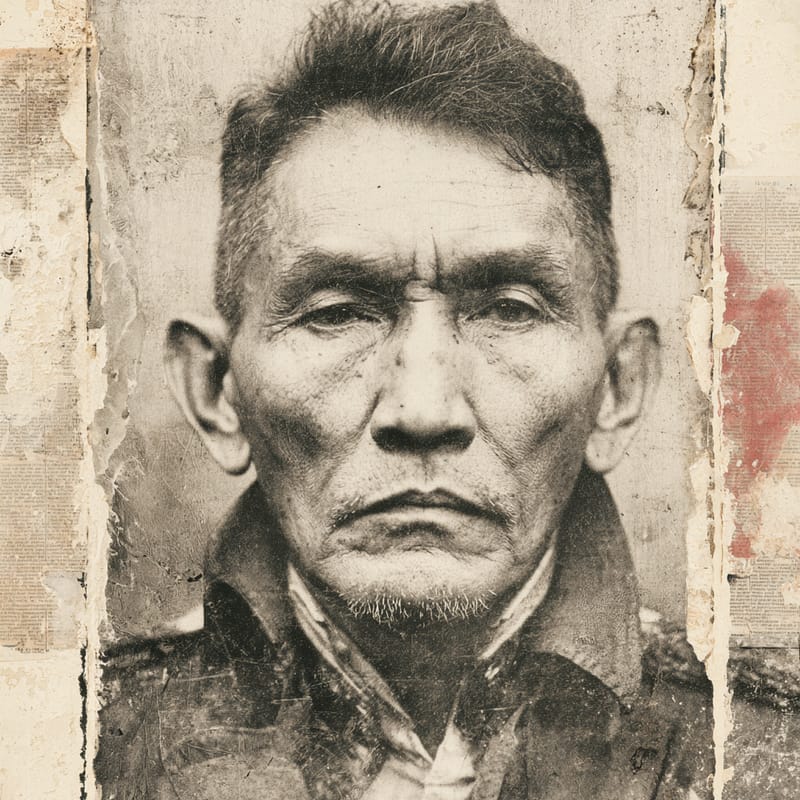
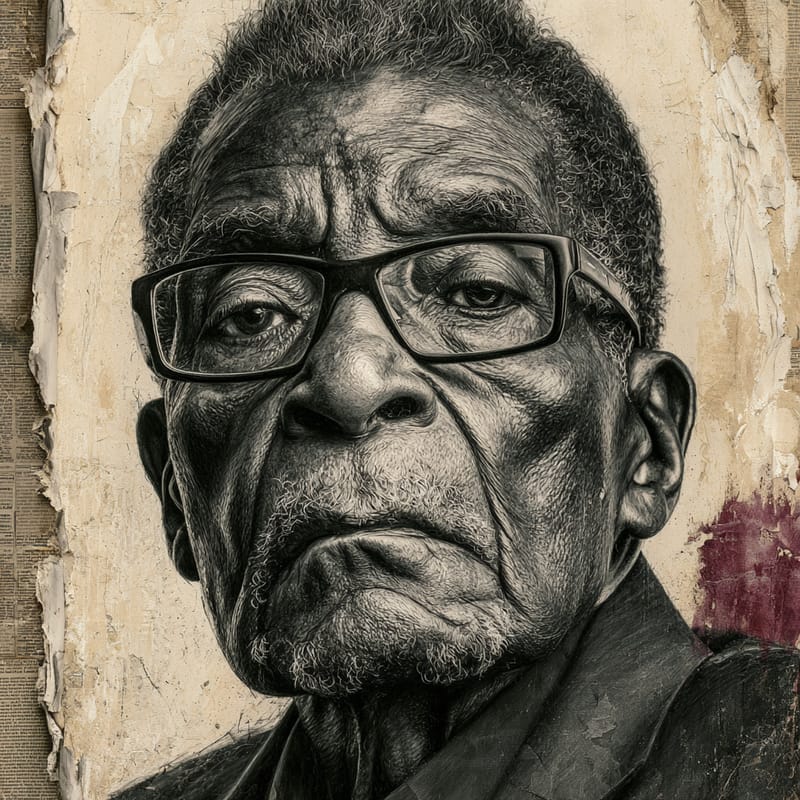
On the 99ideologies three-axis compass, the minds closest to Julius Nyerere are The Liberator (archetype) (96% alike), Ne Win (95% alike) and Robert Mugabe (95% alike). The furthest is Hans-Hermann Hoppe (8% alike).