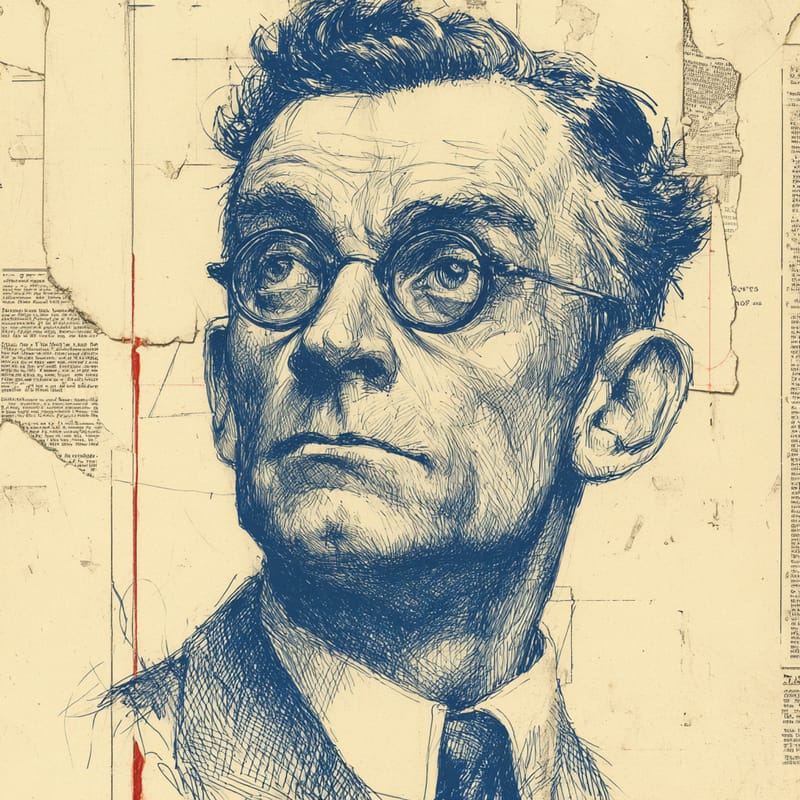
Harold Laski
The theorist of the Labour left
Pluralism, planning, and democracy.
Reformist SocialistOne of 729 ideologies · enter the Socialist hall →- Role
- Theorist
- Era
- 1893–1950
- Region
- United Kingdom
- Social band
- Reformist
- Placement
- −76 · +28 · +50
§ Where Harold Laski stands
3 axesFrom the early 1930s Laski argued that capitalism and democracy had become incompatible in crisis, so a socialist majority must transfer key industries and finance to public ownership and plan the economy. Democracy in Crisis (1933) and The State in Theory and Practice (1935) presented the state as an instrument of the owning class that Labour would have to transform.
Laski wrestled with how far democracy could carry socialism. Early works such as Authority in the Modern State (1919) attacked unlimited state sovereignty, but he later warned that property owners might resist an elected socialist government unconstitutionally, and in Reflections on the Revolution of Our Time (1943) he called for a planned revolution by consent, a strong state reshaping society through parliamentary means.
Laski was a progressive cosmopolitan who defended civil liberties and free expression, notably in Liberty in the Modern State (1930), and championed Indian independence. His long correspondence with the American judge Oliver Wendell Holmes Jr., published in 1953, shows a liberal humanism that sat alongside his socialism, as did his devotion to students from across the empire.
How close are you to Harold Laski?
Three statements, one per axis. Answer them and we’ll drop you on the compass next to them.
§ The story
HistoricalHarold Joseph Laski (1893–1950) was a British political theorist, teacher and Labour Party figure. Born into a prosperous Jewish family in Manchester and educated at New College, Oxford, he taught at McGill and Harvard, where his public support for the 1919 Boston police strike caused an outcry, before joining the London School of Economics in 1920. He was its professor of political science from 1926 until his death, and he sat on Labour's National Executive Committee from 1937 to 1949.
Laski moved from early pluralist theories of the state to a Marxist-influenced socialism after the crises of the early 1930s, and through books, journalism, the Left Book Club and his teaching he shaped a generation of the democratic left, including many future leaders from India and the wider colonial world. As Labour chairman in 1945 he became a target for Winston Churchill, who suggested he would control a Labour government, and in 1946 he lost a libel action against a newspaper that reported him advocating revolution by violence.
Notable for
- 01Chaired the Labour Party
- 02Prolific political theory
- 03Taught a generation at the LSE
Key works & moments
- 1919Backs Boston's striking police while teaching at Harvard, provoking calls for his dismissal.
- 1925Publishes A Grammar of Politics, his major systematic treatise.
- 1935The State in Theory and Practice marks his turn to a Marxist analysis of power.
- 1936Becomes a selector for Victor Gollancz's new Left Book Club.
- 1945Chairs the Labour Party during its landslide; Churchill casts him as Labour's hidden master.
- 1946Loses a libel case over a report that he advocated revolution by violence.
§ Minds closest to Harold Laski
All minds →

§ Also in the Socialist hall
Enter the hall →§ Common questions
4 answersWhat was Harold Laski's political ideology?
Harold Laski was a democratic socialist theorist who moved from pluralism toward Marxism: on the 99ideologies three-axis compass, a Reformist Socialist. Economically he sat well to the left (−76), calling for public ownership of key industries and economic planning. On governance he leaned mildly toward the state (+28), wanting a powerful planning state but insisting it be won and run by parliamentary consent. Socially he was clearly progressive (+50), a defender of civil liberties and colonial independence.
Was Harold Laski left-wing or right-wing?
Left-wing. Laski was one of the most influential socialist intellectuals in the English-speaking world, chaired the Labour Party in 1945–46 and sat on the party's left. He absorbed Marxist ideas about class and the state in the 1930s but remained a Labour man committed to parliamentary democracy rather than a communist. His prominence made him a favourite target of the right, from Churchill's 1945 election campaign to Friedrich Hayek's critique of socialist planning in The Road to Serfdom.
Was Harold Laski a Marxist?
Partly, from the early 1930s. After the collapse of the second Labour government in 1931, Laski adopted a Marxist view of the state as an instrument of the owning class, set out in The State in Theory and Practice (1935), and he was sympathetic to the Soviet experiment. But he never joined the Communist Party, remained active in Labour and argued for revolution by consent through parliament. His Marxism was analytical rather than Leninist, and he continued to prize civil liberties.
Which minds are closest to Harold Laski?
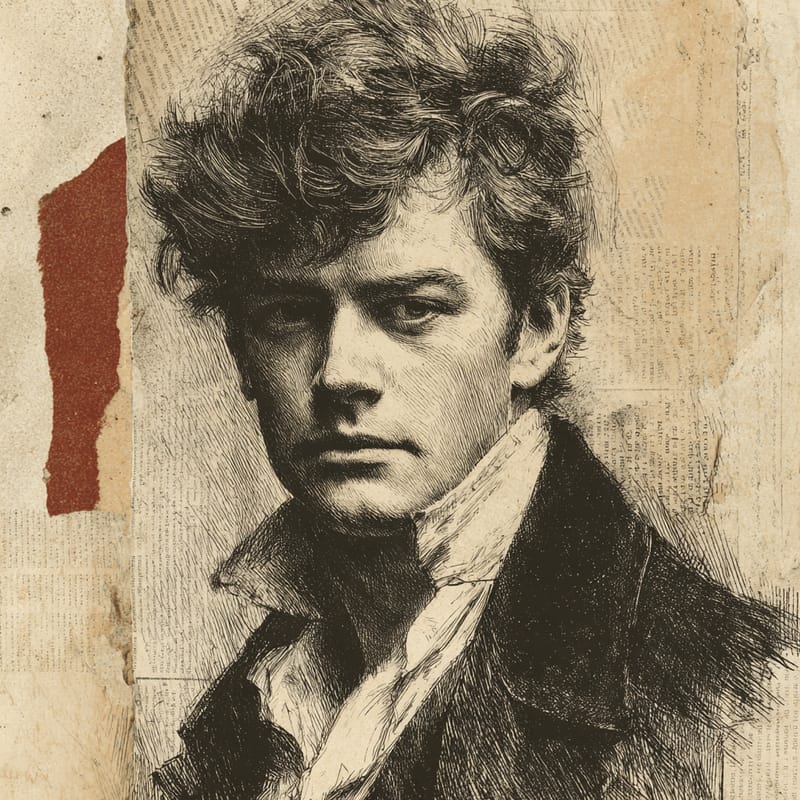
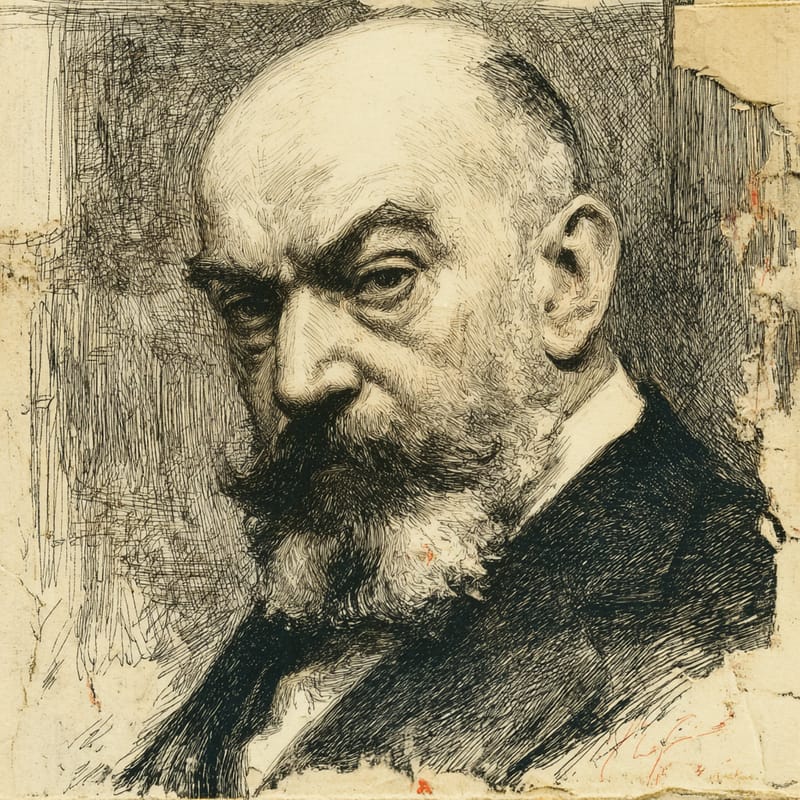
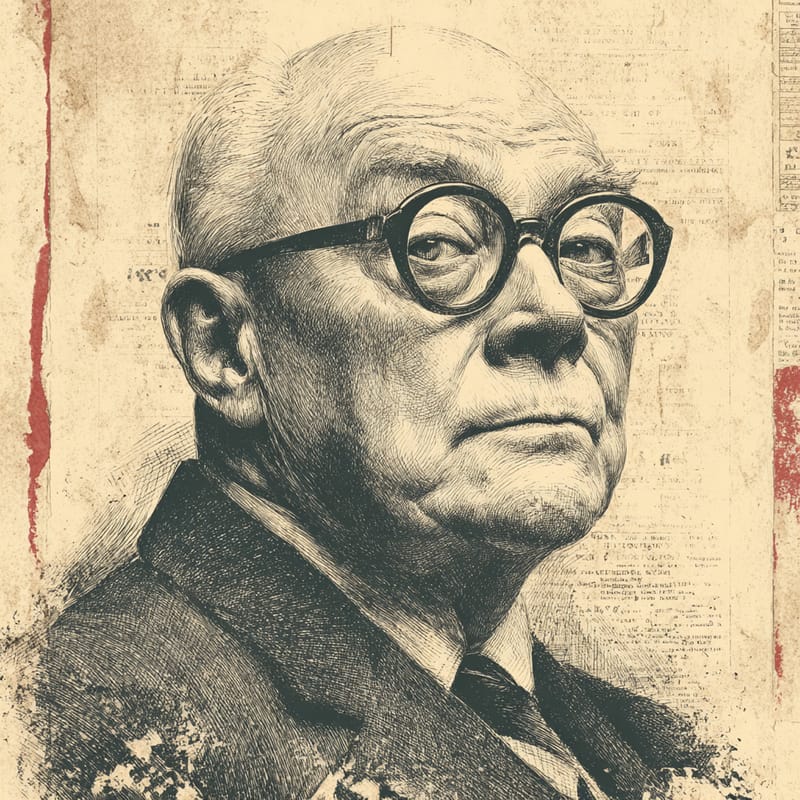
On the 99ideologies three-axis compass, the minds closest to Harold Laski are August Bebel (99% alike), Aneurin Bevan (97% alike) and Wolfie Smith (97% alike). The furthest is Hans-Hermann Hoppe (6% alike).