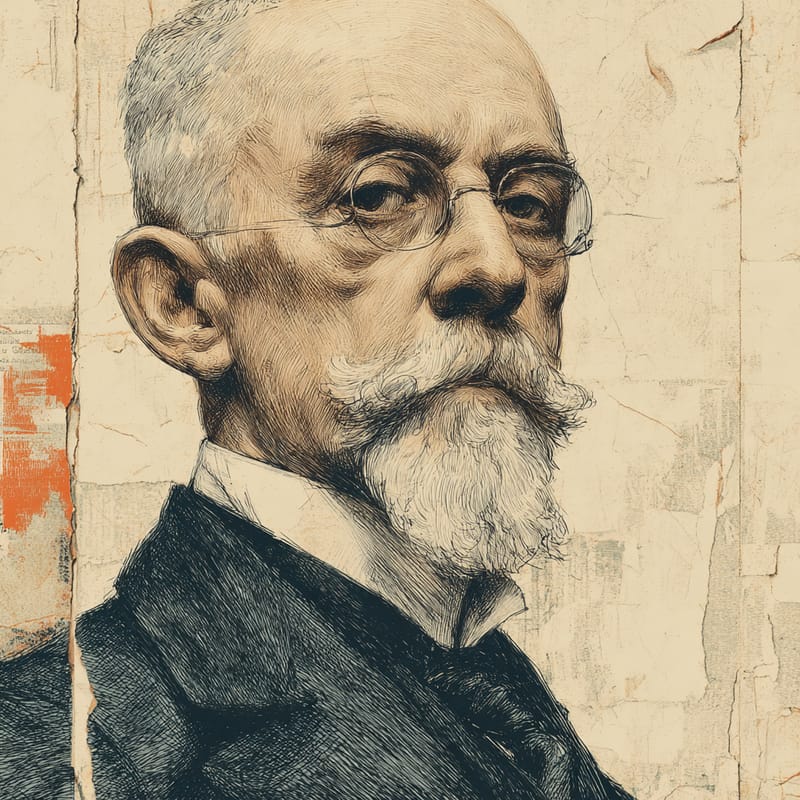
Tomáš Masaryk
The philosopher-founder
A liberal republic, willed into being.
Heterodox State LiberalOne of 729 ideologies · enter the State Liberal hall →- Role
- President
- Era
- 1850–1937
- Region
- Czechoslovakia
- Social band
- Heterodox
- Placement
- −4 · +40 · +20
§ Where Tomáš Masaryk stands
3 axesMasaryk accepted private property and the market but wanted social reform rather than class war; his 1898 book The Social Question rejected Marxist materialism while taking workers' grievances seriously. His new republic introduced the eight-hour working day in 1918 and a 1919 land reform that broke up large aristocratic estates, producing a mixed economy just left of centre.
Masaryk was a convinced democrat who nonetheless built and used a powerful presidency. His informal network, known as the Castle, shaped cabinets, parties and newspapers well beyond the formal powers of the 1920 constitution, and in 1923 he signed the Law for the Protection of the Republic, passed after the assassination of finance minister Alois Rašín, which curbed speech deemed subversive.
A humanist shaped by Protestant faith, Masaryk was progressive for his time. He championed equality for women alongside his feminist wife, condemned the antisemitic blood libel during the Hilsner affair, and his republic's 1920 constitution gave women the vote. His humanism remained religious rather than secular or radical, which keeps him only moderately on the progressive side.
How close are you to Tomáš Masaryk?
Three statements, one per axis. Answer them and we’ll drop you on the compass next to them.
§ The story
HistoricalTomáš Garrigue Masaryk (1850–1937) was the founder and first president of Czechoslovakia, holding the office from 1918 to 1935. The son of a coachman on an imperial estate in Moravia, he studied philosophy in Vienna, married the American Charlotte Garrigue and adopted her surname, and from 1882 taught at the Czech university in Prague. He sat in the Austrian parliament in 1891–1893 and again from 1907, and in December 1914 went into exile to campaign for an independent Czech and Slovak state.
Masaryk built his authority on moral courage as much as on office. He backed the exposure of forged medieval manuscripts prized by Czech nationalists, and in 1899 defended Leopold Hilsner, a young Jewish man accused of ritual murder, against an antisemitic campaign. In exile he won Allied backing through lobbying in London and Washington and through the Czechoslovak Legions. As president he kept Czechoslovakia a parliamentary democracy while its neighbours turned to dictatorship, though critics faulted the informal power of his 'Castle' circle and the state's treatment of its German and Hungarian minorities.
Notable for
- 01Founded Czechoslovakia
- 02Philosopher-president
- 03Humanist democracy
Key works & moments
- 1886His journal Athenaeum publishes proof that celebrated 'medieval' Czech manuscripts are modern forgeries.
- 1898Publishes The Social Question, a philosophical critique of Marxism.
- 1899Defends Leopold Hilsner, a Jewish man convicted in a ritual-murder trial, and demands a retrial.
- 1914Goes into exile to campaign abroad for Czech and Slovak independence.
- 1918Issues the Washington Declaration in October and is elected Czechoslovakia's first president in November.
- 1935Resigns the presidency at 85; his protégé Edvard Beneš succeeds him.
§ Minds closest to Tomáš Masaryk
All minds →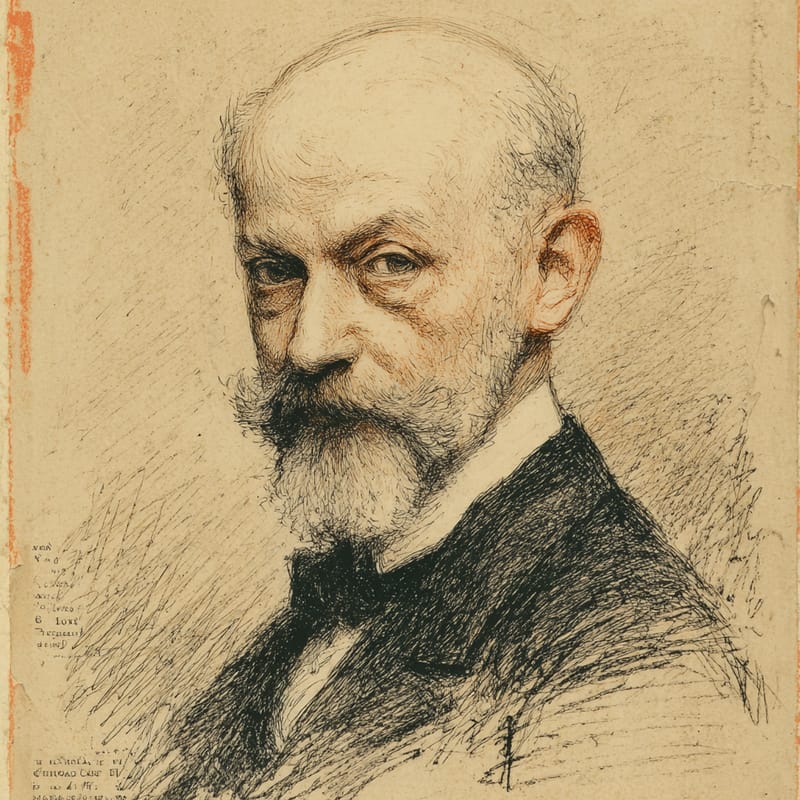

§ Also in the State Liberal hall
Enter the hall →§ Common questions
4 answersWhat was Tomáš Masaryk's political ideology?
Tomáš Masaryk was a liberal democrat and humanist nationalist: on the 99ideologies three-axis compass, a Heterodox State Liberal. Economically he sat just left of centre (−4), backing a market economy tempered by social legislation and land reform. On governance he leaned towards a strong state (+40), building a powerful presidency inside a parliamentary democracy, and socially he was moderately progressive (+20), condemning antisemitism and supporting women's equality from a religious humanist standpoint.
Was Tomáš Masaryk left-wing or right-wing?
Neither firmly: he was a centrist liberal with a slight lean to the left on economics. Masaryk rejected Marxism and revolution but supported social legislation, the eight-hour day and land reform, and he worked with social democrats as well as liberals and agrarians. His strong presidency and nation-building put him on the authority side of the centre, yet he defended parliamentary democracy against both communists and the authoritarian right, which places him in the liberal-democratic mainstream of interwar Europe.
Was Tomáš Masaryk a Marxist?
No. Masaryk was one of Marxism's most serious early critics. In The Social Question (1898) he took the poverty of industrial workers seriously but rejected historical materialism and revolutionary class struggle, arguing that social justice had to come from ethical and religious renewal and democratic reform. He cooperated with social democrats and backed labour reforms, but he opposed the Bolsheviks, whose revolution he witnessed at first hand in Russia in 1917, and regarded Lenin's regime as a dictatorship.
Which minds are closest to Tomáš Masaryk?
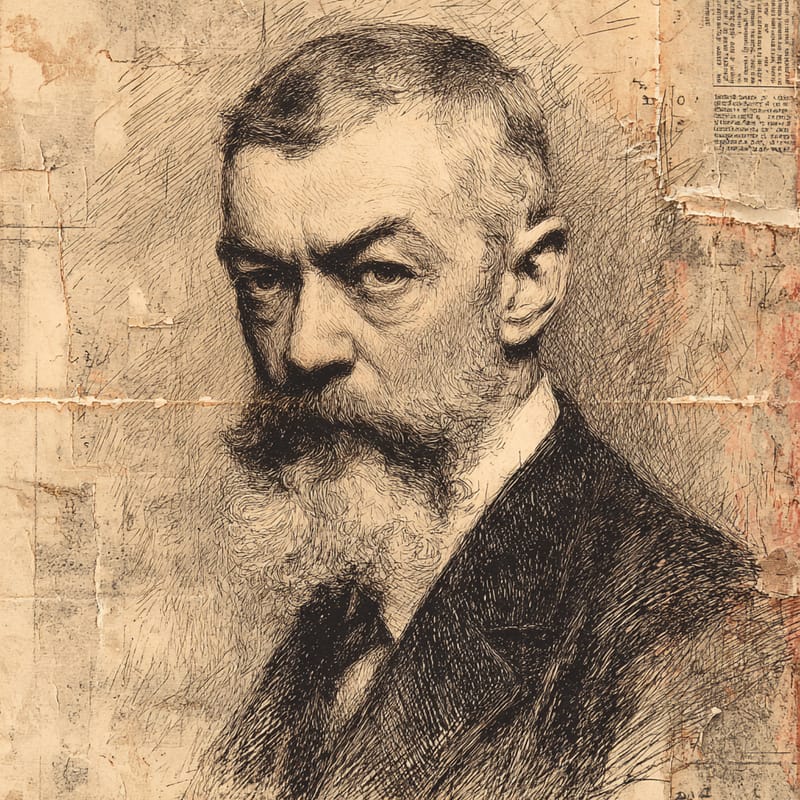
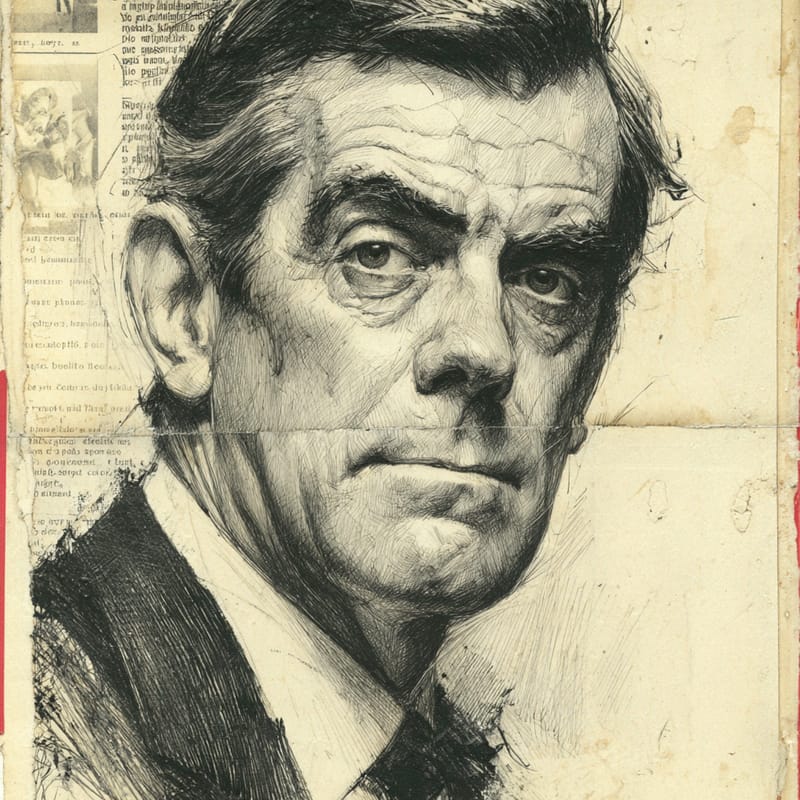
On the 99ideologies three-axis compass, the minds closest to Tomáš Masaryk are Friedrich Naumann (96% alike), Max Weber (93% alike) and Gordon Brown (93% alike). The furthest is Hans-Hermann Hoppe (27% alike).