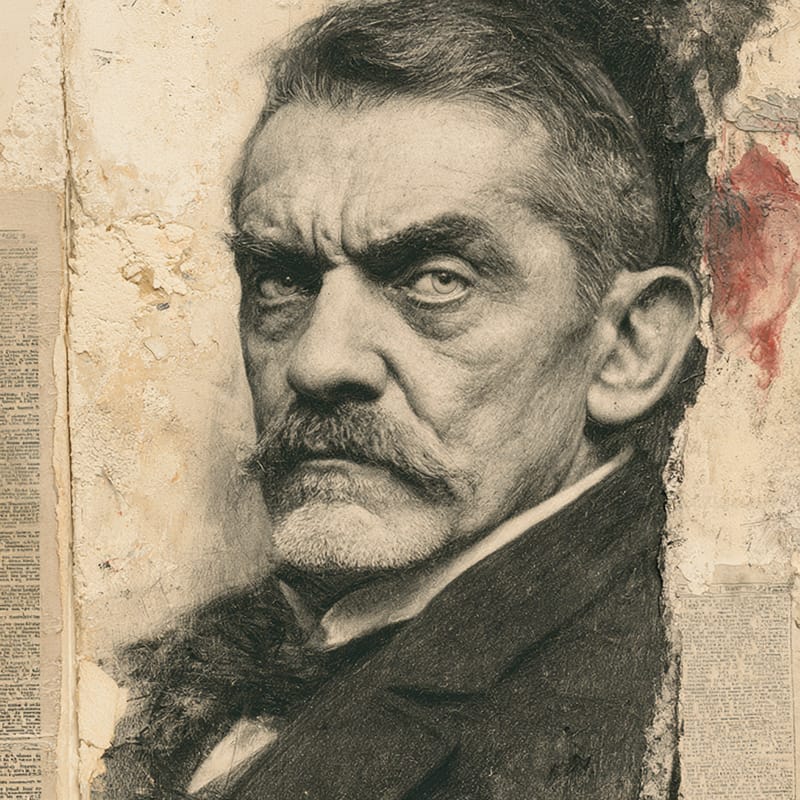
Plutarco Elías Calles
State LiberalOne of 729 ideologies · enter the State Liberal hall →- Role
- —
- Era
- —
- Region
- —
- Social band
- Centre (no modifier)
- Placement
- 0 · +50 · 0
§ Where Plutarco Elías Calles stands
3 axesCalles built the institutions of a mixed economy. He founded the Bank of Mexico as the central bank in 1925, created national commissions for roads and irrigation, and asserted national control over oil in a 1925 petroleum law that angered Washington. But he distributed land cautiously and by 1930 was calling land reform a failure, protecting private agriculture and business, which keeps him at the centre.
Calles concentrated power in the presidency and then in himself. His 1929 National Revolutionary Party gave Mexico a dominant ruling party that absorbed regional bosses, generals and unions, and during the Maximato of 1928–1934 he made and unmade presidents and cabinets from behind the scenes. Opponents faced repression, from the killing of rebellious generals in 1927 to the military campaign against the Cristeros.
Calles was a militant secularist who saw the Catholic Church as the chief obstacle to a modern revolutionary nation. The 1926 Calles Law imposed penalties for breaching the constitution's restrictions on the clergy, closed church schools and expelled foreign priests, and in his 1934 Grito de Guadalajara he called for the revolution to take hold of children's minds through socialist education.
How close are you to Plutarco Elías Calles?
Three statements, one per axis. Answer them and we’ll drop you on the compass next to them.
§ The story
HistoricalPlutarco Elías Calles (1877–1945) was a Mexican revolutionary general and president of Mexico from 1924 to 1928. A former schoolteacher from Sonora, he rose in the revolutionary army alongside Álvaro Obregón, served as governor of Sonora and as interior minister, and succeeded Obregón as president. After Obregón's assassination in 1928, Calles remained the power behind three successive presidents as the 'Jefe Máximo', a period known as the Maximato, until Lázaro Cárdenas broke his influence and expelled him to the United States in 1936.
Calles is remembered for two legacies. In 1929 he founded the National Revolutionary Party, forerunner of the Institutional Revolutionary Party (PRI), which held Mexico's presidency without interruption until 2000, turning the revolution's warring factions into a single ruling machine. And his rigorous enforcement of the 1917 constitution's anticlerical articles provoked the Cristero War of 1926–1929, a Catholic rebellion in which tens of thousands died. Admirers credit him with building modern state institutions; critics see the father of a one-party system and a persecutor of religion.
Key works & moments
- 1924Elected president of Mexico as Álvaro Obregón's chosen successor.
- 1925Founds the Bank of Mexico as the country's central bank.
- 1926The Calles Law enforces anticlerical rules and the Catholic Cristero rebellion breaks out.
- 1929Founds the National Revolutionary Party, forerunner of the PRI, while ruling as 'Jefe Máximo'.
- 1934His Grito de Guadalajara calls for socialist education to win over Mexico's young.
- 1936Expelled to the United States by President Lázaro Cárdenas.
§ Minds closest to Plutarco Elías Calles
All minds →


§ Also in the State Liberal hall
Enter the hall →§ Common questions
4 answersWhat was Plutarco Elías Calles's political ideology?
Plutarco Elías Calles was a revolutionary nationalist and anticlerical state-builder: on the 99ideologies three-axis compass, a State Liberal. Economically he sat at the centre (0), founding the central bank and asserting national control of oil while protecting private enterprise and slowing land reform. On governance he was strongly statist (+50), creating the ruling party that dominated Mexico for seven decades. On social questions (an axis the site leaves unrated for him) he was a militant secularist who fought the Catholic Church.
Was Plutarco Elías Calles left-wing or right-wing?
He began on the revolutionary left and drifted right. As president Calles allied with the CROM labour confederation, asserted national claims over oil and waged an aggressive secular campaign against the Church, all hallmarks of Mexico's revolutionary left. By the early 1930s, however, he had turned against land redistribution and militant unions, and it was the more radical Lázaro Cárdenas who broke with him in 1935–36. His record is best seen as authoritarian revolutionary nationalism.
Did Plutarco Elías Calles found the PRI?
Effectively, yes. In March 1929, after the assassination of president-elect Álvaro Obregón, Calles founded the National Revolutionary Party (PNR) to bring Mexico's revolutionary generals, regional bosses and labour organisations into one national organisation and end violent struggles over the succession. Lázaro Cárdenas reorganised it as the Party of the Mexican Revolution in 1938, and in 1946 it became the Institutional Revolutionary Party, which held the presidency without a break until 2000.
Which minds are closest to Plutarco Elías Calles?
On the 99ideologies three-axis compass, the minds closest to Plutarco Elías Calles are Giovanni Giolitti (97% alike), Eleftherios Venizelos (97% alike) and Max Weber (97% alike). The furthest is Emma Goldman (24% alike).