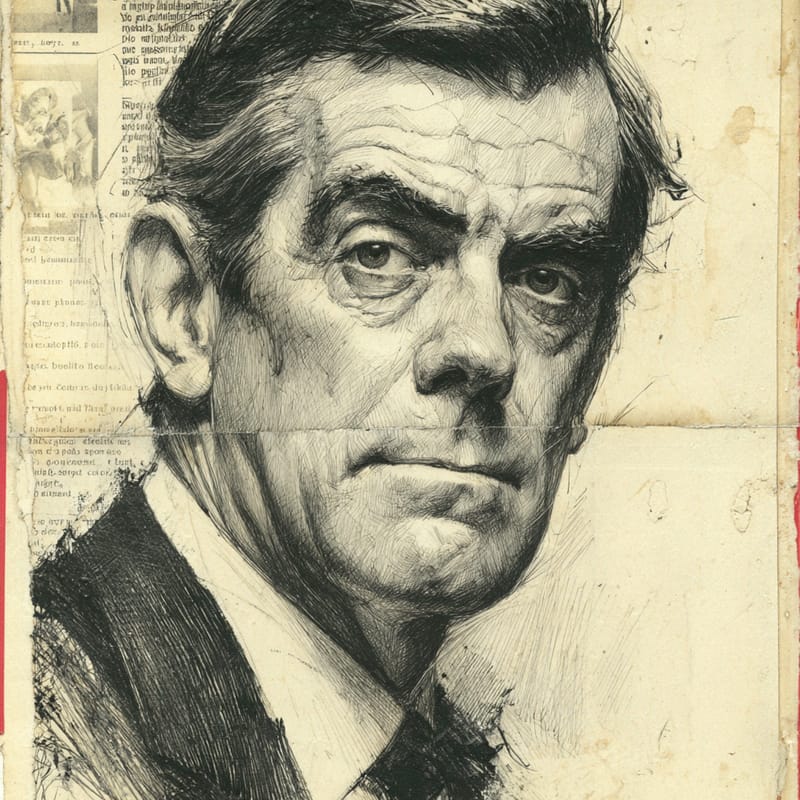
Gordon Brown
Prudence for a purpose
New Labour's economic engine.
Heterodox Third-Way LabouriteOne of 729 ideologies · enter the Third-Way Labourite hall →- Role
- Prime Minister & Chancellor
- Era
- b. 1951
- Region
- United Kingdom
- Social band
- Heterodox
- Placement
- −2 · +26 · +30
§ Where Gordon Brown stands
3 axesBrown fused market credibility with quiet redistribution. He handed interest-rate setting to the Bank of England in 1997 and set strict fiscal rules, but channelled money to low-income families through the Working Families' Tax Credit and its successors, used a windfall tax on privatised utilities to fund welfare-to-work and, after the 2008 crash, announced a 50p top rate of income tax.
Brown ran an unusually powerful Treasury that reached into almost every area of domestic policy, and as prime minister he met the 2008 crash with sweeping state action, nationalising Northern Rock and taking large stakes in Royal Bank of Scotland and Lloyds. In 2008 his government also sought 42-day pre-charge detention for terror suspects, which the House of Lords rejected.
His progressivism centred on poverty and development. He backed New Labour's pledge to end child poverty, pushed debt relief and aid for Africa in the run-up to the 2005 Gleneagles G8 summit, and his government passed the Equality Act 2010. In 2009 he issued an official apology for Britain's treatment of the codebreaker Alan Turing.
How close are you to Gordon Brown?
Three statements, one per axis. Answer them and we’ll drop you on the compass next to them.
§ The story
LivingJames Gordon Brown (b. 1951) was chancellor of the exchequer from 1997 to 2007 and prime minister of the United Kingdom from 2007 to 2010. The son of a Church of Scotland minister, he grew up in Kirkcaldy, entered the University of Edinburgh at sixteen, lost the sight of one eye after a rugby injury and earned a doctorate in history. He worked as a lecturer and television journalist before entering Parliament for Dunfermline East in 1983, and became shadow chancellor in 1992.
Brown was New Labour's economic architect and Tony Blair's partner and rival; after John Smith's death in 1994 he stood aside so that Blair could run for the leadership. As the longest continuously serving chancellor in modern times he made the Bank of England independent, kept Britain out of the euro and built a system of tax credits. He succeeded Blair unopposed in 2007, launched a bank recapitalisation scheme in October 2008 that other governments followed, and hosted the 2009 London G20 summit, but resigned after Labour lost the 2010 election.
Notable for
- 01Bank of England independence
- 02Tax credits and child-poverty targets
- 032008 crisis leadership
Key works & moments
- 1997As chancellor, gives the Bank of England independence to set interest rates.
- 1999Introduces the Working Families' Tax Credit for low-paid households.
- 2003Rules that his five economic tests for joining the euro have not been met.
- 2005Secures a deal to cancel the debts of the poorest countries ahead of the Gleneagles G8.
- 2008As prime minister, nationalises Northern Rock and recapitalises Britain's banks during the financial crisis.
- 2010Loses the general election and resigns as prime minister and Labour leader.
§ Minds closest to Gordon Brown
All minds →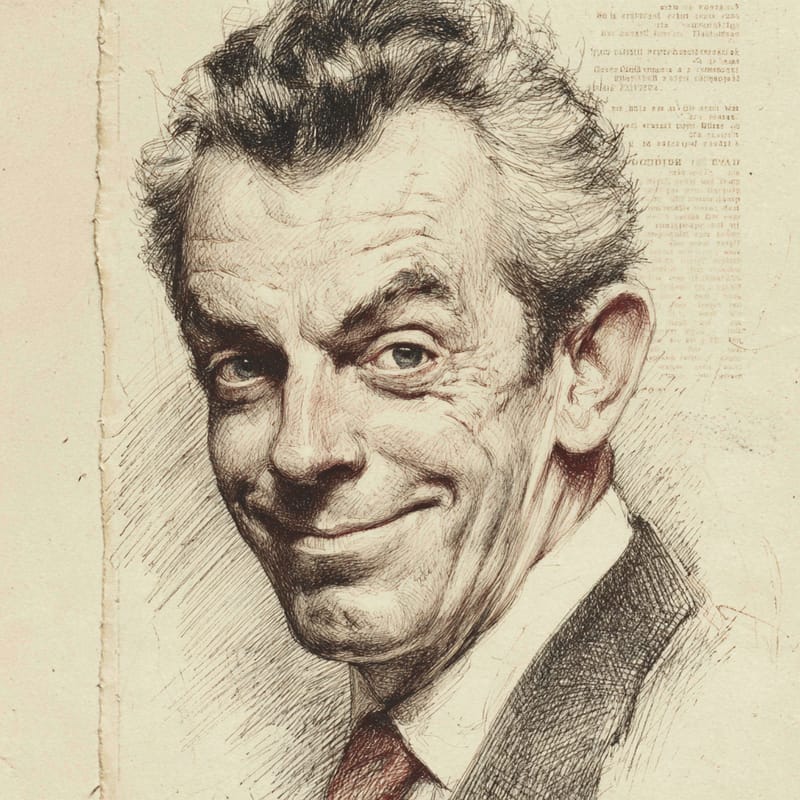


§ Also in the Third-Way Labourite hall
Enter the hall →§ Common questions
4 answersWhat is Gordon Brown's political ideology?
Gordon Brown is a Third Way social democrat with deep roots in Labour's redistributive tradition: on the 99ideologies three-axis compass, a Heterodox Third-Way Labourite. Economically he sits at the centre (−2), combining Bank of England independence and fiscal rules with tax credits, higher public spending and, after 2008, a 50p top tax rate. On governance he leans towards a strong, interventionist state (+26), from a dominant Treasury to the bank rescues, and socially he is progressive (+30), focused on child poverty and global development.
Is Gordon Brown left-wing or right-wing?
Centre-left, and somewhat to the left of Tony Blair. Brown accepted the market economy, courted the City of London and set fiscal rules to reassure investors, which led critics on the left to see him as part of New Labour's accommodation with finance. But he used the tax system to redistribute towards poorer families, raised spending on health and overseas aid, and answered the 2008 crisis with large-scale state intervention, positions that put him on the moderate left.
How did Gordon Brown respond to the 2008 financial crisis?
With large-scale state intervention. His government nationalised Northern Rock in February 2008, and in October 2008 announced a rescue package that injected public capital into the banks, taking major stakes in Royal Bank of Scotland and Lloyds, alongside guarantees for bank borrowing. Other governments adopted similar schemes. He cut VAT temporarily to support demand and hosted the April 2009 London G20 summit, which pledged extra resources for the International Monetary Fund. Critics argued that his earlier light-touch regulation and borrowing had left Britain exposed.
Which minds are closest to Gordon Brown?
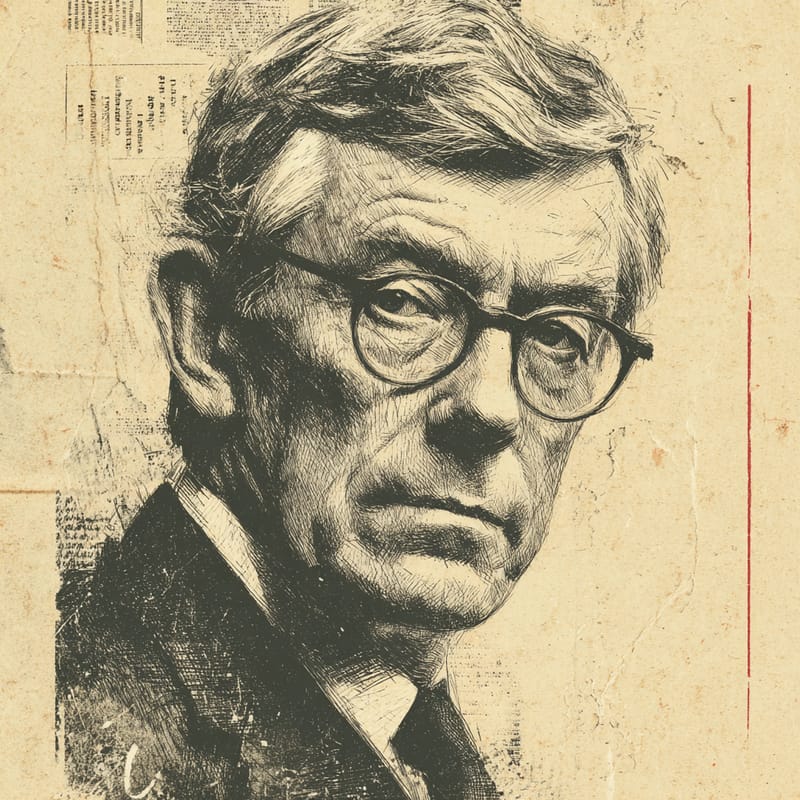
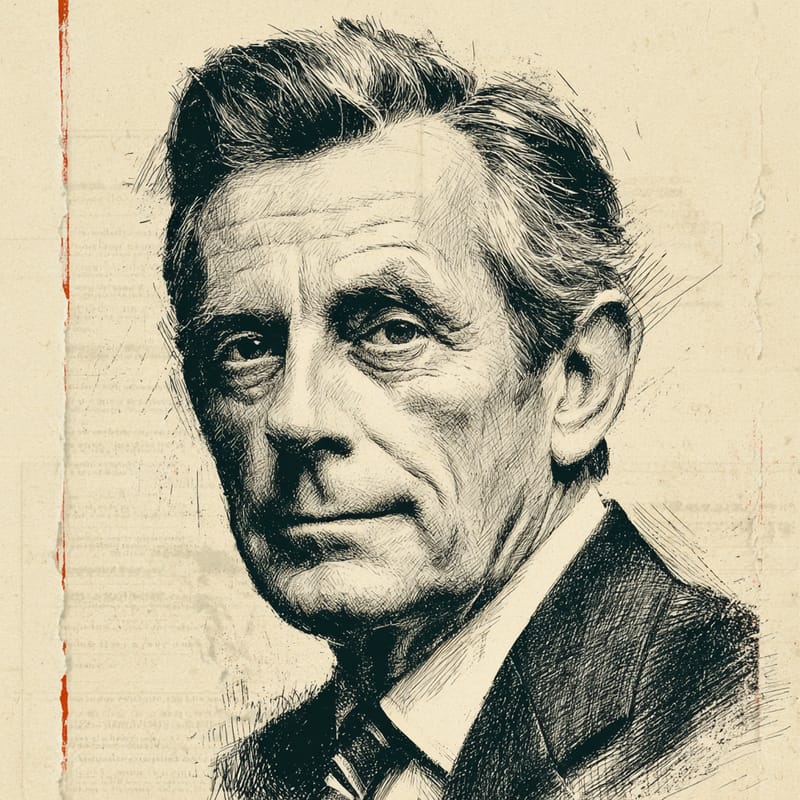
On the 99ideologies three-axis compass, the minds closest to Gordon Brown are Tony Blair (97% alike), Wim Kok (97% alike) and Gerhard Schröder (96% alike). The furthest is Hans-Hermann Hoppe (30% alike).