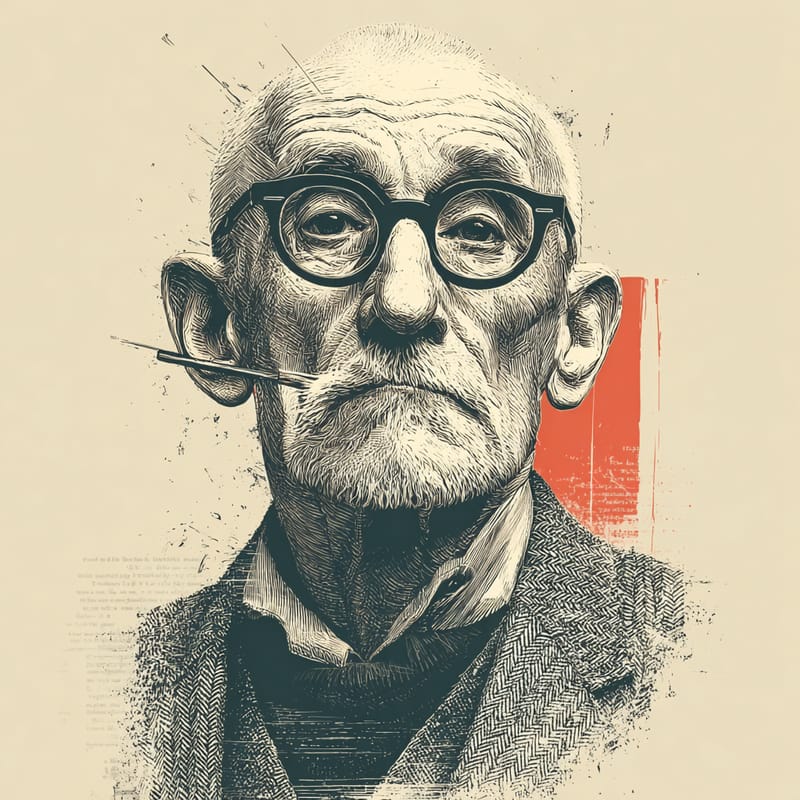
Friedrich Hayek
Knowledge and spontaneous order
Prices as information; the rule of law over planning.
Rooted Classical LiberalOne of 729 ideologies · enter the Classical Liberal hall →- Role
- Economist & philosopher
- Era
- 1899–1992
- Region
- Austria / UK
- Social band
- Rooted
- Placement
- +58 · −48 · −20
§ Where Friedrich Hayek stands
3 axesHayek's 1945 essay 'The Use of Knowledge in Society' argued that prices coordinate knowledge dispersed among millions of people, which no planner can gather, and The Road to Serfdom (1944) drew the political conclusion against central planning. Yet he accepted a guaranteed minimum of food, shelter and clothing for all and state-organised social insurance, which keeps him short of the market pole.
Hayek defended the rule of law, general rules binding rulers and ruled alike, against discretionary state power in The Constitution of Liberty (1960) and Law, Legislation and Liberty (1973–79). He was no anarchist and distrusted unlimited majority rule, proposing a legislative assembly elected for fifteen-year terms, and his praise for Pinochet's economic course showed how far he would subordinate democracy to liberalism.
Hayek rejected the conservative label in 'Why I Am Not a Conservative', the postscript to The Constitution of Liberty (1960), yet his social thought prized evolved traditions of morals, law and language as stores of knowledge no reformer could redesign. The Fatal Conceit (1988) defended inherited rules of property, honesty and the family against rationalist planners, which places him moderately on the traditional side.
How close are you to Friedrich Hayek?
Three statements, one per axis. Answer them and we’ll drop you on the compass next to them.
§ The story
HistoricalFriedrich August von Hayek (1899–1992) was an Austrian-born British economist and political philosopher. Born in Vienna, he served on the Italian front in the First World War, studied law and economics at the University of Vienna and joined Ludwig von Mises's circle, directing the Austrian Institute for Business Cycle Research from 1927. In 1931 he moved to the London School of Economics, where he became Keynes's leading academic opponent, and he took British citizenship in 1938.
The Road to Serfdom (1944) warned that central planning leads toward totalitarianism and became a bestseller in Britain and America. Hayek later taught at Chicago, Freiburg and Salzburg, founded the Mont Pelerin Society in 1947, shared the 1974 Nobel Memorial Prize with Gunnar Myrdal and inspired Margaret Thatcher's governments. His defining controversy is his sympathy for Pinochet's Chile, where he told a newspaper in 1981 that he preferred a liberal dictator to a democratic government lacking liberalism.
Notable for
- 01'The Road to Serfdom'
- 02Nobel Memorial Prize, 1974
- 03Theory of spontaneous order
Key works & moments
- 1931Joins the London School of Economics and begins his long debate with Keynes.
- 1944Publishes The Road to Serfdom.
- 1945Publishes 'The Use of Knowledge in Society', on prices as carriers of information.
- 1947Founds the Mont Pelerin Society of liberal intellectuals.
- 1960Publishes The Constitution of Liberty.
- 1974Shares the Nobel Memorial Prize in Economics with Gunnar Myrdal.
In their own words
“The curious task of economics is to demonstrate to men how little they really know about what they imagine they can design.”
§ Minds closest to Friedrich Hayek
All minds →
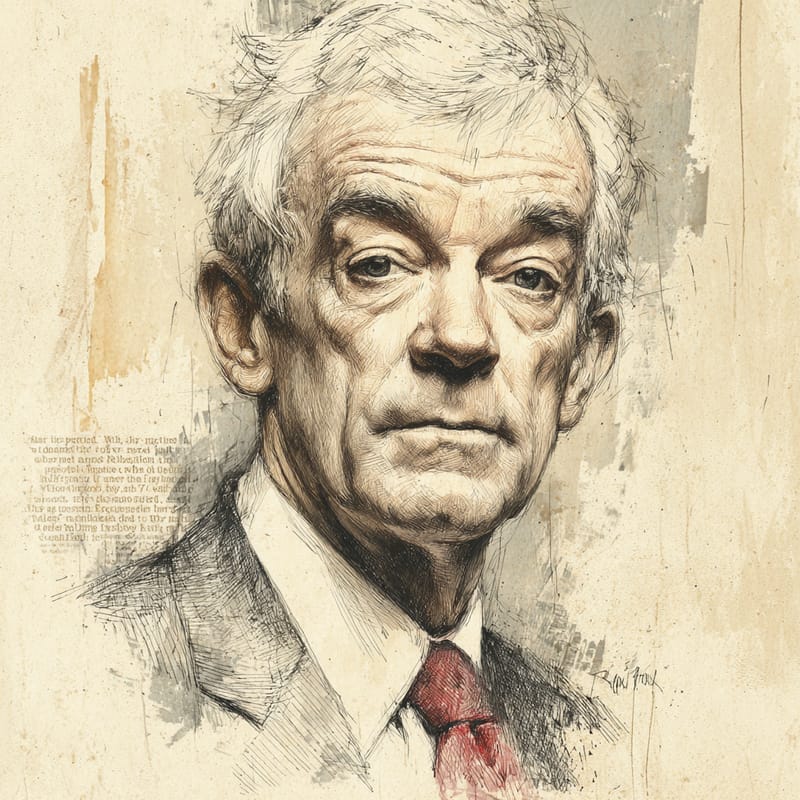
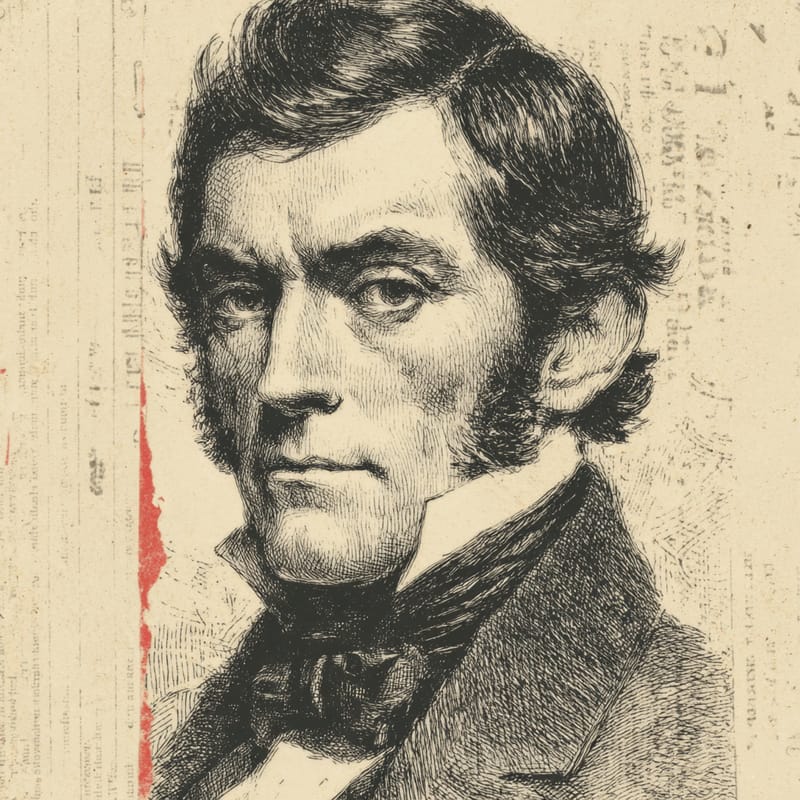
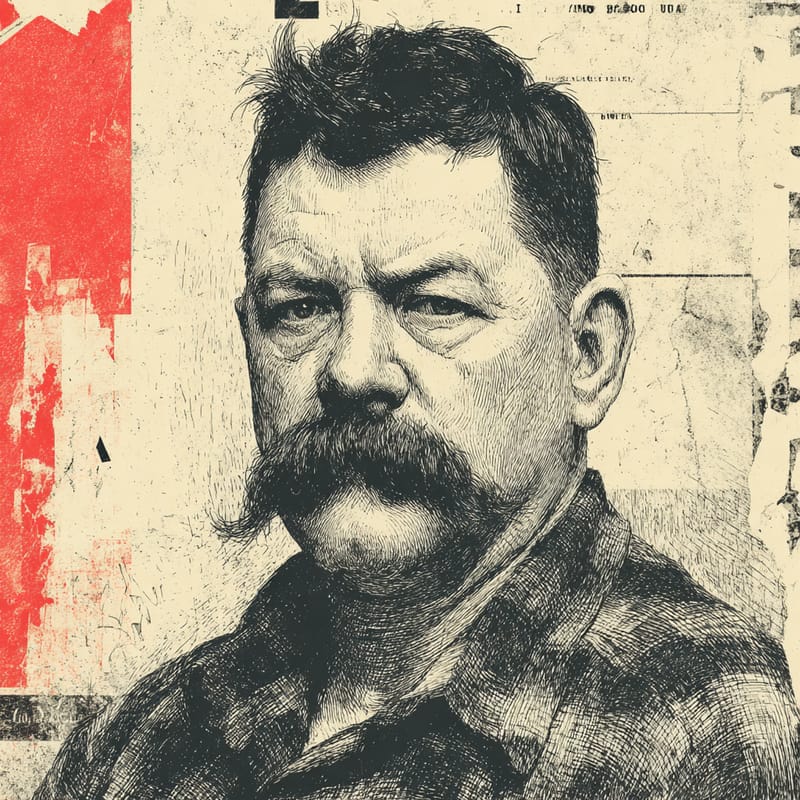

§ Also in the Classical Liberal hall
Enter the hall →§ Common questions
4 answersWhat was Friedrich Hayek's political ideology?
Friedrich Hayek was a classical liberal who rejected both socialism and conservatism: on the 99ideologies three-axis compass, a Rooted Classical Liberal. Economically he sat firmly on the market side (+58), arguing that prices coordinate knowledge no planner can possess, though he accepted a guaranteed minimum income. On governance he defended limited government under the rule of law (−48). Socially he leaned traditional (−20), valuing evolved customs and morals as accumulated wisdom.
Was Friedrich Hayek left-wing or right-wing?
Right of centre in practice, though he insisted he was a liberal, not a conservative. His attack on central planning and his influence on Margaret Thatcher made him a hero of the free-market right, and his defence of tradition appeals to conservatives. But in 'Why I Am Not a Conservative' (1960) he criticised conservatives for lacking principles and for using state power to enforce their values, and he accepted a basic social safety net that many libertarians reject.
What is The Road to Serfdom about?
The Road to Serfdom (1944) argues that comprehensive central economic planning, however well meant, leads toward tyranny. Because planners must decide whose goals take priority, they need ever more power to override individual choices, and the people most willing to wield that power rise to the top. Hayek dedicated it to the socialists of all parties and argued that Nazism had grown from socialist ideas rather than simply in reaction to them. A condensed version in Reader's Digest in 1945 brought it to millions of American readers.
Which minds are closest to Friedrich Hayek?
On the 99ideologies three-axis compass, the minds closest to Friedrich Hayek are Ludwig von Mises (98% alike), William Gladstone (96% alike) and Alexis de Tocqueville (94% alike). The furthest is Pol Pot (8% alike).