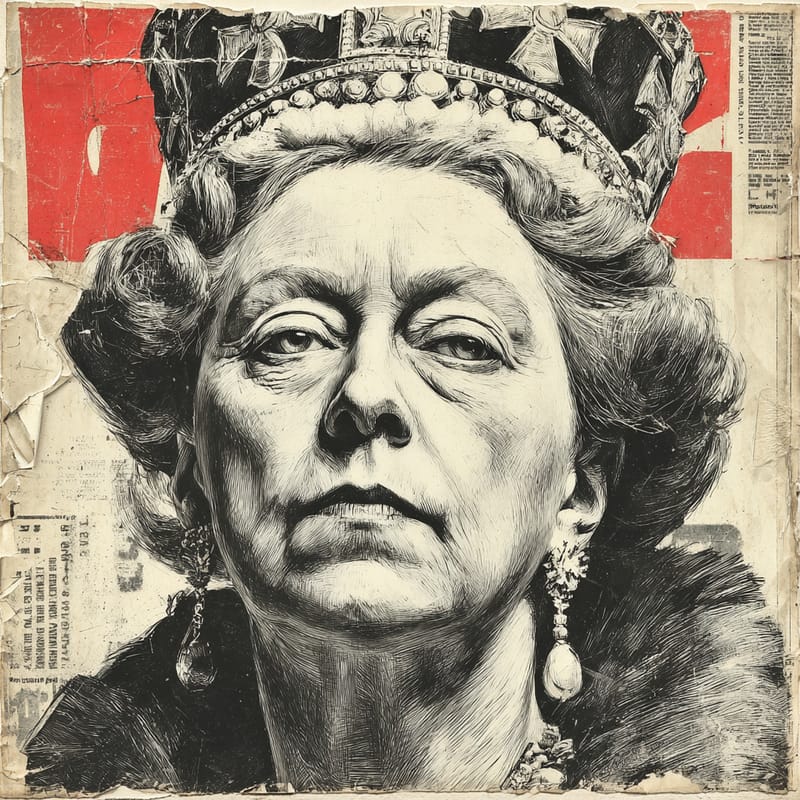
Queen Victoria
The constitutional sovereign
A crown that reigns within the constitution.
Reactionary Constitutional MonarchistOne of 729 ideologies · enter the Constitutional Monarchist hall →- Role
- Monarch
- Era
- 1819–1901
- Region
- United Kingdom
- Social band
- Reactionary
- Placement
- +50 · +70 · −65
§ Where Queen Victoria stands
3 axesVictoria reigned over the high noon of British free-trade capitalism. Parliament repealed the Corn Laws in 1846, the Great Exhibition of 1851, championed by Prince Albert, celebrated industrial progress, and the Limited Liability Act of 1855 opened the way to the modern company. The queen accepted this liberal market order without playing any part in shaping it; the economy was governed by ministers and markets, not the crown.
Victoria never doubted the crown's right to a voice in government. In the Bedchamber Crisis of 1839 she refused to replace her Whig ladies-in-waiting, keeping Robert Peel from office, and she pressed ministers hard on appointments and foreign policy. She came to accept that governments rested on parliamentary majorities, but she guarded royal prestige and pressed for the Royal Titles Act of 1876 that made her Empress of India.
Victoria's name became shorthand for moral respectability, family piety and social hierarchy. She opposed votes for women and denounced the women's rights movement in an 1870 letter, her court set a standard of domestic propriety that defined an era, and as Empress of India she embodied the hierarchy of empire. Rank, duty and decorum framed her view of society.
How close are you to Queen Victoria?
Three statements, one per axis. Answer them and we’ll drop you on the compass next to them.
§ The story
HistoricalVictoria (1819–1901) was Queen of the United Kingdom of Great Britain and Ireland from 1837 until her death and, from 1876, Empress of India. The only child of Prince Edward, Duke of Kent, she inherited the throne at eighteen from her uncle William IV. In 1840 she married her cousin Prince Albert of Saxe-Coburg and Gotha, with whom she had nine children, and their children's marriages into royal houses across Europe earned her the name grandmother of Europe.
Her reign of almost sixty-four years, the longest of any British monarch until Elizabeth II, spanned industrialisation, the Reform Acts and the empire's expansion across Africa and Asia. After Albert's death in 1861 she withdrew into years of mourning and republican sentiment grew in the early 1870s, but the jubilees of 1887 and 1897 made her the symbol of nation and empire. Partisan in private, she favoured Disraeli, distrusted Gladstone and opposed women's suffrage, yet accepted ministers backed by parliamentary majorities.
Notable for
- 01Defined the Victorian era
- 02Empress of India
- 03Model of constitutional monarchy
Key works & moments
- 1837Succeeds her uncle William IV on 20 June, aged eighteen.
- 1839The Bedchamber Crisis keeps Robert Peel from forming a government.
- 1840Marries her cousin Prince Albert of Saxe-Coburg and Gotha.
- 1851Opens the Great Exhibition at the Crystal Palace, championed by Albert.
- 1876The Royal Titles Act makes her Empress of India.
- 1897Celebrates her Diamond Jubilee as the symbol of a global empire.
In their own words
“The Queen is most anxious to enlist every one who can speak or write to join in checking this mad, wicked folly of 'Woman's Rights', with all its attendant horrors, on which her poor feeble sex is bent, forgetting every sense of womanly feeling and propriety.”
§ Minds closest to Queen Victoria
All minds →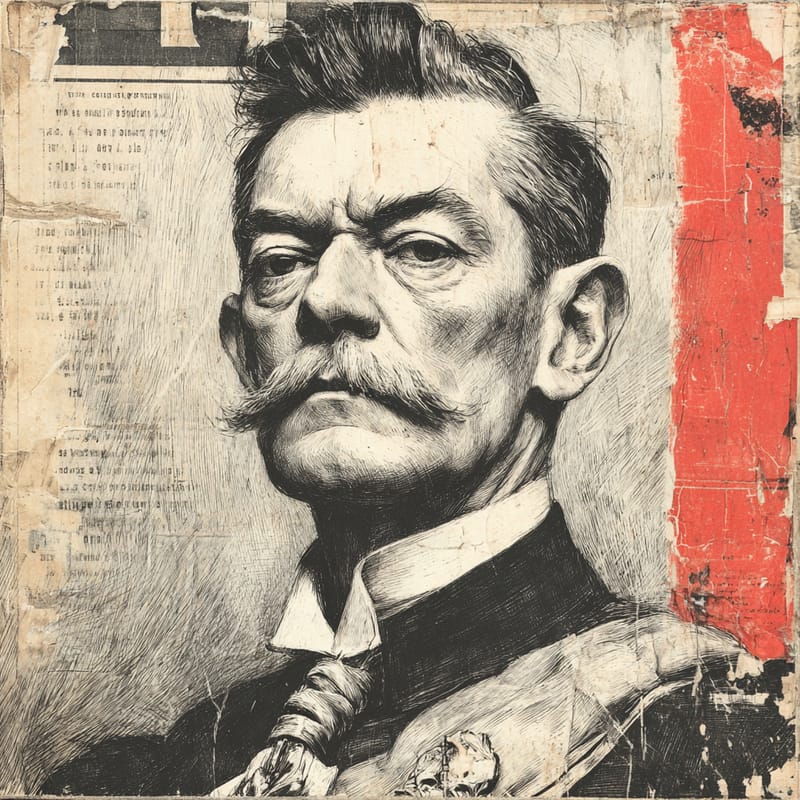

§ Also in the Constitutional Monarchist hall
Enter the hall →§ Common questions
4 answersWhat was Queen Victoria's political ideology?
Victoria was a conservative constitutional monarch who believed in the crown's influence, the empire and a strict social and moral order: on the 99ideologies three-axis compass, a Reactionary Constitutional Monarchist. Economically she sat on the market side (+50), reigning over Britain's free-trade industrial economy. On governance she leaned strongly toward authority (+70), defending royal influence and imperial rule, and socially she was strongly traditional (−65), opposing women's suffrage and embodying Victorian respectability.
Was Queen Victoria left-wing or right-wing?
Right-wing by modern standards, and increasingly Conservative in her own time. Early in her reign she was close to the Whig prime minister Lord Melbourne, but from the 1870s she openly favoured the Conservative Benjamin Disraeli and disliked the Liberal William Gladstone, whose Irish Home Rule policy she opposed. Her hostility to women's suffrage, her pride in empire and her attachment to hierarchy place her firmly on the right, though she accepted the parliamentary reforms passed in her name.
How much political power did Queen Victoria have?
Less than her predecessors and more than her successors. Victoria could not set policy or keep a government without a Commons majority, and the Reform Acts of 1832, 1867 and 1884 shifted power decisively to parliament and voters. But she exercised real influence: she was consulted on appointments and foreign affairs, sometimes delayed or shaped decisions, and helped choose prime ministers when no leader was obvious, as in 1894, when she chose Lord Rosebery without consulting the outgoing Gladstone.
Which minds are closest to Queen Victoria?
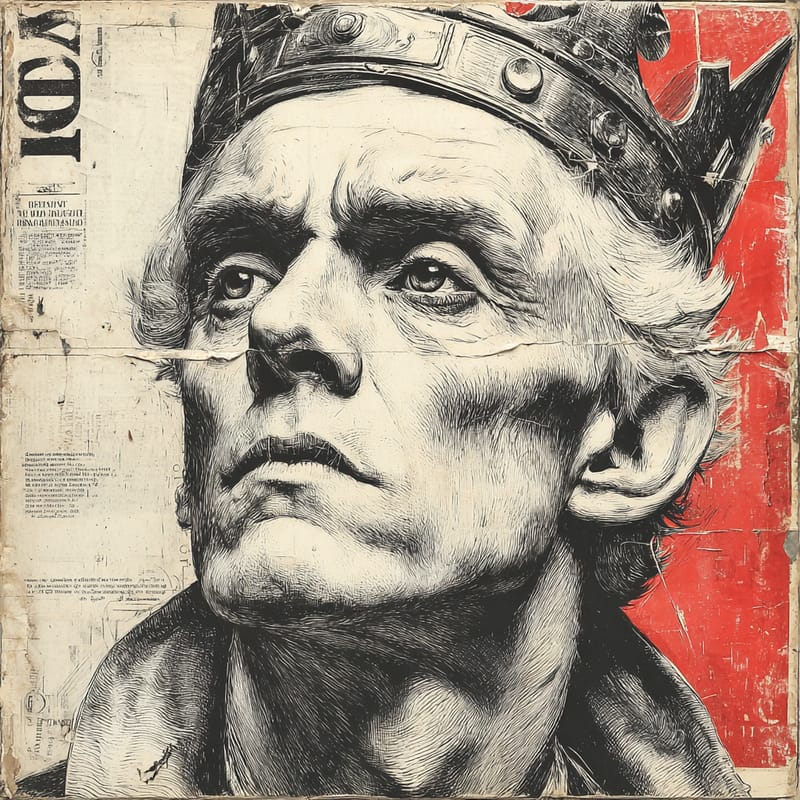
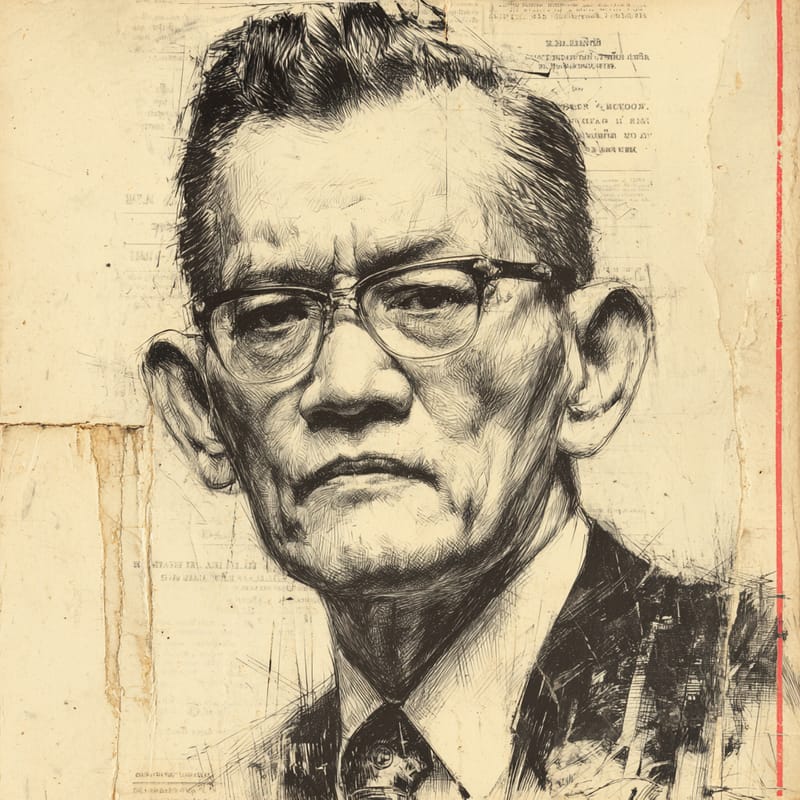
On the 99ideologies three-axis compass, the minds closest to Queen Victoria are Rama VI (Vajiravudh) (97% alike), King Régis (illustrative) (96% alike) and Bhumibol Adulyadej (96% alike). The furthest is Emma Goldman (0% alike).