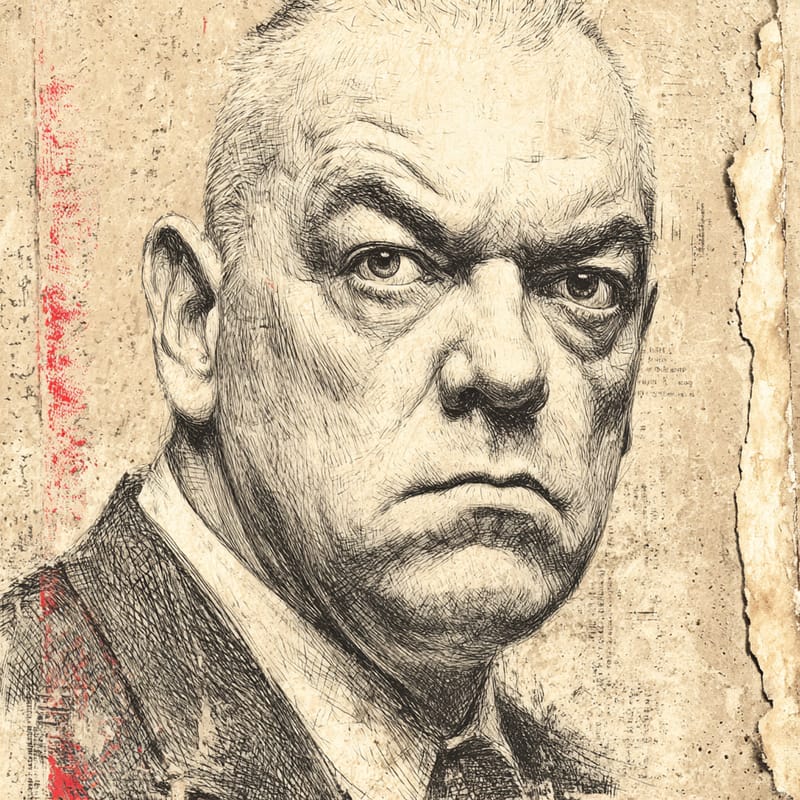
Viktor Orbán
Illiberal democracy
Nation and family over liberalism.
Traditional Right-Wing NationalistOne of 729 ideologies · enter the Right-Wing Nationalist hall →- Role
- Prime Minister
- Era
- b. 1963
- Region
- Hungary
- Social band
- Traditional
- Placement
- +46 · +54 · −56
§ Where Viktor Orbán stands
3 axesOrbán's governments built a capitalist economy with a flat personal income tax, introduced at 16% in 2011 and later cut to 15%, and generous family tax breaks, including a lifetime income-tax exemption for mothers of four or more children from 2020. His self-described unorthodox economics stop well short of laissez-faire: special taxes on banks, telecoms and retail chains, the 2010–11 transfer of private pension savings to the state, and capped household energy prices.
Orbán has used repeated two-thirds majorities to concentrate power. The 2011 Fundamental Law, adopted without opposition support, was followed by changes to the constitutional court, the electoral map and the media authority, and in 2014 he said Hungary was building an illiberal state. In 2022 the European Parliament called Hungary a hybrid regime of electoral autocracy, though Fidesz won every general election from 2010 to 2022.
Orbán defines Hungary as a Christian and national state. A 2020 constitutional amendment declared that the mother is a woman and the father is a man, a 2021 law banned the depiction of homosexuality and gender change in material for minors, and he fenced the southern border against migrants in 2015. He offers pronatalist family policy, not immigration, as the answer to population decline.
How close are you to Viktor Orbán?
Three statements, one per axis. Answer them and we’ll drop you on the compass next to them.
§ The story
LivingViktor Orbán (born 1963) is a Hungarian politician who served as prime minister from 1998 to 2002 and again from 2010, winning four consecutive general elections between 2010 and 2022. A law graduate from a provincial family, he co-founded Fidesz in 1988 as a liberal, anti-communist youth movement and became nationally known in June 1989, when he demanded the withdrawal of Soviet troops at the reburial of Imre Nagy, leader of the 1956 revolution. He briefly studied at Oxford on a scholarship funded by George Soros before entering parliament in 1990.
In the 1990s Orbán moved Fidesz from liberalism to national conservatism. After winning a two-thirds majority in 2010 he used it to adopt a new constitution and reshape the courts, the electoral system and media regulation, while allied businessmen bought up much of the private press. The European Parliament triggered the EU's Article 7 procedure against Hungary in 2018, and the EU later froze billions in funds over rule-of-law concerns. Supporters see him as a defender of national sovereignty, Christianity and the family against Brussels and mass migration; critics see the construction of an electoral autocracy.
Notable for
- 01Coined 'illiberal democracy'
- 02Anti-migration 'border fence'
- 03National-conservative model
Key works & moments
- 1988Co-founds Fidesz, the Alliance of Young Democrats, as a liberal anti-communist youth movement.
- 1989Demands the withdrawal of Soviet troops in a speech at Imre Nagy's reburial in Budapest.
- 1998Becomes prime minister for the first time, aged 35, at the head of a centre-right coalition.
- 2010Wins a two-thirds majority; a new constitution, the Fundamental Law, is adopted in 2011.
- 2014In a speech at Băile Tușnad, Romania, says Hungary is building an illiberal state.
- 2015Builds a razor-wire fence on Hungary's southern border during Europe's migrant crisis.
§ Minds closest to Viktor Orbán
All minds →

§ Also in the Right-Wing Nationalist hall
Enter the hall →§ Common questions
4 answersWhat is Viktor Orbán's political ideology?
Viktor Orbán is a national conservative who calls his model illiberal or Christian democracy: on the 99ideologies three-axis compass, a Traditional Right-Wing Nationalist. Economically he sits on the market right (+46), with a flat income tax and pro-business policy mixed with special sector taxes and price caps. On governance he is clearly authoritarian-leaning (+54), concentrating power through two-thirds majorities. Socially he is firmly traditional (−56), defending Christian identity and the traditional family and opposing immigration.
Is Viktor Orbán left-wing or right-wing?
Right-wing. Orbán began as a liberal anti-communist in 1988 but rebuilt Fidesz in the 1990s as Hungary's main national-conservative party. His flat tax, family-centred welfare, hostility to immigration and defence of Christian national identity place him on the right, and Fidesz left the centre-right European People's Party in 2021 before joining other national-conservative parties in the Patriots for Europe group in 2024. His state-heavy interventions in banking, energy and media make him a statist rather than a free-market right-winger.
What does Viktor Orbán mean by illiberal democracy?
A democracy in which an elected majority puts the nation and its traditions ahead of liberal rights and checks. In a July 2014 speech at Băile Tușnad in Romania, Orbán said Hungary was building an illiberal state that would not make liberalism its organising principle, and he pointed to countries such as Singapore, China, Turkey and Russia as successful systems that were not liberal democracies. He later preferred the term Christian democracy. Critics argue the model hollows out the courts, media and electoral fairness that make elections meaningful.
Which minds are closest to Viktor Orbán?
On the 99ideologies three-axis compass, the minds closest to Viktor Orbán are Coriolanus (99% alike), Giorgia Meloni (98% alike) and Jair Bolsonaro (97% alike). The furthest is Emma Goldman (1% alike).