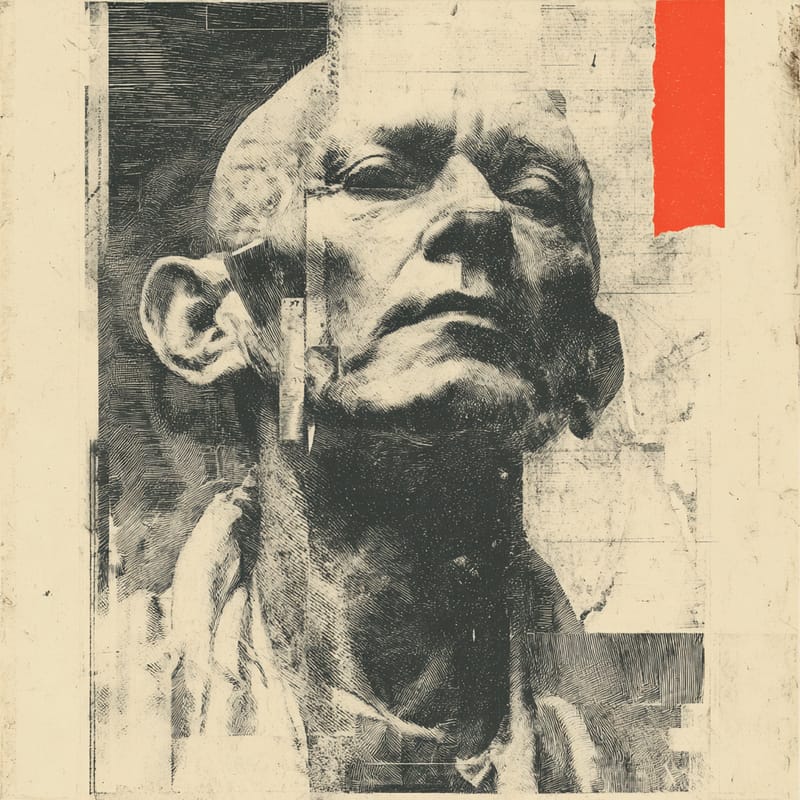
The Spectre of Communism (archetype)
A spectre haunting Europe
The idea itself, personified.
Reformist Classical MarxistOne of 729 ideologies · enter the Classical Marxist hall →- Role
- Revolutionary idea (figure of speech)
- From
- The Communist Manifesto
- Region
- Europe
- Social band
- Reformist
- Placement
- −95 · −45 · +60
§ Where The Spectre of Communism (archetype) stands
3 axesThe Manifesto sums up communist theory in a single phrase, the abolition of private property, meaning bourgeois ownership of the means of production rather than personal belongings. Its ten immediate measures include a heavy progressive income tax, abolition of inheritance, a state bank with a monopoly of credit and state control of transport, all as steps toward a classless economy.
The Manifesto's first step is for the proletariat to become the ruling class and 'win the battle of democracy', using political power to centralise production. Its horizon, though, is the end of class rule altogether: public power loses its political character, and in its place comes 'an association, in which the free development of each is the condition for the free development of all'.
Few texts are as hostile to inherited tradition. The Manifesto says the bourgeoisie has already torn the sentimental veil from the family and drowned religious fervour 'in the icy water of egotistical calculation'; it pleads guilty to wanting to end the exploitation of children by their parents and demands free education for all children in public schools.
How close are you to The Spectre of Communism (archetype)?
Three statements, one per axis. Answer them and we’ll drop you on the compass next to them.
§ The story
FictionThe Spectre of Communism is the image that opens the Manifesto of the Communist Party, the pamphlet Karl Marx and Friedrich Engels wrote for the Communist League and published in German in London in February 1848. In its first lines the spectre is the fear of communism that unites 'all the powers of old Europe', from Pope and Tsar to French Radicals and German police spies, in a holy alliance to exorcise it.
Marx and Engels turn that ruling-class nightmare into a promise: it is high time, they write, for communists to publish their views openly and meet the nursery tale of the spectre with a manifesto of the party itself. The image stands for communism as an idea before any state claimed it, and it has had a long afterlife, from Jacques Derrida's Specters of Marx (1993) to countless headlines announcing that some new spectre is haunting Europe.
Notable for
- 01'A spectre is haunting Europe'
- 02The idea of communism
- 03Emancipatory horizon
Key works & moments
- 1847The Communist League's London congress commissions Marx and Engels to draft its programme.
- 1848The Manifesto appears in German in London as revolution breaks out across Europe.
- 1850Helen Macfarlane's first English translation renders the spectre as 'a frightful hobgoblin'.
- 1872A new preface by Marx and Engels says the Paris Commune has made parts of the programme antiquated.
- 1888Samuel Moore's English translation, edited by Engels, fixes the famous opening line.
- 1993Jacques Derrida's Specters of Marx revives the spectre after the Soviet collapse.
In The Spectre of Communism (archetype)'s words
“A spectre is haunting Europe — the spectre of communism.”
“The history of all hitherto existing society is the history of class struggles.”
§ Minds closest to The Spectre of Communism (archetype)
All minds →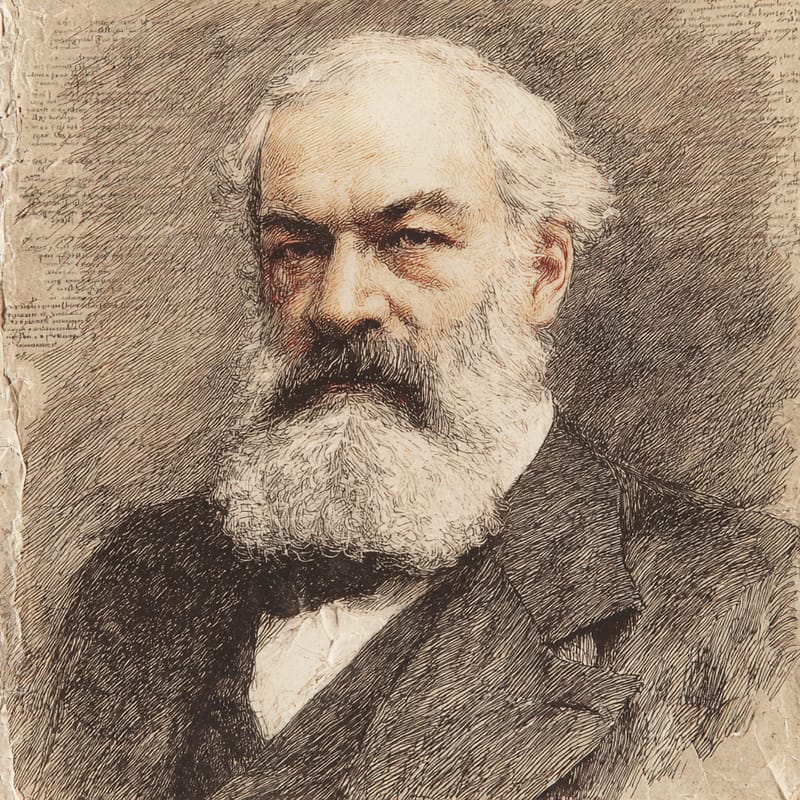


§ Also in the Classical Marxist hall
Enter the hall →§ Common questions
4 answersWhat is the Spectre of Communism's political ideology?
The spectre is communism itself as Marx and Engels described it in 1848: on the 99ideologies three-axis compass, a Reformist Classical Marxist. Economically it stands at the far left (−95), calling for the abolition of bourgeois private property. On governance it leans libertarian (−45): the workers must first win political power, but the end goal is a classless association without a coercive state. Socially it is clearly progressive (+60), dismissing religion, nationalism and the bourgeois family as relics of class society.
Is the Spectre of Communism left-wing or right-wing?
Left-wing, and foundationally so. The Manifesto's spectre is the original image of the revolutionary left: the idea that capitalism creates its own gravediggers and will give way to common ownership. Because it predates every regime that later claimed it, it carries neither the one-party states of the twentieth century nor the caution of later social democrats. It stands for the hope Marx and Engels set out in 1848, of an economy held in common and a society free of class rule.
What does 'a spectre is haunting Europe' mean?
It means that communism had become a fear before it was a force. When Marx and Engels wrote in 1848, governments routinely branded their opponents communists, and the authors seized on that panic: if Europe's powers were united against a phantom, communists should step out of the shadows and state their real aims. The line therefore announces the Manifesto's purpose, to replace a nursery tale with an open programme, and it has become one of the most quoted openings in political writing.
Which minds are closest to The Spectre of Communism (archetype)?
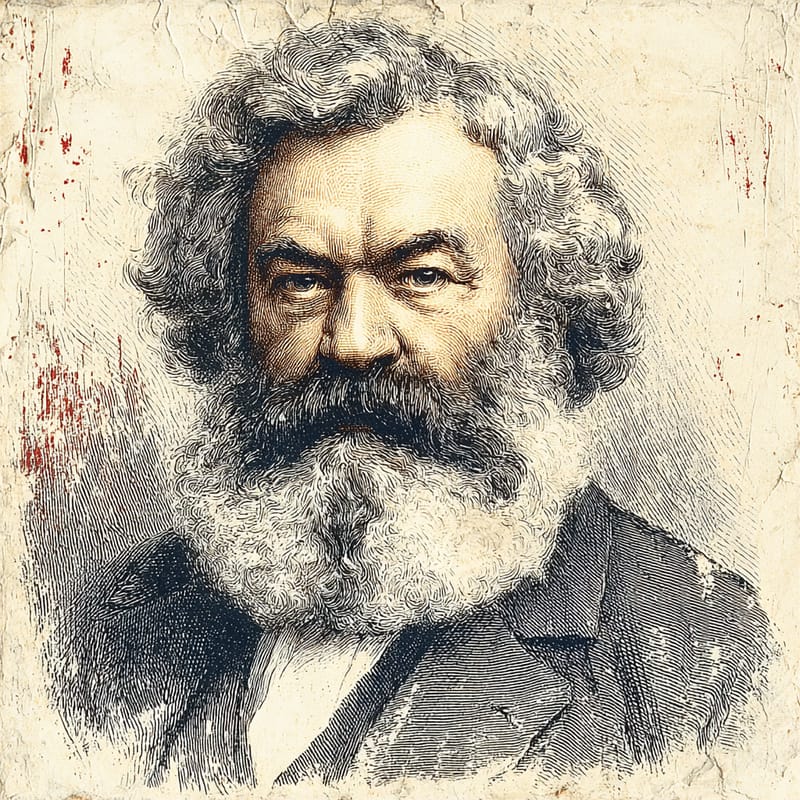
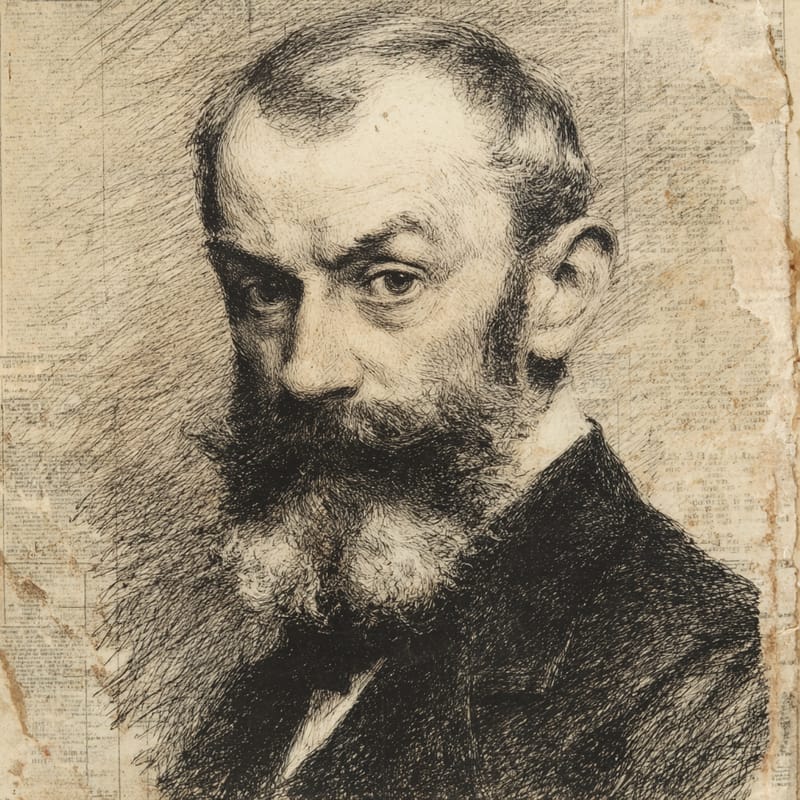
On the 99ideologies three-axis compass, the minds closest to The Spectre of Communism (archetype) are Friedrich Engels (99% alike), Karl Marx (98% alike) and Paul Lafargue (98% alike). The furthest is Adam Sutler (0% alike).