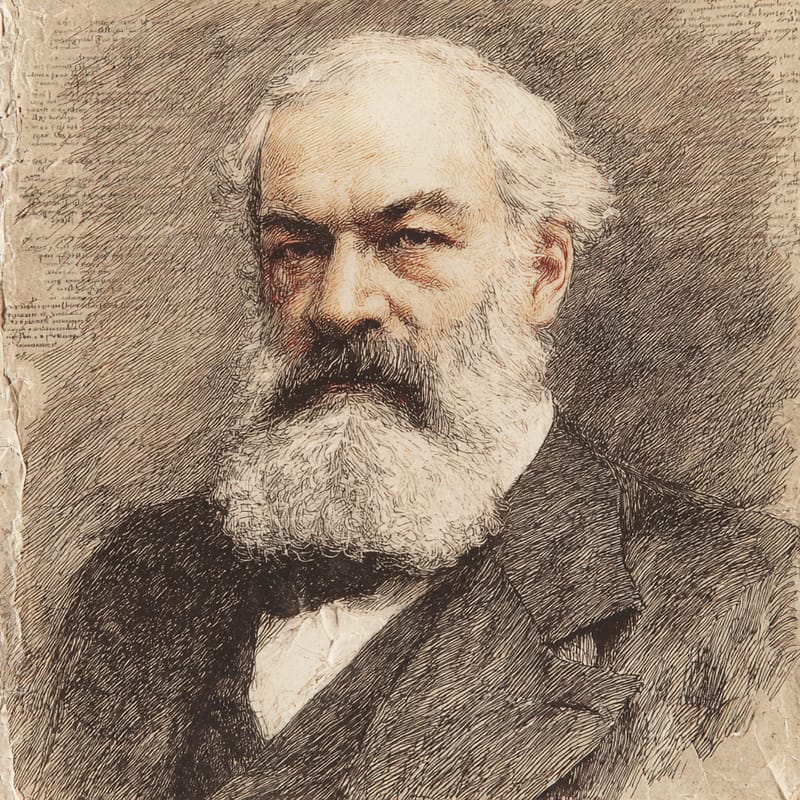
Friedrich Engels
Marx's collaborator
Industry, family, and the state.
Reformist Classical MarxistOne of 729 ideologies · enter the Classical Marxist hall →- Role
- Theorist
- Era
- 1820–1895
- Region
- Germany
- Social band
- Reformist
- Placement
- −96 · −46 · +62
§ Where Friedrich Engels stands
3 axesEngels shared Marx's aim of abolishing private ownership of the means of production; his Principles of Communism (1847), a draft for the Manifesto, called for its gradual replacement by common ownership and planned production. The Condition of the Working Class in England (1845) documented the misery of Manchester's mill workers from first-hand observation, even though Engels himself managed and later co-owned a capitalist cotton firm.
Engels expected the state, which The Origin of the Family (1884) described as a product of class society, to wither away once classes were abolished, a phrase drawn from his Anti-Dühring (1878). He defended a transitional rule of the working class, but in his 1895 introduction to Marx's The Class Struggles in France he hailed the German socialists' use of the ballot, though he never renounced revolution.
Engels was a progressive on the family, sex and religion. The Origin of the Family, Private Property and the State (1884) traced women's subordination to the rise of private property and predicted that socialism would free marriage from economic compulsion, and he lived for decades with the Irish working women Mary Burns and, after her death, her sister Lydia, whom he married only on her deathbed in 1878.
How close are you to Friedrich Engels?
Three statements, one per axis. Answer them and we’ll drop you on the compass next to them.
§ The story
HistoricalFriedrich Engels (1820–1895) was a German philosopher, social scientist and businessman, and Karl Marx's lifelong collaborator. The son of a textile manufacturer in Barmen, Prussia, he was sent in 1842 to the family firm's cotton mill in Manchester, where his observation of industrial poverty produced The Condition of the Working Class in England (1845). He co-wrote The Communist Manifesto with Marx in 1848, fought in the Baden–Palatinate uprising of 1849, and then returned to the Manchester business, whose income supported Marx for two decades.
After retiring from business in 1869, Engels moved to London, where he worked alongside Marx in the international socialist movement and, after Marx's death in 1883, acted as his literary executor, editing the second and third volumes of Capital (1885 and 1894). His own popular works, Anti-Dühring (1878), Socialism: Utopian and Scientific (1880) and The Origin of the Family, Private Property and the State (1884), shaped how a generation understood Marxism. Critics argue his systematising made Marxism more rigid; admirers credit him with its spread.
Notable for
- 01'The Condition of the Working Class in England'
- 02Co-wrote 'The Communist Manifesto'
- 03'Origin of the Family'
Key works & moments
- 1845Publishes The Condition of the Working Class in England, based on his Manchester years.
- 1848Co-writes The Communist Manifesto with Karl Marx.
- 1849Fights in the Baden–Palatinate uprising before fleeing to Switzerland and then England.
- 1878Publishes Anti-Dühring, a systematic exposition of Marxism.
- 1884Publishes The Origin of the Family, Private Property and the State.
- 1885Edits and publishes the second volume of Marx's Capital; the third follows in 1894.
In their own words
“The state is not 'abolished'. It withers away.”
§ Minds closest to Friedrich Engels
All minds →


§ Also in the Classical Marxist hall
Enter the hall →§ Common questions
4 answersWhat was Friedrich Engels's political ideology?
Friedrich Engels was a communist and, with Karl Marx, co-founder of Marxism: on the 99ideologies three-axis compass, a Reformist Classical Marxist. Economically he sat at the far left (−96), seeking common ownership of the means of production. On governance he leaned clearly libertarian (−46), expecting the state to wither away after a transitional period of working-class rule and, late in life, praising the ballot, and socially he was progressive (+62), tracing women's oppression to private property.
Was Friedrich Engels left-wing or right-wing?
Left-wing: he was one of the two founders of modern communism. Engels co-wrote The Communist Manifesto, fought in the 1849 revolution and spent his life building the international socialist movement. His position on the left was revolutionary in principle, but late in life he welcomed the electoral successes of the German Social Democrats, which is why both revolutionary communists and democratic socialists claim him as their own.
Did Friedrich Engels fund Karl Marx?
Yes, for most of Marx's working life. From 1850 Engels worked at his family's cotton firm in Manchester, Ermen & Engels, partly so he could send Marx regular sums, and in 1869, on leaving the business, he settled an annual allowance of £350 on him. The irony that a mill owner bankrolled the critique of capitalism was not lost on contemporaries, but Engels saw it as a practical necessity, and the support allowed Marx to research and write Capital.
Which minds are closest to Friedrich Engels?
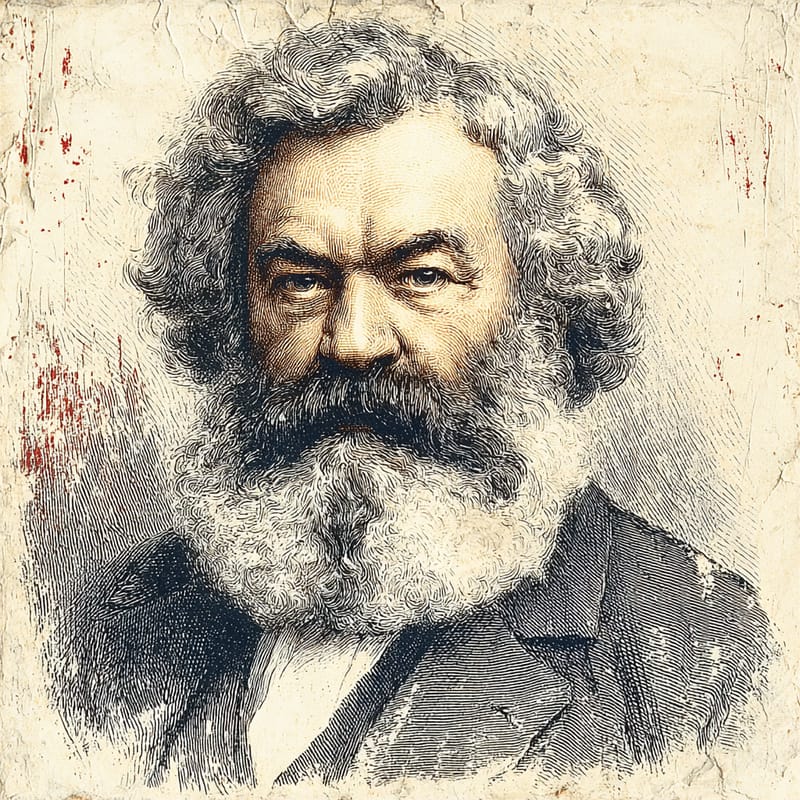
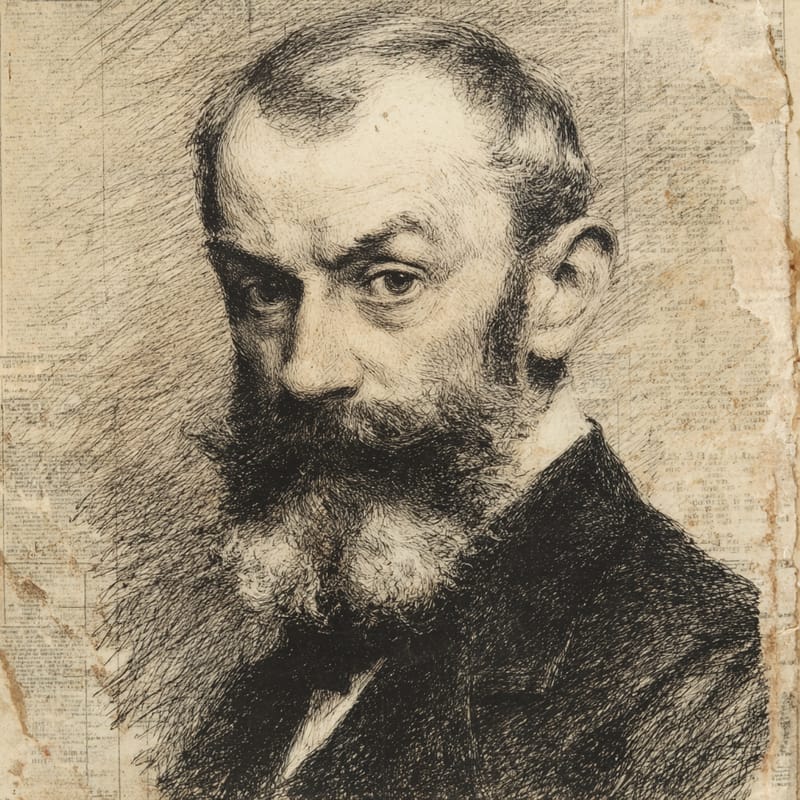
On the 99ideologies three-axis compass, the minds closest to Friedrich Engels are The Spectre of Communism (archetype) (99% alike), Karl Marx (99% alike) and Paul Lafargue (97% alike). The furthest is Adam Sutler (0% alike).