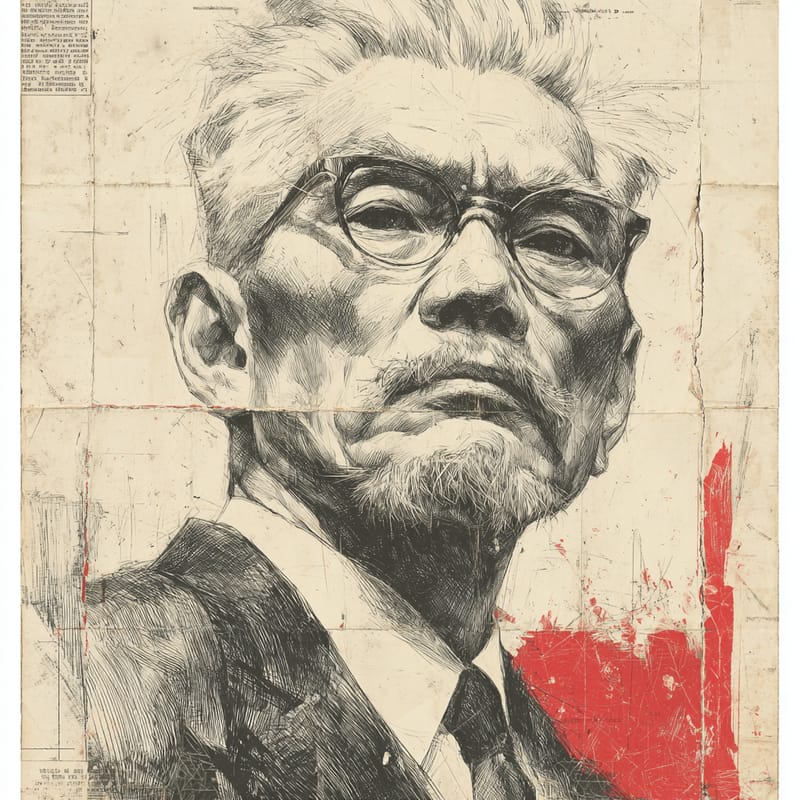
Zhu Rongji
The economic surgeon
Restructured the Chinese economy.
TechnocratOne of 729 ideologies · enter the Technocrat hall →- Role
- Premier
- Era
- b. 1928
- Region
- China
- Social band
- Centre (no modifier)
- Placement
- +66 · +32 · −10
§ Where Zhu Rongji stands
3 axesZhu is a market-oriented reformer who worked through the state. His 1994 tax-sharing reform restored Beijing's fiscal strength, the policy of 'grasping the large and letting go of the small' privatised, merged or closed huge numbers of small state enterprises, and in 1998 his government ended the allocation of welfare housing. WTO entry in 2001 opened China to foreign competition, though the commanding heights stayed in state hands.
Zhu governed as a forceful administrator within the Communist party-state and never challenged its monopoly on power. As mayor of Shanghai in 1989 he ended the city's protests without calling in the army, and as premier he led high-profile anti-smuggling and anti-corruption drives while the army was ordered out of commerce in 1998. Reform for him meant better administration, not political pluralism.
Zhu's social outlook is pragmatic and modernising rather than ideological, sitting slightly on the traditional side of the centre. He prized competence, discipline and clean government over cultural change, and his 1998 housing reform and the state-sector lay-offs reshaped urban life more than any campaign of social liberalisation. He showed little interest in widening personal or civil freedoms.
How close are you to Zhu Rongji?
Three statements, one per axis. Answer them and we’ll drop you on the compass next to them.
§ The story
HistoricalZhu Rongji (born 1928) is a Chinese engineer and economic administrator who served as premier of the State Council from 1998 to 2003. Born in Changsha and trained in electrical engineering at Tsinghua University, he joined the Communist Party in 1949 and worked in state planning, but was branded a rightist in 1958 and spent two decades in political disgrace before his rehabilitation in 1978. He rose under Deng Xiaoping's reforms to become mayor of Shanghai in 1988 and a vice-premier in 1991.
As vice-premier and central bank governor Zhu tamed the inflation of the early 1990s and recentralised tax revenue, and as premier he shut or sold thousands of loss-making state firms, cleaned up the banks' bad loans and concluded the negotiations that brought China into the World Trade Organization in 2001. Admirers credit him with laying the foundations of China's boom in the 2000s; critics point to the tens of millions of state workers who lost their jobs and to the limits of economic reform inside an unchanged one-party state.
Notable for
- 01State-enterprise reform
- 02Steered China into the WTO
- 03Banking modernisation
Key works & moments
- 1958Branded a rightist and expelled from the party; he is rehabilitated only in 1978.
- 1988Becomes mayor of Shanghai and champions the opening of the Pudong New Area.
- 1993Takes charge of the People's Bank of China and leads the fight against soaring inflation.
- 1994Introduces the tax-sharing system dividing revenue between central and local governments.
- 1998Becomes premier, launching state-enterprise, banking and housing reforms.
- 2001China joins the World Trade Organization after negotiations he championed.
§ Minds closest to Zhu Rongji
All minds →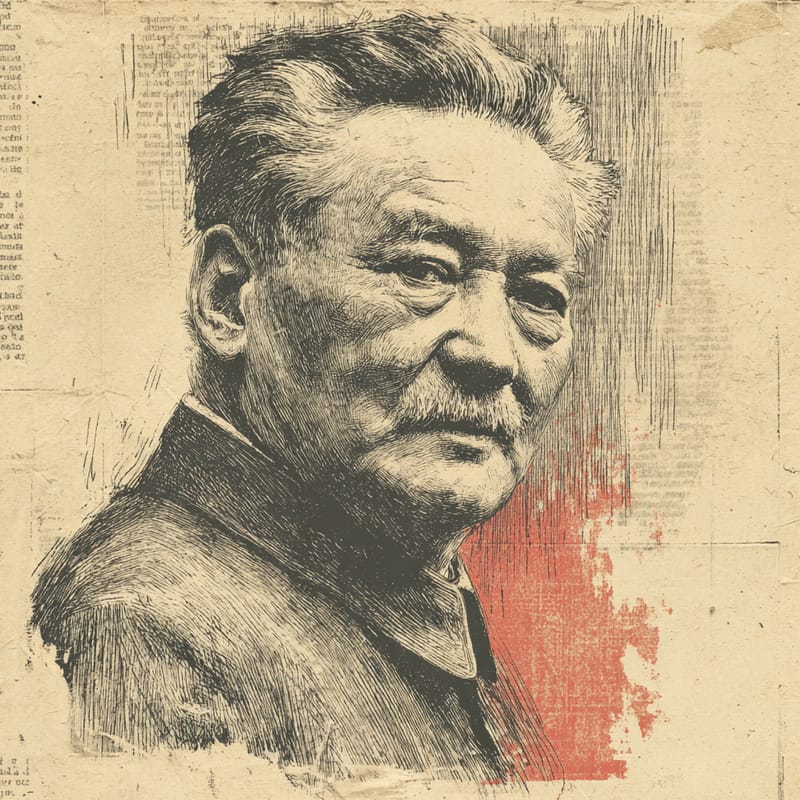

§ Also in the Technocrat hall
Enter the hall →§ Common questions
4 answersWhat is Zhu Rongji's political ideology?
Zhu Rongji is a market-oriented technocrat of the Chinese Communist Party: on the 99ideologies three-axis compass, a Technocrat. Economically he sits clearly on the market side (+66), having overseen the sell-off of small state firms, reformed the banks and taken China into the WTO. On governance he is moderately authoritarian (+32), a reformer who never questioned one-party rule, and socially he sits slightly on the traditional side of centre (−10), focused on competence and growth rather than cultural change.
Is Zhu Rongji left-wing or right-wing?
Neither label fits neatly. As a lifelong Communist Party official Zhu belongs to a party of the left in name, but his policies, from the mass sell-off of small state enterprises to opening China to world trade, moved the economy sharply towards the market. Politically he defended the party's monopoly on power. He is best described as a pragmatic, pro-market technocrat working inside an authoritarian socialist state.
What did Zhu Rongji do for China's economy?
He restructured it for the market era. Zhu curbed the inflation of 1993–95 as central bank governor, and his 1994 tax-sharing reform restored the central government's revenues. As premier from 1998 he restructured the state sector, shutting or selling thousands of loss-making firms, moved bad debts out of the state banks into asset-management companies, ended welfare housing and secured WTO entry in 2001. Many economists credit these reforms with China's rapid growth in the 2000s, though they cost tens of millions of state jobs.
Which minds are closest to Zhu Rongji?
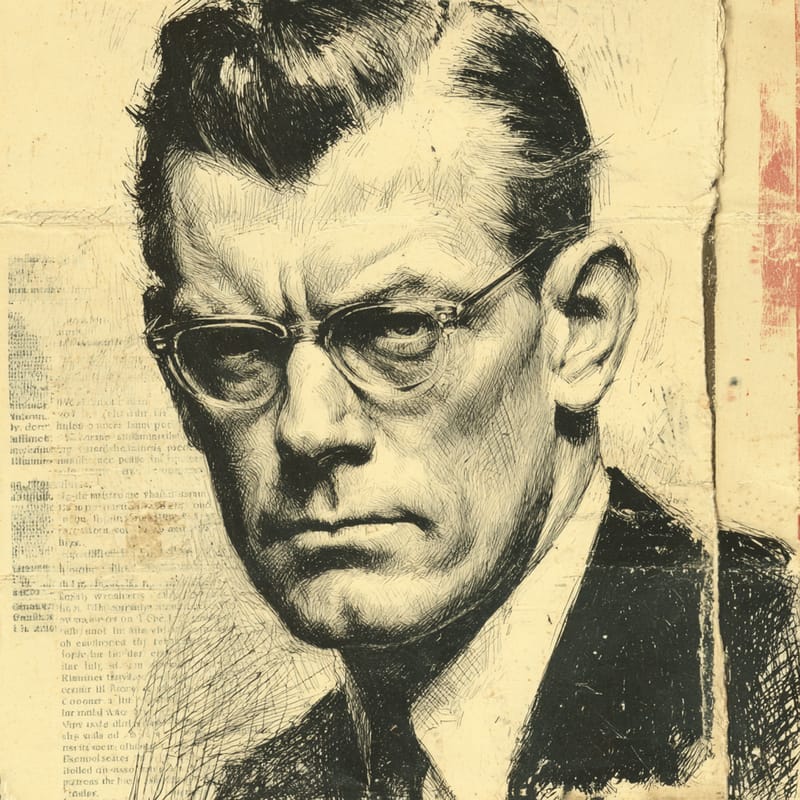
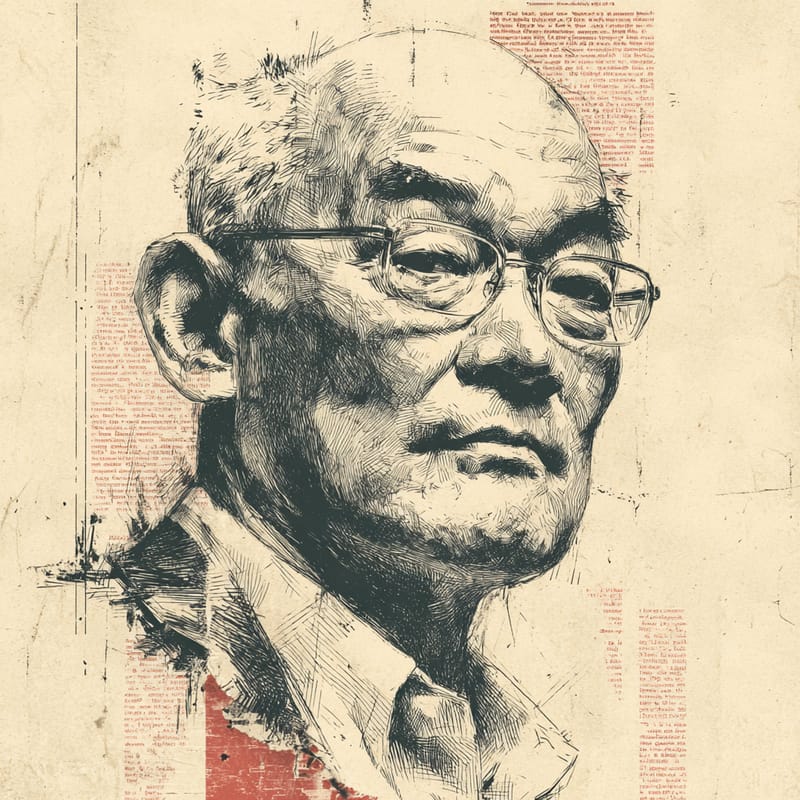
On the 99ideologies three-axis compass, the minds closest to Zhu Rongji are Deng Xiaoping (96% alike), Robert McNamara (96% alike) and Lee Kuan Yew (94% alike). The furthest is Emma Goldman (11% alike).