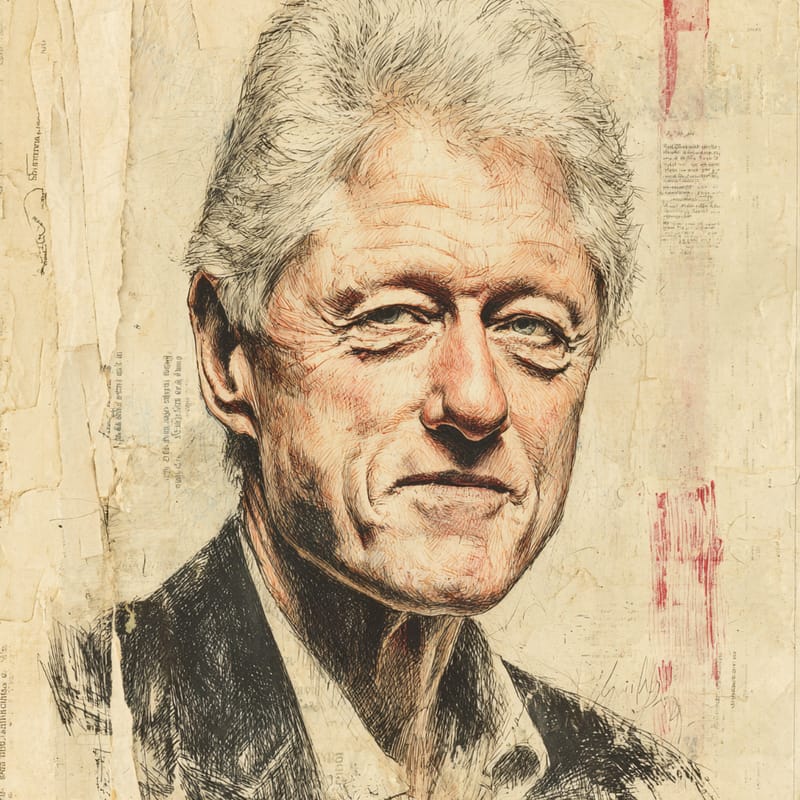
Bill Clinton
The era of big government is over
Third-way market centrism.
Heterodox NeoliberalOne of 729 ideologies · enter the Neoliberal hall →- Role
- President
- Era
- b. 1946
- Region
- United States
- Social band
- Heterodox
- Placement
- +20 · −4 · +20
§ Where Bill Clinton stands
3 axesClinton accepted markets and pursued fiscal discipline: he signed NAFTA in 1993, the welfare-reform law of 1996 that replaced open-ended cash aid with time-limited assistance, and the Gramm–Leach–Bliley Act of 1999 that dismantled barriers between commercial and investment banking. Yet his 1993 budget raised the top income-tax rate and expanded the Earned Income Tax Credit, keeping him only moderately right of centre.
Clinton practised triangulation within democratic norms, positioning himself between congressional Democrats and Republicans. His National Partnership for Reinventing Government, led by Al Gore, shrank the federal workforce, and his 1996 declaration that the era of big government was over signalled a lighter state, though his 1994 crime law expanded policing and sentencing. He sits near the centre with a slight libertarian lean.
Clinton was moderate-to-progressive by the standards of the 1990s: he appointed a diverse cabinet, signed the Family and Medical Leave Act and the Brady gun-control law in 1993, and supported abortion rights. Yet he also signed Don't Ask, Don't Tell into law in 1993 and the Defense of Marriage Act in 1996, positions he later disavowed, leaving him only moderately progressive.
How close are you to Bill Clinton?
Three statements, one per axis. Answer them and we’ll drop you on the compass next to them.
§ The story
LivingWilliam Jefferson Clinton (born 1946) served as the 42nd president of the United States from 1993 to 2001. Born William Jefferson Blythe III in Hope, Arkansas, he studied at Georgetown University, at Oxford as a Rhodes Scholar and at Yale Law School. He was elected attorney general of Arkansas in 1976 and governor in 1978, serving five terms in all, and chaired the centrist Democratic Leadership Council before defeating President George H. W. Bush and the independent Ross Perot in the 1992 election.
Clinton remade the Democrats as a party of the Third Way, combining deficit reduction, free trade and welfare reform with targeted social spending. His presidency saw a long economic expansion and the first federal budget surpluses since 1969, alongside the failure of his 1993–94 health plan and Republican control of Congress from 1995. In 1998 the House impeached him for perjury and obstruction of justice arising from his affair with the White House intern Monica Lewinsky; the Senate acquitted him in 1999. Critics on the left later blamed his crime law and financial deregulation for lasting harm.
Notable for
- 01NAFTA and welfare reform
- 02Balanced federal budgets
- 03'Third Way' politics
Key works & moments
- 1992Defeats George H. W. Bush and Ross Perot to win the presidency.
- 1993Signs NAFTA, the Family and Medical Leave Act and a deficit-reduction budget.
- 1994Signs the Violent Crime Control and Law Enforcement Act; Republicans win Congress in November.
- 1996Declares the era of big government over, signs welfare reform and wins re-election.
- 1998The federal budget records its first surplus since 1969; the House impeaches him in December.
- 1999The Senate acquits him; he signs the Gramm–Leach–Bliley financial deregulation act.
In their own words
“The era of big government is over.”
“There is nothing wrong with America that cannot be cured by what is right with America.”
§ Minds closest to Bill Clinton
All minds →




§ Also in the Neoliberal hall
Enter the hall →§ Common questions
4 answersWhat is Bill Clinton's political ideology?
Bill Clinton is a Third Way Democrat: on the 99ideologies three-axis compass, a Heterodox Neoliberal. Economically he sits moderately right of centre (+20), embracing free trade, balanced budgets, welfare reform and financial deregulation while raising taxes on top earners. On governance he is near the centre (−4), a triangulating institutionalist who trimmed the federal workforce, and socially he is moderately progressive (+20), pro-choice and pro-diversity but the signer of Don't Ask, Don't Tell and the Defense of Marriage Act.
Is Bill Clinton left-wing or right-wing?
Centre-left by party, centrist in policy. Clinton led the Democrats, defended abortion rights and expanded tax credits for working families, but he deliberately moved his party toward the centre after a decade of Republican presidential victories. His embrace of NAFTA, welfare reform, deficit reduction and deregulation drew criticism from the left and won grudging approval from many conservatives, which is why he is seen as the American face of Third Way politics.
What was Bill Clinton's Third Way?
It was his attempt to reconcile the Democratic Party's commitment to social justice with markets, fiscal discipline and personal responsibility. Developed in the Democratic Leadership Council during the 1980s, the approach rejected both old-style tax-and-spend liberalism and Reagan-era conservatism. In office it meant balanced budgets, free trade, work requirements for welfare and tougher crime laws alongside targeted social spending, and it influenced Tony Blair's New Labour and centre-left parties across Europe.
Which minds are closest to Bill Clinton?
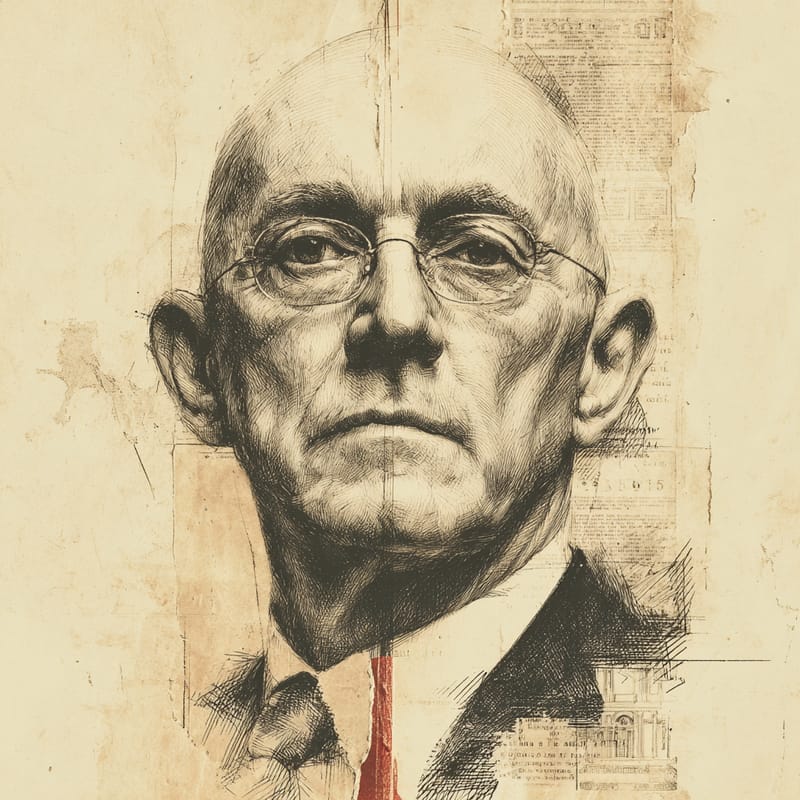
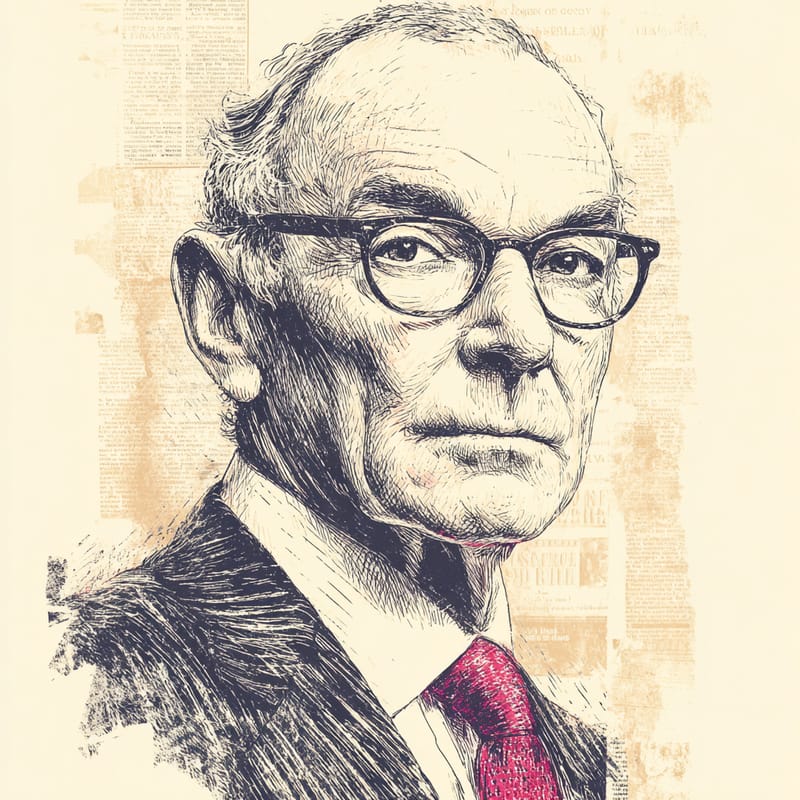
On the 99ideologies three-axis compass, the minds closest to Bill Clinton are Emmanuel Macron (96% alike), Robert Rubin (94% alike) and Jules Ferry (94% alike). The furthest is Gregor Strasser (34% alike).