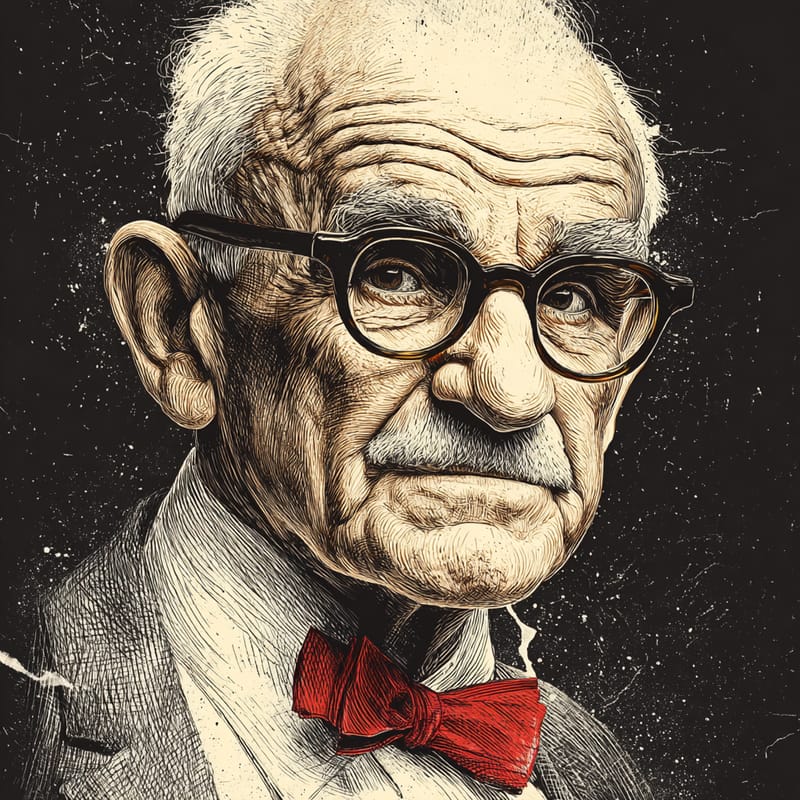
Milton Friedman
Free to choose
Monetarism and markets over the managed state.
NeoliberalOne of 729 ideologies · enter the Neoliberal hall →- Role
- Economist
- Era
- 1912–2006
- Region
- United States
- Social band
- Centre (no modifier)
- Placement
- +32 · −6 · +5
§ Where Milton Friedman stands
3 axesFriedman's Capitalism and Freedom (1962) called for floating exchange rates, school vouchers and a volunteer army, and his 1970 New York Times Magazine essay argued that business's only social responsibility is to increase its profits within the rules. Yet his market case kept a role for the state: he proposed a negative income tax to replace welfare programmes and a rule-bound central bank, so he stops short of laissez-faire.
Friedman wanted government limited to protecting rights, enforcing contracts and providing a stable monetary framework, but he pursued that goal through democratic persuasion, advising candidates and serving on the 1969–70 Gates Commission, whose call for an all-volunteer force was adopted when the draft ended in 1973. He insisted that economic freedom was a precondition of political freedom, an argument critics found convenient when he advised military-ruled Chile.
On personal conduct Friedman was a libertarian: he called for ending drug prohibition, most famously in a 1989 open letter to the drug czar William Bennett, and opposed peacetime conscription. But he also argued in Capitalism and Freedom that fair-employment laws against discrimination infringe freedom of contract, and he showed little interest in cultural causes, which leaves him close to the social centre.
How close are you to Milton Friedman?
Three statements, one per axis. Answer them and we’ll drop you on the compass next to them.
§ The story
HistoricalMilton Friedman (1912–2006) was an American economist, the leading figure of the Chicago school and winner of the 1976 Nobel Memorial Prize in Economic Sciences. Born in Brooklyn to Jewish immigrants from Carpathian Ruthenia, he studied at Rutgers and the University of Chicago, worked for New Deal agencies in the 1930s and, during the Second World War, at the Treasury, where he helped design income-tax withholding. He taught at Chicago from 1946 to 1977, then moved to the Hoover Institution at Stanford.
Friedman's monetarism, the claim that inflation is driven by excessive growth in the money supply, challenged Keynesian orthodoxy and shaped central banking in the late 1970s and 1980s, while his popular books and the television series Free to Choose carried the case for markets to a mass audience. He advised Barry Goldwater, Richard Nixon and Ronald Reagan and helped end the military draft. His defining controversy was Chile: after he met Augusto Pinochet in 1975 and urged rapid action against inflation, critics accused him of lending legitimacy to a dictatorship, a charge he rejected.
Notable for
- 01'Capitalism and Freedom'
- 02Nobel Memorial Prize, 1976
- 03'Free to Choose' and monetarism
Key works & moments
- 1962Publishes Capitalism and Freedom, proposing school vouchers, a negative income tax and floating exchange rates.
- 1963With Anna Schwartz, publishes A Monetary History of the United States, blaming the Fed for the Depression's depth.
- 1967His presidential address to the American Economic Association sets out the natural rate of unemployment.
- 1970Argues in The New York Times Magazine that business's social responsibility is to increase its profits.
- 1976Awarded the Nobel Memorial Prize in Economic Sciences amid protests over his Chile visit.
- 1980Free to Choose, a book and PBS television series made with Rose Friedman, reaches a mass audience.
In their own words
“Inflation is always and everywhere a monetary phenomenon in the sense that it is and can be produced only by a more rapid increase in the quantity of money than in output.”
“There is one and only one social responsibility of business – to use its resources and engage in activities designed to increase its profits so long as it stays within the rules of the game, which is to say, engages in open and free competition without deception or fraud.”
§ Minds closest to Milton Friedman
All minds →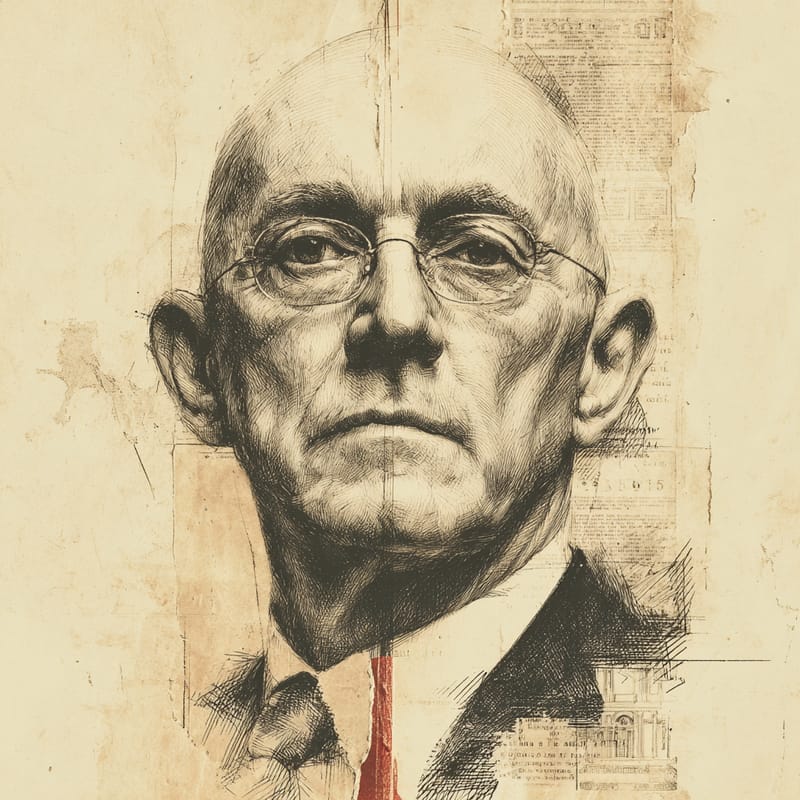

§ Also in the Neoliberal hall
Enter the hall →§ Common questions
4 answersWhat was Milton Friedman's political ideology?
Milton Friedman was a classical liberal economist and the leading intellectual of free-market monetarism: on the 99ideologies three-axis compass, a Neoliberal. Economically he sat moderately on the market side (+32), favouring deregulation, floating currencies and school vouchers while accepting a negative income tax and a rule-bound central bank. On governance he leaned slightly libertarian (−6), seeking limited government through democratic persuasion, and socially he sat near the centre (+5), liberal on drugs and conscription but uninterested in cultural causes.
Was Milton Friedman left-wing or right-wing?
Right of centre economically, and a hero of the American right, but not a social conservative. Friedman advised Republican candidates from Barry Goldwater to Ronald Reagan and supplied much of the intellectual case for lower taxes, deregulation and privatisation. Yet he called himself a liberal in the nineteenth-century sense, opposed the draft and the war on drugs, and proposed a negative income tax that would have guaranteed every household a minimum income, positions that put him closer to libertarians than to traditional conservatives.
Did Milton Friedman advise Pinochet?
Briefly, and it remains the most contested episode of his career. In March 1975 Friedman lectured in Chile, met Augusto Pinochet and afterwards sent him a letter recommending a rapid programme to end inflation, including deep cuts in government spending. Many of the junta's economic policymakers were Chilean economists trained at the University of Chicago, known as the Chicago Boys. Friedman held no official post and argued that freer markets would eventually undermine the dictatorship; critics said he lent credibility to a regime that tortured and killed its opponents.
Which minds are closest to Milton Friedman?
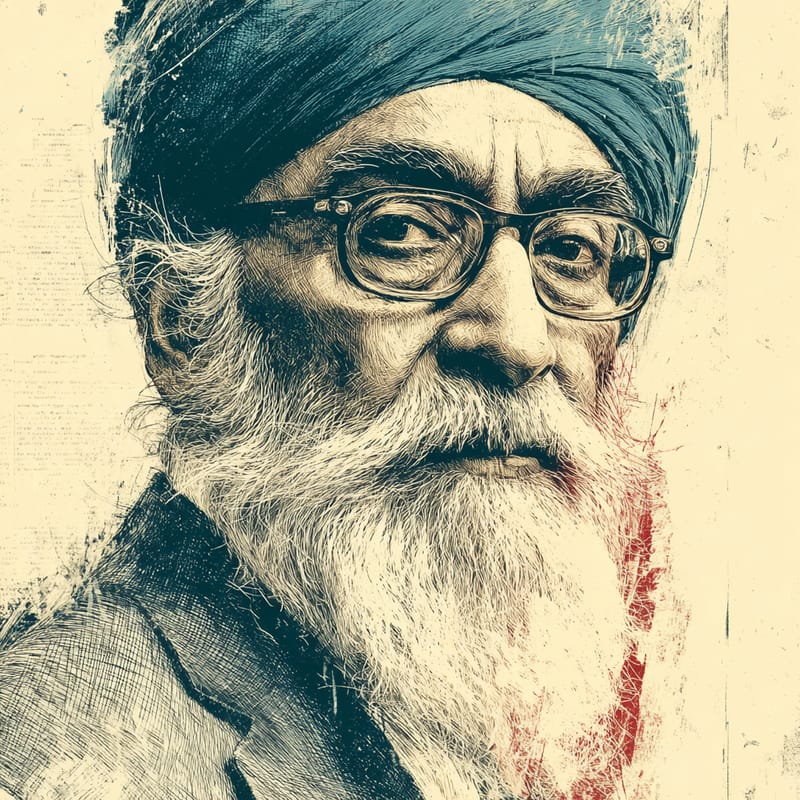
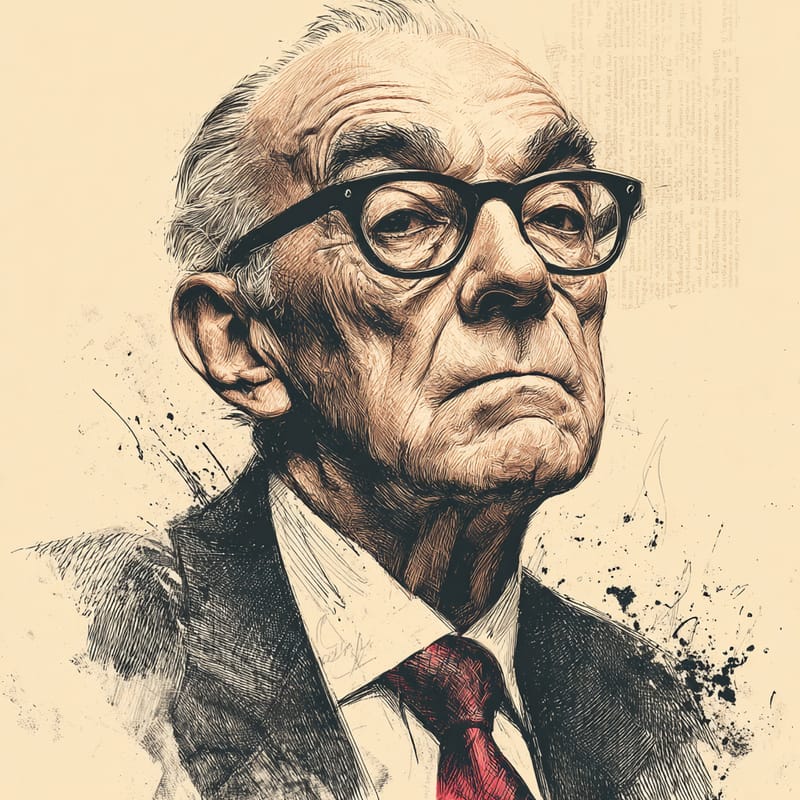
On the 99ideologies three-axis compass, the minds closest to Milton Friedman are Robert Rubin (97% alike), Manmohan Singh (97% alike) and Alan Greenspan (97% alike). The furthest is Pol Pot (29% alike).