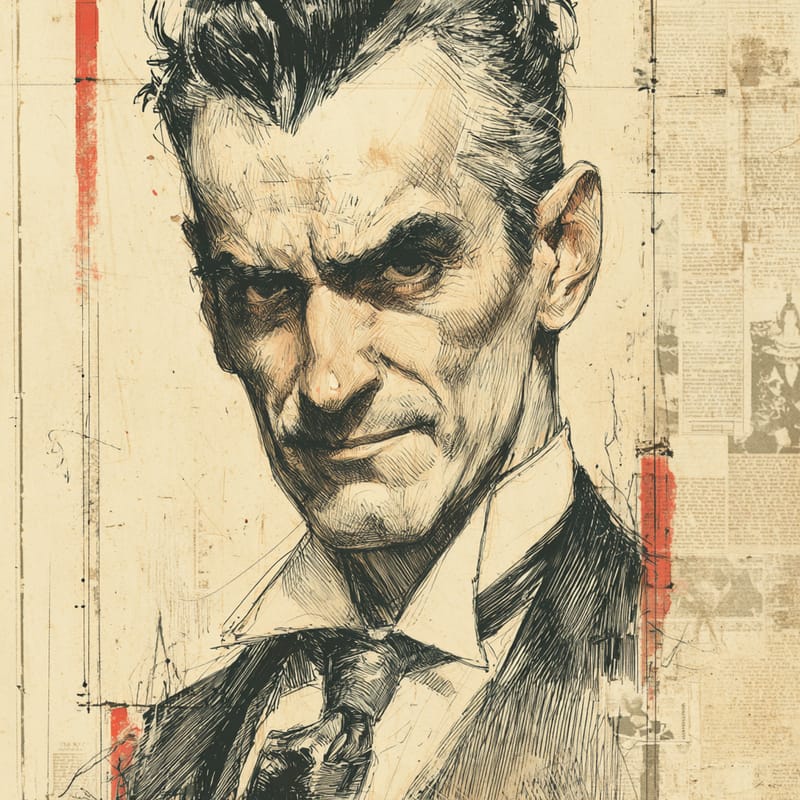
Gordon Gekko
Greed is good
The market ethos, distilled and exposed.
NeoliberalOne of 729 ideologies · enter the Neoliberal hall →- Role
- Financier (fiction)
- From
- Wall Street
- Region
- United States
- Social band
- Centre (no modifier)
- Placement
- +37 · +2 · −10
§ Where Gordon Gekko stands
3 axesGekko preaches unrestrained capitalism: at the Teldar Paper meeting he casts himself as a liberator of shareholders from bloated management, and he makes money by buying undervalued companies and selling off their parts. Yet his fortune rests on insider information and rigged trades rather than open competition, so the film presents him less as a free-market idealist than as a predator gaming the market.
Gekko has no political programme and little interest in the state except as an obstacle: he treats securities law as a nuisance to evade and assumes that money, not voters, makes the rules. He neither seeks office nor campaigns against government, and he is finally brought down when Bud wears a wire for the Securities and Exchange Commission, which leaves him near the governance centre.
Socially Gekko is an amoral individualist who measures worth in money and status, collecting art, property and protégés as trophies of success. He has no interest in cultural causes or moral reform, and the film sets his cynicism against the loyalty of Bud's father, Carl, to his fellow workers. His conventional appetite for rank and luxury tilts him slightly toward the traditional side.
How close are you to Gordon Gekko?
Three statements, one per axis. Answer them and we’ll drop you on the compass next to them.
§ The story
FictionGordon Gekko is the corporate raider at the centre of Wall Street, the 1987 film directed by Oliver Stone and written by Stone with Stanley Weiser. Played by Michael Douglas, who won the Academy Award for Best Actor for the role, Gekko takes the ambitious young broker Bud Fox under his wing, trades on the inside information Bud brings him and plots to buy and break up Bluestar Airlines, where Bud's father is a mechanic and union representative.
Stone, whose father was a stockbroker, meant Gekko as an indictment of the takeover boom and insider-trading scandals of the 1980s, and the character's speech to Teldar Paper's shareholders echoed Ivan Boesky's 1986 remark to Berkeley business graduates that greed was healthy. Instead many viewers admired him, and the compressed catchphrase 'greed is good' became shorthand for the decade's market triumphalism. Douglas reprised the role in Wall Street: Money Never Sleeps (2010), in which a Gekko released from prison warns of the coming financial crisis.
Notable for
- 01'Greed, for lack of a better word, is good'
- 02Icon of 1980s finance
- 03Cautionary capitalist archetype
Key works & moments
- 1987Oliver Stone's Wall Street opens, with Michael Douglas as the corporate raider Gordon Gekko.
- Act OneTakes Bud Fox as his protégé after Bud passes him inside information on Bluestar Airlines.
- Act TwoTells Teldar Paper's shareholders that greed, for lack of a better word, is good.
- Act ThreePlans to liquidate Bluestar; Bud turns on him and helps investigators record him incriminating himself.
- 1988Michael Douglas wins the Academy Award for Best Actor for the role.
- 2010Returns from prison in Wall Street: Money Never Sleeps, set during the 2008 financial crisis.
In Gordon Gekko's words
“Greed, for lack of a better word, is good. Greed is right. Greed works.”
§ Minds closest to Gordon Gekko
All minds →

§ Also in the Neoliberal hall
Enter the hall →§ Common questions
4 answersWhat is Gordon Gekko's political ideology?
Gordon Gekko is a market fundamentalist of the 1980s trading floor: on the 99ideologies three-axis compass, a Neoliberal. Economically he sits on the market side (+37), preaching greed as the engine of progress, though his fortune depends on insider trading rather than fair competition. On governance he is near the centre (+2), treating regulators as obstacles without any political agenda of his own, and socially he leans slightly traditional (−10), an amoral individualist who prizes wealth, rank and status.
Is Gordon Gekko left-wing or right-wing?
Right-leaning in economic temper, but not a political conservative. Gekko celebrates profit, takeovers and shareholder value, the language of the 1980s free-market right, and treats workers and complacent managers alike as obstacles to profit. Yet he never speaks for a party or a cause, and Oliver Stone, a critic of Reagan-era capitalism, wrote him as a villain whose greed leads to his downfall. He is best read as a portrait of financial predation rather than of any ideology's ideals.
Was Gordon Gekko based on a real person?
Partly. Gekko is generally described as a composite of 1980s financiers rather than a portrait of one man. His speech to Teldar Paper's shareholders echoes Ivan Boesky, the arbitrageur who told Berkeley business graduates in 1986 that greed was healthy and who was later imprisoned in an insider-trading scandal, and commentators also saw traces of corporate raiders such as Carl Icahn. Oliver Stone, whose father Louis was a stockbroker, dedicated the film to him.
Which minds are closest to Gordon Gekko?
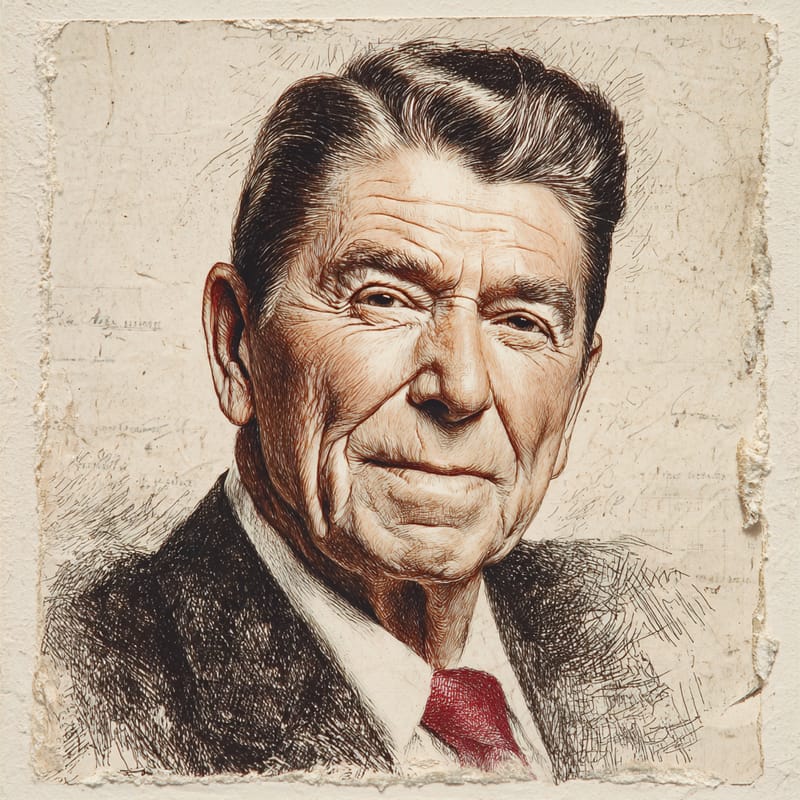
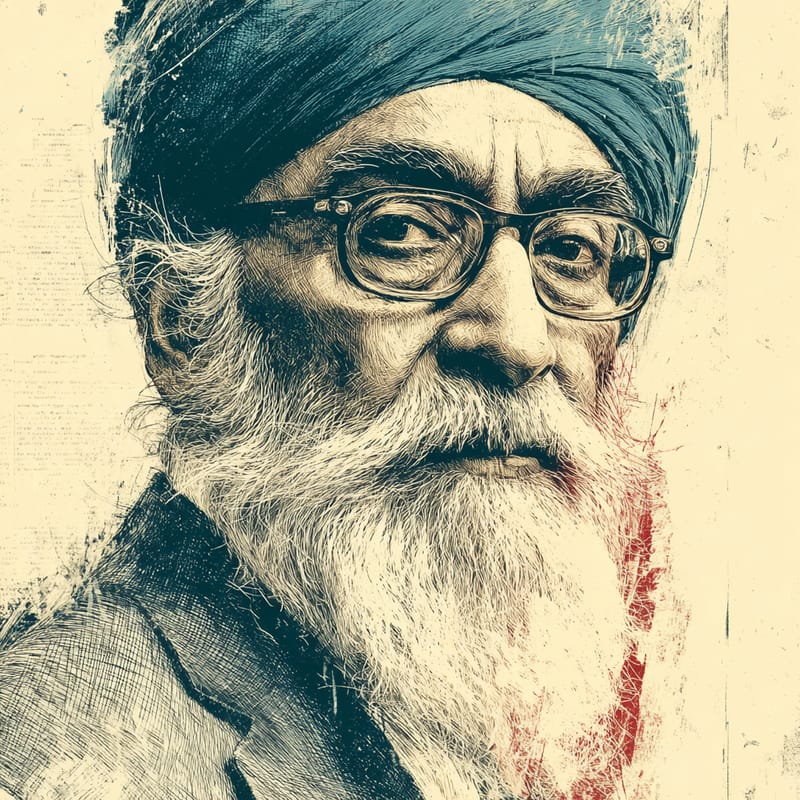
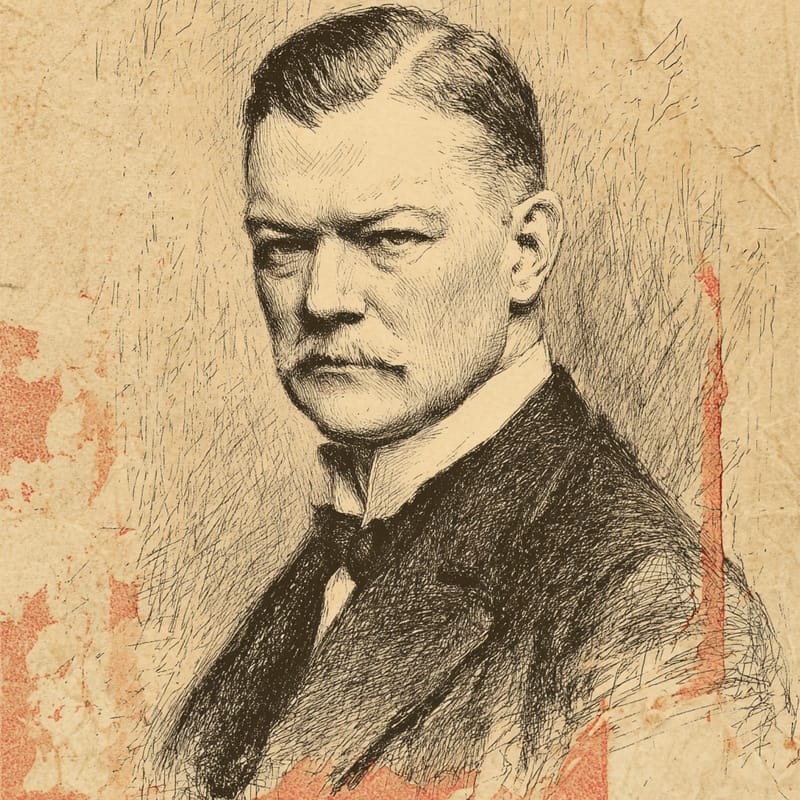
On the 99ideologies three-axis compass, the minds closest to Gordon Gekko are Alan Greenspan (96% alike), Harold Macmillan (94% alike) and Milton Friedman (93% alike). The furthest is Emma Goldman (25% alike).