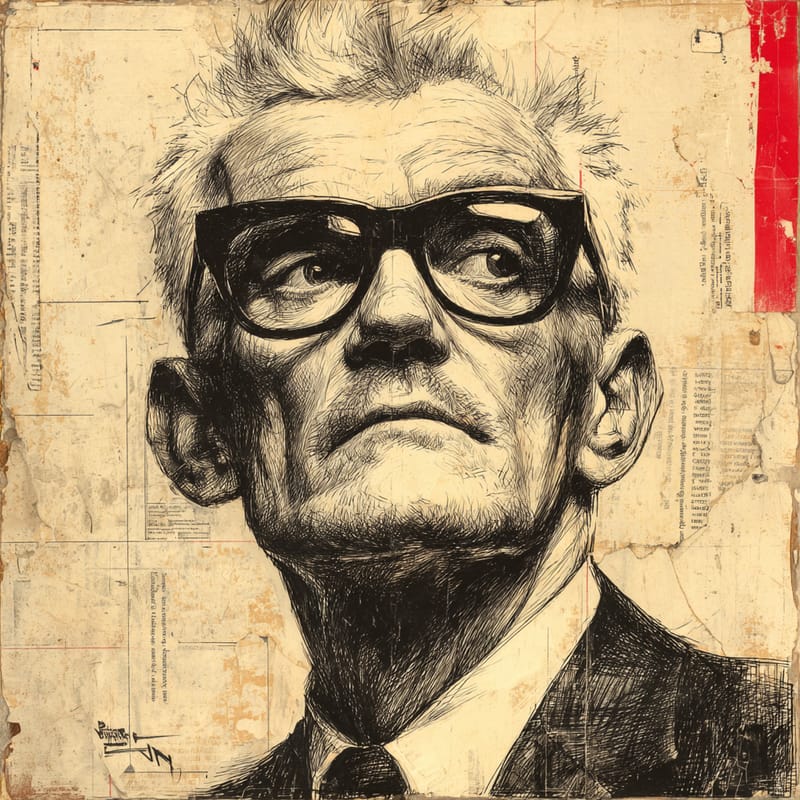
Barry Goldwater
Extremism in defense of liberty
The conscience of a conservative.
Rooted Liberal CapitalistOne of 729 ideologies · enter the Liberal Capitalist hall →- Role
- Senator
- Era
- 1909–1998
- Region
- United States
- Social band
- Rooted
- Placement
- +36 · −20 · −25
§ Where Barry Goldwater stands
3 axesGoldwater's The Conscience of a Conservative (1960) called for deep cuts in federal spending, an end to farm subsidies and Washington's withdrawal from welfare programmes he believed belonged to the states and private charity, and in 1964 he floated making Social Security voluntary. His small-state creed stopped at defence, however: he was a Cold War hawk who backed heavy military spending.
Goldwater's constitutionalism made him suspicious of central power: he opposed federal aid to education and voted against the Civil Rights Act of 1964, arguing that its public-accommodations and employment titles exceeded Washington's authority. His libertarianism was tempered by Cold War anti-communism, seen in his 1954 vote against censuring Senator Joseph McCarthy, though in later life he defended privacy and personal choice against government.
In the 1960s Goldwater led a socially traditional right whose 1964 campaign drew Southern segregationist voters toward the Republicans, although he had belonged to the Phoenix NAACP and voted for the civil rights acts of 1957 and 1960. In old age his libertarian instincts pulled him leftward on personal questions: he backed abortion rights and, in 1993, openly gay service in the military.
How close are you to Barry Goldwater?
Three statements, one per axis. Answer them and we’ll drop you on the compass next to them.
§ The story
HistoricalBarry Morris Goldwater (1909–1998) was a US senator from Arizona from 1953 to 1965 and again from 1969 to 1987. The grandson of a Jewish immigrant merchant, he ran the family department store in Phoenix, flew as a pilot in the Army Air Forces during the Second World War and entered politics on the Phoenix city council in 1949. His 1960 manifesto The Conscience of a Conservative, ghostwritten by L. Brent Bozell, made him the hero of a rising conservative movement.
As the Republican presidential nominee in 1964 he lost to Lyndon Johnson in a landslide, carrying only Arizona and five Deep South states, but his campaign shifted the party's centre of gravity to the right and launched Ronald Reagan's political career. His vote against the Civil Rights Act of 1964, parts of which he called unconstitutional, remains his most contested decision. In 1974 he told Richard Nixon that he had lost the Senate's support, and in later life he backed abortion rights and gay military service while denouncing the religious right.
Notable for
- 01'The Conscience of a Conservative'
- 021964 presidential nominee
- 03Refounded the conservative movement
Key works & moments
- 1952Elected to the US Senate from Arizona, defeating Senate Majority Leader Ernest McFarland.
- 1960Publishes The Conscience of a Conservative, ghostwritten by L. Brent Bozell.
- 1964Votes against the Civil Rights Act, citing constitutional objections to two of its titles.
- 1964Wins the Republican nomination, then loses to Lyndon Johnson, carrying only six states.
- 1974Tells Richard Nixon he has lost Congress's support; Nixon resigns days later.
- 1986The Goldwater–Nichols Act reorganises the command structure of the US armed forces.
In their own words
“I would remind you that extremism in the defense of liberty is no vice! And let me remind you also that moderation in the pursuit of justice is no virtue!”
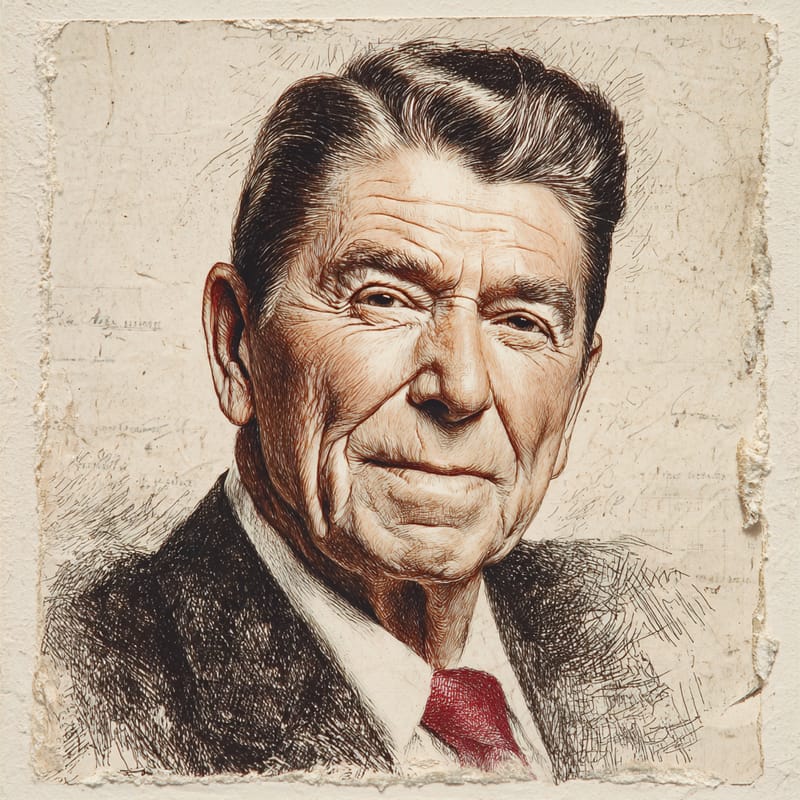
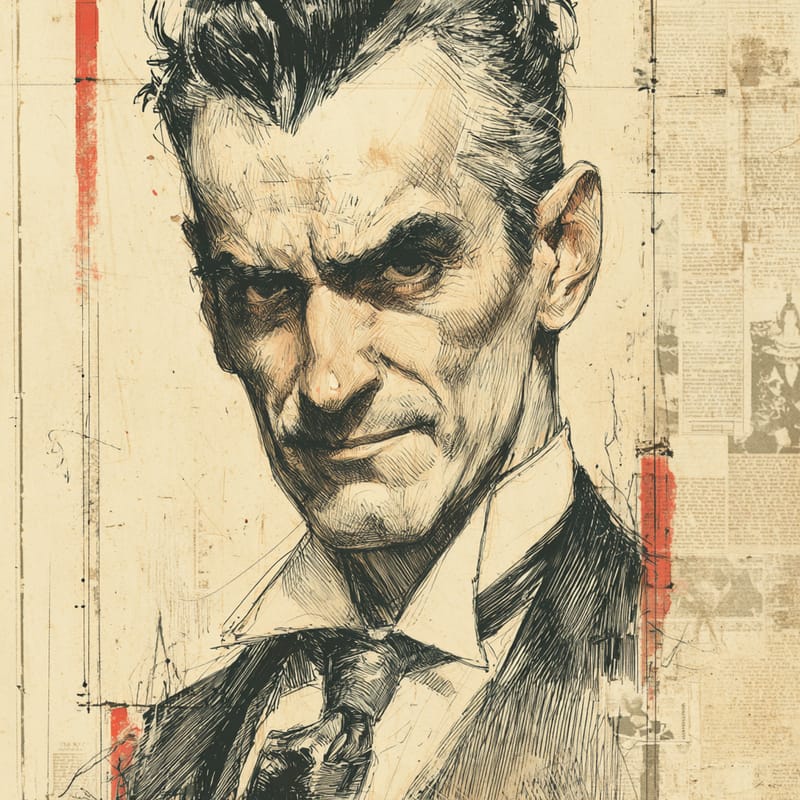
§ Minds closest to Barry Goldwater
All minds →


§ Also in the Liberal Capitalist hall
Enter the hall →§ Common questions
4 answersWhat was Barry Goldwater's political ideology?
Barry Goldwater was a libertarian-leaning conservative, often called the founder of the modern American conservative movement: on the 99ideologies three-axis compass, a Rooted Liberal Capitalist. Economically he sat on the market side (+36), seeking to shrink federal spending and welfare while backing a strong military. On governance he leaned libertarian (−20), a states'-rights constitutionalist wary of Washington, and socially he was moderately traditional (−25), a stance he softened in later life by supporting abortion rights and gay military service.
Was Barry Goldwater left-wing or right-wing?
Right-wing: his 1964 campaign was the first great insurgency of the modern American right and moved the Republican Party decisively in that direction. His agenda of lower spending, smaller federal government, states' rights and militant anti-communism defined American conservatism for decades. But his conservatism was libertarian rather than religious, and in the 1980s and 1990s he clashed with the religious right, defended abortion rights and backed gay people serving openly in the military, which left some later conservatives regarding him as out of step.
Why did Barry Goldwater vote against the Civil Rights Act of 1964?
He said his objection was constitutional rather than racial. Goldwater argued that Title II, on public accommodations, and Title VII, on employment, gave the federal government powers over private businesses that the Constitution did not grant it. He had voted for the 1957 and 1960 civil rights acts and had belonged to the NAACP in Phoenix. Critics, including many Republicans, saw his vote as giving cover to segregation, and that November his campaign carried five Deep South states.
Which minds are closest to Barry Goldwater?
On the 99ideologies three-axis compass, the minds closest to Barry Goldwater are Calvin Coolidge (98% alike), Herbert Hoover (97% alike) and Wilhelm Röpke (95% alike). The furthest is Pol Pot (20% alike).