
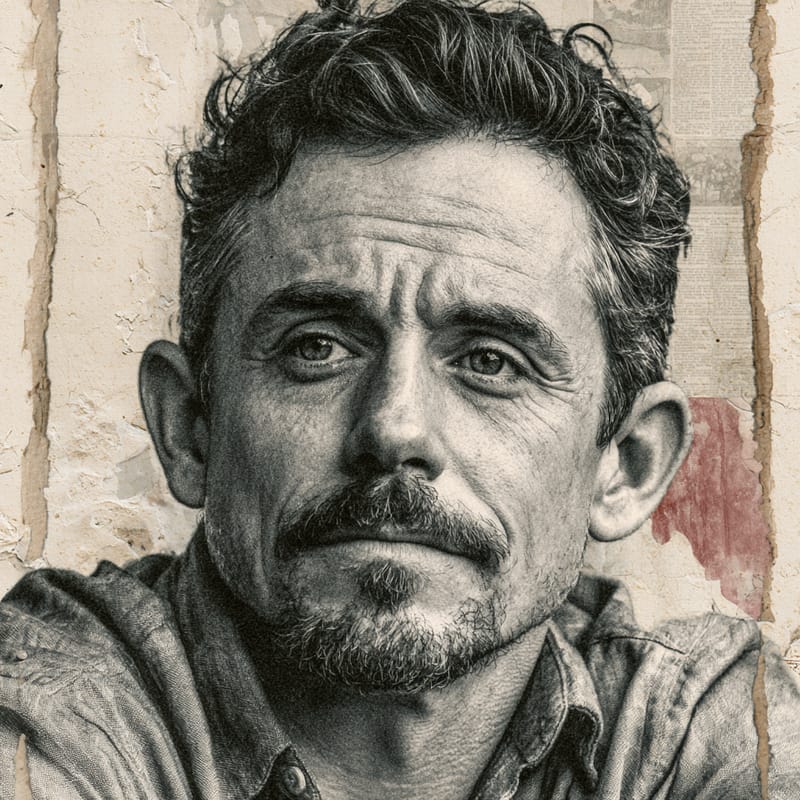
Walter Block
Defending the undefendable
Property rights pushed to the limit.
Anarcho-CapitalistOne of 729 ideologies · enter the Anarcho-Capitalist hall →- Role
- Economist
- Era
- b. 1941
- Region
- United States
- Social band
- Centre (no modifier)
- Placement
- +97 · −93 · −5
§ Where Walter Block stands
3 axesBlock would privatise virtually everything. He opposes minimum wages, rent control and all taxation, and The Privatization of Roads and Highways (2009) argues that even streets and motorways would be better run by private owners competing for customers. Defending the Undefendable (1976) applies the same principle to markets the law forbids, insisting that voluntary exchange is legitimate whatever is traded.
Block is a Rothbardian anarcho-capitalist who regards the state as institutionalised coercion, financed by taxation he considers theft. He holds that law and defence, like every other service, should be supplied privately, applying the non-aggression principle in the strict form set out in Murray Rothbard's For a New Liberty (1973). His scholarly articles defending that position number in the hundreds.
Socially Block sits close to the centre because his positions pull in opposite directions. He would legalise drugs, prostitution and blackmail, as Defending the Undefendable (1976) argues, yet he stresses that legality is not approval and defends private owners' freedom to discriminate. His theory of evictionism splits the abortion debate, allowing a woman to evict a foetus but not to kill one that could survive outside the womb.
How close are you to Walter Block?
Three statements, one per axis. Answer them and we’ll drop you on the compass next to them.
§ The story
LivingWalter Block (born 1941) is an American economist of the Austrian school and one of the most prolific defenders of anarcho-capitalism. Born in Brooklyn, he studied philosophy at Brooklyn College, earned a PhD in economics at Columbia University and was won over to anarcho-capitalism in the 1960s by Murray Rothbard. After years as a senior economist at Canada's Fraser Institute and posts at several American colleges, he joined Loyola University New Orleans in the early 2000s and became a senior fellow of the Mises Institute.
Block's best-known book, Defending the Undefendable (1976), argues that the pimp, the blackmailer, the drug dealer, the slumlord and other reviled figures violate no one's rights and should not be punished by law, a deliberately provocative application of libertarian property logic. He has extended that logic to the privatisation of roads and highways and to a theory of abortion he calls evictionism. His readiness to press arguments to uncomfortable conclusions has drawn frequent criticism, notably over remarks about slavery reported by The New York Times in 2014, which he said had been taken out of context.
Notable for
- 01'Defending the Undefendable'
- 02Prolific Austrian-school output
- 03Privatise-everything advocacy
Key works & moments
- 1960sMoves from Ayn Rand's ideas to anarcho-capitalism under Murray Rothbard's influence.
- 1976Publishes Defending the Undefendable, championing the pimp, the blackmailer and the drug dealer.
- 1980sWorks as a senior economist at Canada's free-market Fraser Institute.
- 2000sJoins Loyola University New Orleans as a professor of economics.
- 2009Publishes The Privatization of Roads and Highways.
- 2014Faces criticism after The New York Times reports remarks on slavery he says were misrepresented.
§ Minds closest to Walter Block
All minds →




§ Also in the Anarcho-Capitalist hall
Enter the hall →§ Common questions
4 answersWhat is Walter Block's political ideology?
Walter Block is a Rothbardian anarcho-capitalist and Austrian-school economist: on the 99ideologies three-axis compass, an Anarcho-Capitalist. Economically he sits at the far market end (+97), favouring the privatisation of everything from roads to law. On governance he is almost wholly anti-state (−93), treating taxation as theft and the state as institutionalised coercion, and socially he sits near the centre (−5), favouring legal tolerance of vices he does not endorse while defending property owners' freedom to discriminate.
Is Walter Block left-wing or right-wing?
Right-wing on economics and libertarian on government. Block's opposition to taxation, minimum wages, rent control and the state itself places him at the far free-market end of the spectrum. Socially he defies easy labels: he would legalise drugs, prostitution and other vices, a position many conservatives reject, while defending property owners' right to discriminate and proposing a middle way on abortion that fits neither camp's position.
What is Defending the Undefendable about?
It is Walter Block's 1976 book defending, as a matter of law, people society condemns, from the pimp and the prostitute to the blackmailer, the drug dealer, the slumlord and the strikebreaker. Block's argument is that none of them initiates force against anyone else, so in a libertarian legal order none should be punished, however distasteful their conduct. The book deliberately provokes readers in order to test their commitment to voluntary exchange, and it has stayed in print as a libertarian classic.
Which minds are closest to Walter Block?
On the 99ideologies three-axis compass, the minds closest to Walter Block are Murray Rothbard (98% alike), Ragnar Danneskjöld (94% alike) and The Night-Watchman State (archetype) (93% alike). The furthest is Pol Pot (0% alike).