
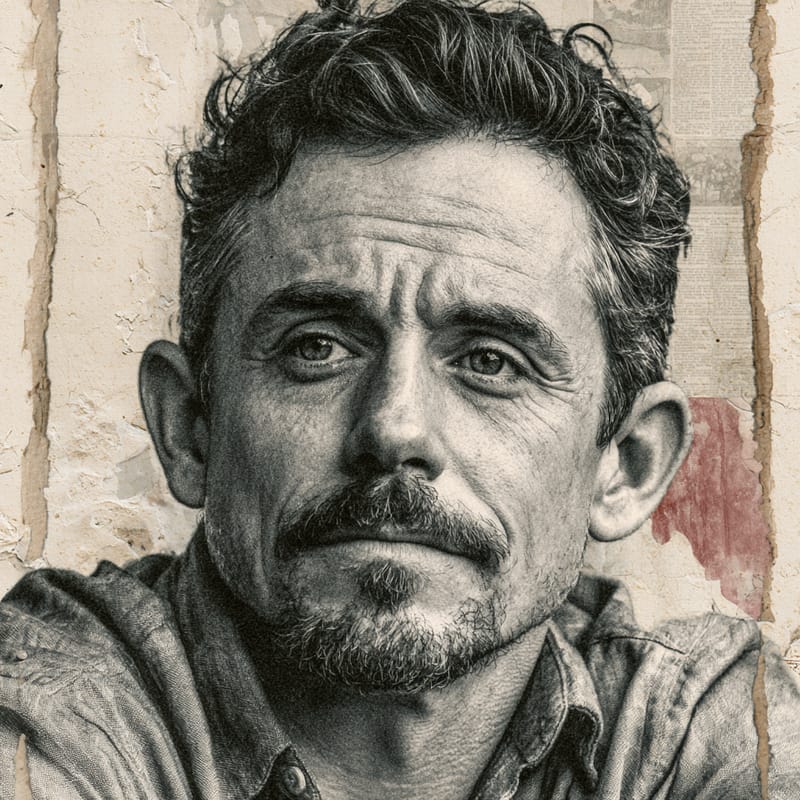
Tibor Machan
Individuals and their rights
The moral case for the minimal state.
Minarcho-CapitalistOne of 729 ideologies · enter the Minarcho-Capitalist hall →- Role
- Philosopher
- Era
- 1939–2016
- Region
- Hungary / US
- Social band
- Centre (no modifier)
- Placement
- +92 · −76 · −12
§ Where Tibor Machan stands
3 axesMachan defended laissez-faire capitalism as the economic expression of individual rights, not merely as an efficient system. In Capitalism and Individualism (1990) he argued that the free market is the only order consistent with each person's rights to life, liberty and property, and as a professor of business ethics at Chapman University he defended the pursuit of profit as morally legitimate.
Machan was a minarchist: he held that government is justified only to protect individual rights, through police, courts and defence, and that any further reach violates those rights. Individuals and Their Rights (1989) set out this natural-rights case, and he argued against anarcho-capitalists that a limited government could arise and operate without violating anyone's rights.
Machan's individualism rested on a classical ethic of virtue rather than on social liberation. He held that adults must be free to make their own moral choices, wise or foolish, without state interference, while insisting on personal responsibility and an Aristotelian ideal of flourishing, and in Putting Humans First (2004) he rejected the idea of animal rights, defending human priority over nature.
How close are you to Tibor Machan?
Three statements, one per axis. Answer them and we’ll drop you on the compass next to them.
§ The story
HistoricalTibor R. Machan (1939–2016) was a Hungarian-born American philosopher and one of the most prolific academic defenders of libertarianism. Born in Budapest, he escaped communist Hungary as a teenager, settled in the United States in the 1950s and served in the US Air Force before studying philosophy at Claremont Men's College, New York University and the University of California, Santa Barbara. In the early 1970s he joined Robert Poole and Manuel Klausner in taking over Reason magazine, and in 1978 they co-founded the Reason Foundation.
Machan taught at the State University of New York at Fredonia, Auburn University and Chapman University, where he held a chair in business ethics and free enterprise, and was a research fellow at the Hoover Institution. Influenced by Ayn Rand and Aristotle, he grounded individual rights in an ethic of human flourishing, setting out the case most fully in Individuals and Their Rights (1989). In books and a long-running newspaper column he defended capitalism and a minimal state, rejected the idea of animal rights and argued against anarcho-capitalists that a limited government could be legitimate.
Notable for
- 01'Individuals and Their Rights'
- 02Reason Foundation co-founder
- 03Natural-rights libertarianism
Key works & moments
- 1950sEscapes communist Hungary as a teenager and settles in the United States.
- early 1970sWith Robert Poole and Manuel Klausner, takes over Reason magazine.
- 1978Co-founds the Reason Foundation with Poole and Klausner.
- 1989Publishes Individuals and Their Rights, his systematic case for natural rights.
- 1990Publishes Capitalism and Individualism, a rights-based defence of the free market.
- 2004Publishes Putting Humans First, rejecting the idea of animal rights.
§ Minds closest to Tibor Machan
All minds →




§ Also in the Minarcho-Capitalist hall
Enter the hall →The closest minds above are this hall’s whole roster.
§ Common questions
4 answersWhat was Tibor Machan's political ideology?
Tibor Machan was a natural-rights libertarian who defended laissez-faire capitalism and a strictly limited government: on the 99ideologies three-axis compass, a Minarcho-Capitalist. Economically he sat near the market extreme (+92), treating free markets as the expression of individual rights. On governance he was strongly libertarian (−76), confining the state to police, courts and defence, and socially he leaned slightly traditional (−12), pairing personal freedom with a classical ethic of virtue and responsibility.
Was Tibor Machan left-wing or right-wing?
He belonged to the libertarian right. Machan's defence of capitalism, profit and property rights, and his long association with Reason and the Hoover Institution, placed him firmly against socialism, which he had experienced first-hand in communist Hungary. But he was not a conventional conservative: he held that adults should be free to make their own moral choices without state interference, and he grounded his politics in individual rights rather than in religion or tradition.
Was Tibor Machan an Objectivist?
Not strictly, though Ayn Rand shaped his thinking. Machan read Rand as a young man, and his early work drew on her defence of rational self-interest and individual rights. But he grounded his ethics in Aristotle's account of human flourishing rather than in Rand's system as such, and he became one of the leading neo-Aristotelian libertarians, an approach he shared with the philosophers Douglas Rasmussen and Douglas Den Uyl.
Which minds are closest to Tibor Machan?
On the 99ideologies three-axis compass, the minds closest to Tibor Machan are John Hospers (99% alike), The Night-Watchman State (archetype) (98% alike) and Randy Barnett (97% alike). The furthest is Pol Pot (0% alike).