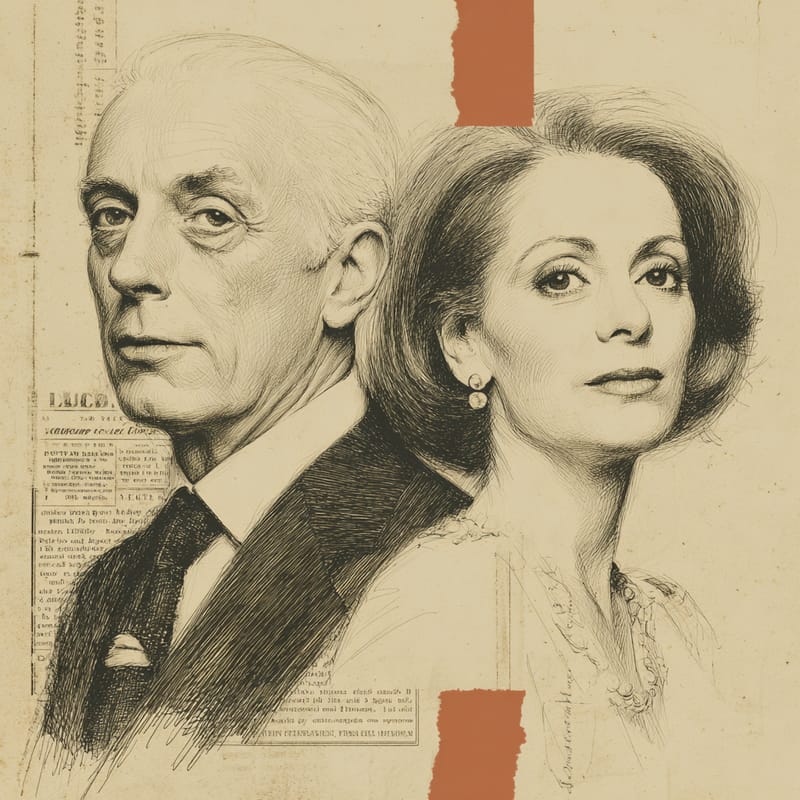
Linda & Morris Tannehill
The market for liberty
A whole society without the state.
Heterodox Anarcho-CapitalistOne of 729 ideologies · enter the Anarcho-Capitalist hall →- Role
- Authors
- Era
- fl. 1970s
- Region
- United States
- Social band
- Heterodox
- Placement
- +90 · −94 · +20
§ Where Linda & Morris Tannehill stands
3 axesThe Tannehills wanted a completely free market with nothing left to government. The Market for Liberty (1970) assigns police protection, courts and even national defence to competing firms financed by voluntary payment, and gives insurance companies a central role in pricing risk and compensating victims. Their economics are laissez-faire without exception, grounded in a Rand-influenced theory of property rights.
They regarded government as a coercive monopoly that is illegitimate by nature, not merely too large. The Market for Liberty (1970) answers the standard objections one by one, arguing that competing defence agencies would have every commercial reason to avoid fighting each other and that disputes would go to private arbitration. A fully voluntary society organised by contract was their goal.
Socially the Tannehills were voluntarists first: their concern was ending coercion, not reforming customs. The Market for Liberty (1970) argues that justice should mean restitution paid by aggressors to their victims rather than punishment imposed by the state, and that acts harming no one else should not be crimes, a mildly progressive outlook framed in individualist rather than egalitarian terms.
How close are you to Linda & Morris Tannehill?
Three statements, one per axis. Answer them and we’ll drop you on the compass next to them.
§ The story
HistoricalMorris and Linda Tannehill were an American husband-and-wife writing team who in 1970 published The Market for Liberty, one of the first book-length blueprints for a society with no government at all. Strongly influenced by Ayn Rand's Objectivism, they accepted her ethics of rational self-interest and individual rights but rejected her conclusion that a limited government was necessary, arguing instead that every legitimate function of the state could be supplied by the market.
The book proposed that private defence agencies, insurance companies and arbitration firms would protect rights more efficiently and peacefully than any state, since violence and injustice would be costly to the firms that had to insure against them. Privately published and passed around the libertarian movement of the early 1970s, it became a founding text of anarcho-capitalism alongside two books of 1973, Murray Rothbard's For a New Liberty and David Friedman's The Machinery of Freedom, and libertarian publishers have reissued it several times.
Notable for
- 01'The Market for Liberty'
- 02Private defence-agency model
- 03Early an-cap blueprint
Key works & moments
- 1970Publish The Market for Liberty, a blueprint for a society without government.
- 1970Propose that private defence agencies, insurers and arbitrators replace police, courts and armies.
- 1970Argue that aggressors should pay restitution to victims instead of facing state punishment.
- 1970sThe book circulates through the libertarian movement as an early anarcho-capitalist classic.
§ Minds closest to Linda & Morris Tannehill
All minds →



§ Also in the Anarcho-Capitalist hall
Enter the hall →§ Common questions
4 answersWhat was Linda and Morris Tannehill's political ideology?
Linda and Morris Tannehill were anarcho-capitalists who built on Ayn Rand's ethics while rejecting her case for government: on the 99ideologies three-axis compass, a Heterodox Anarcho-Capitalist. Economically they stood near the far market end (+90), handing even police, courts and defence to competing firms. On governance they were almost wholly anti-state (−94), treating government as an illegitimate coercive monopoly, and socially they leaned mildly progressive (+20), favouring restitution over punishment and voluntary association over custom.
Were Linda and Morris Tannehill left-wing or right-wing?
Right-wing in economic terms, as radical free-market anarchists. Their call to abolish government entirely and let insurers and private agencies provide security places them at the libertarian extreme of the free-market right. They were not conservatives, though: their arguments rest on Rand-influenced reason and individual rights rather than tradition or religion, and their emphasis on voluntary association and restitution to victims sets them apart from the law-and-order politics of the right.
What is The Market for Liberty about?
It is a 1970 book by Linda and Morris Tannehill describing how a society without any government could work. The authors argue that protection, justice and defence are services like any other, and that competing defence agencies, insurance companies and arbitration firms would supply them better than a coercive monopoly. Insurers would have a financial interest in preventing aggression and compensating victims, and aggressors would owe restitution. The book became an influential early text of anarcho-capitalism.
Which minds are closest to Linda & Morris Tannehill?
On the 99ideologies three-axis compass, the minds closest to Linda & Morris Tannehill are David D. Friedman (97% alike), Ragnar Danneskjöld (95% alike) and Satoshi Nakamoto (95% alike). The furthest is Pol Pot (0% alike).