
The Night-Watchman State (archetype)
Only courts, cops, and defence
The smallest state a market needs.
Minarcho-CapitalistOne of 729 ideologies · enter the Minarcho-Capitalist hall →- Role
- Minimal state over a free market
- From
- Archetype
- Region
- —
- Social band
- Centre (no modifier)
- Placement
- +92 · −76 · −8
§ Where The Night-Watchman State (archetype) stands
3 axesIn the night-watchman model the economy is left almost wholly to markets: prices, wages, trade and investment are set by voluntary exchange, and taxation is limited to funding police, courts and defence. Its closest historical model is mid-Victorian Britain, which embraced free trade with the repeal of the Corn Laws in 1846 and kept public spending low by later standards, though even it retained poor relief.
The state exists only to protect individuals against force and fraud. Robert Nozick's Anarchy, State, and Utopia (1974) defined this minimal state as one limited to protection against force, theft and fraud and to the enforcement of contracts, and argued that any more extensive state violates people's rights. Everything else, from schooling to welfare, belongs to private and voluntary institutions.
The night-watchman state is neutral on culture: it neither promotes nor suppresses religions or ways of life, leaving family, faith and custom to civil society. In practice that hands social life to inherited institutions such as churches, private charities and the friendly societies that insured millions of British workers in the nineteenth century, which gives the archetype a mildly traditional cast.
How close are you to The Night-Watchman State (archetype)?
Three statements, one per axis. Answer them and we’ll drop you on the compass next to them.
§ The story
ArchetypeThe Night-Watchman State is the archetype of minarchism: a government reduced to police, courts and national defence, which protects life, liberty and property and leaves everything else to free exchange and voluntary association. The German socialist Ferdinand Lassalle coined the mocking term Nachtwächterstaat in 1862 to describe the liberal ideal of his day. Historical approximations include mid-Victorian Britain after the repeal of the Corn Laws in 1846 and the United States before the Civil War, when federal spending was a tiny share of national income.
The archetype recurs because it marks the boundary between libertarians who accept some state and anarchists who accept none. Robert Nozick's Anarchy, State, and Utopia (1974) argued that a minimal state could arise without violating anyone's rights, and Ayn Rand defended government limited to police, armed forces and courts. Critics on the left, beginning with Lassalle, saw it as a guard for the propertied, while anarcho-capitalists such as Murray Rothbard argued that even the night watchman holds an unjustifiable monopoly. It also invites the question of how much of the modern state lies beyond these core functions.
Notable for
- 01Night-watchman state
- 02Rights-protection only
- 03Free-market order
Key works & moments
- 1776Adam Smith's The Wealth of Nations limits the sovereign to defence, justice and certain public works.
- 1846Britain repeals the Corn Laws under Robert Peel, embracing free trade.
- 1862Ferdinand Lassalle mocks the liberal ideal as a Nachtwächterstaat, a night-watchman state.
- 1964Ayn Rand's The Virtue of Selfishness confines government to police, armed forces and courts.
- 1974Robert Nozick's Anarchy, State, and Utopia defends the minimal state.
§ Minds closest to The Night-Watchman State (archetype)
All minds →




§ Also in the Minarcho-Capitalist hall
Enter the hall →The closest minds above are this hall’s whole roster.
§ Common questions
4 answersWhat is the Night-Watchman State's political ideology?
The Night-Watchman State stands for minarchism, the view that government should do nothing but protect people's rights through police, courts and defence: on the 99ideologies three-axis compass, a Minarcho-Capitalist. Economically it sits near the market extreme (+92), leaving production and exchange to free markets. On governance it is strongly libertarian (−76), confining the state to protecting life, liberty and property, and socially it sits just on the traditional side of the centre (−8), neutral on culture and leaving custom to civil society.
Is the Night-Watchman State left-wing or right-wing?
It belongs to the libertarian right. Defending private property and unregulated markets while rejecting redistribution and the welfare state, it is the ideal of classical liberals, minarchist libertarians and some free-market conservatives. Yet it is not conservative in the traditional sense, because it refuses to use state power to enforce morality or protect established institutions, and its strongest critics include both socialists, who see it as protecting the rich, and anarcho-capitalists, who reject even its limited monopoly.
Where does the term night-watchman state come from?
It comes from the German socialist Ferdinand Lassalle, who in his Workers' Programme of 1862 mocked the liberal bourgeoisie's idea of a state whose only task was to protect personal freedom and property, comparing it to a night watchman. The term Nachtwächterstaat was meant as an insult, but liberals and libertarians later adopted it. Robert Nozick used it approvingly in Anarchy, State, and Utopia (1974), presenting the night-watchman state of classical liberal theory as the most extensive state that could be justified.
Which minds are closest to The Night-Watchman State (archetype)?
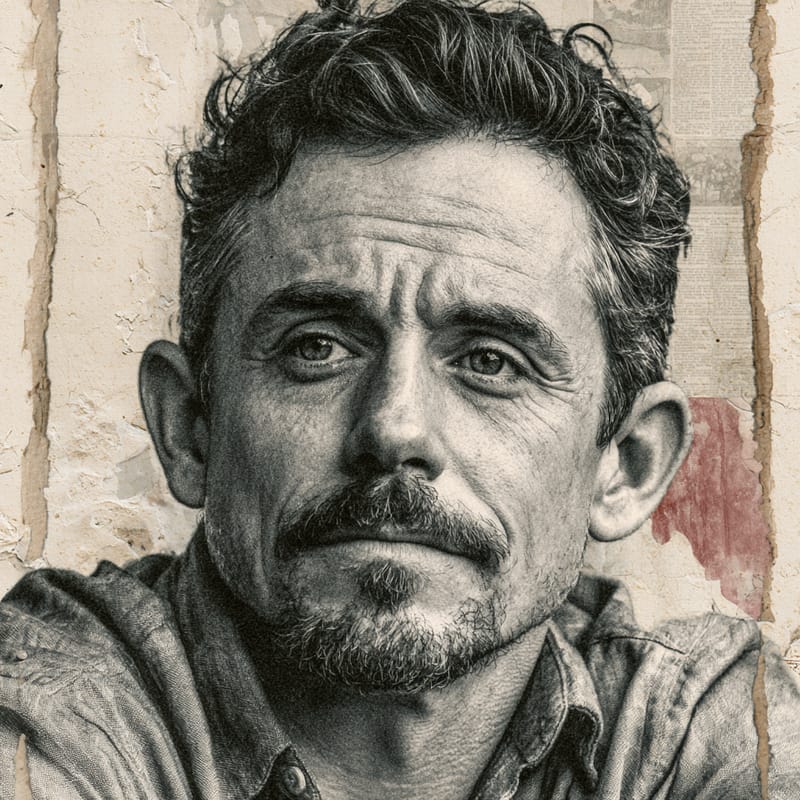
On the 99ideologies three-axis compass, the minds closest to The Night-Watchman State (archetype) are Randy Barnett (99% alike), Tibor Machan (98% alike) and John Hospers (97% alike). The furthest is Pol Pot (0% alike).