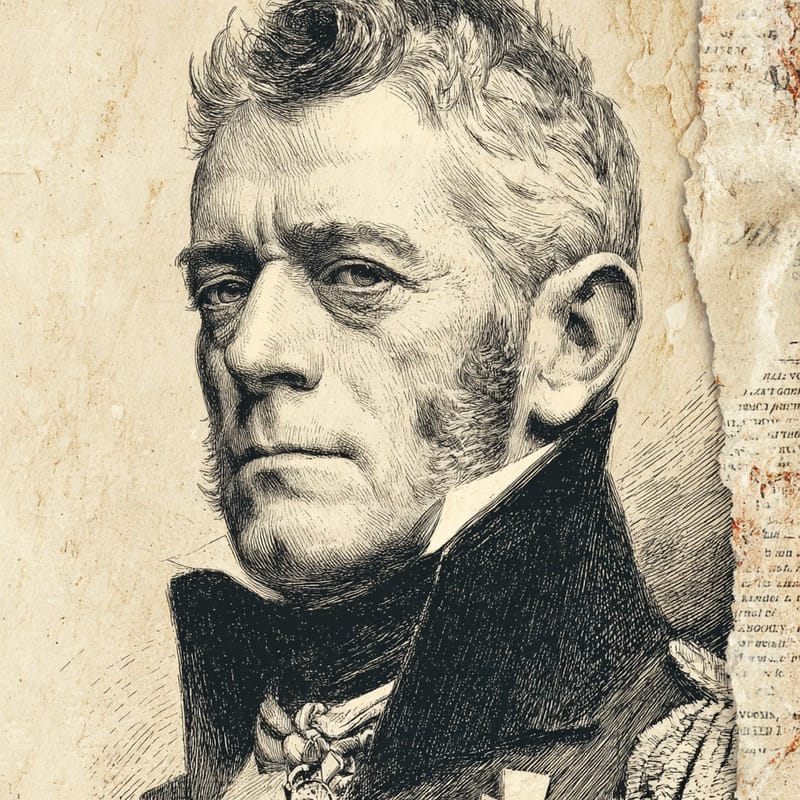
Josip Broz Tito
Communism on his own terms
Non-aligned, self-managed socialism.
Leninist-MarxistOne of 729 ideologies · enter the Leninist-Marxist hall →- Role
- Revolutionary & head of state
- Era
- 1892–1980
- Region
- Yugoslavia
- Social band
- Centre (no modifier)
- Placement
- −88 · +72 · +10
§ Where Josip Broz Tito stands
3 axesTito kept the economy socialist but broke with Soviet central planning. The 1950 law on workers' self-management handed the running of state enterprises to elected workers' councils, and the 1965 reform introduced more market pricing and openness to foreign trade. Yugoslav firms competed in markets and citizens could work abroad, yet social ownership of industry was never abandoned.
Yugoslavia under Tito was a one-party state built around his personality. Thousands of suspected Stalin loyalists were sent to the Goli Otok prison camp after 1948, his former deputy Milovan Djilas was jailed for advocating democracy, and the 1974 constitution, while decentralising power to the republics, named Tito president for life.
Tito was a secular moderniser welding many nations into one state, and his policy of brotherhood and unity suppressed Serb, Croat and other nationalisms alike. His regime imprisoned Archbishop Alojzije Stepinac after a 1946 trial and curbed organised religion, yet it was more open than the Soviet bloc, letting citizens travel abroad and absorb Western popular culture.
How close are you to Josip Broz Tito?
Three statements, one per axis. Answer them and we’ll drop you on the compass next to them.
§ The story
HistoricalJosip Broz (1892–1980), known as Tito, ruled Yugoslavia from 1945 until his death. Born to a Croat-Slovene peasant family in Kumrovec, he trained as a metalworker, was captured by the Russians while serving in the Austro-Hungarian army in 1915 and witnessed the revolution there. Back home he became a communist organiser, spent 1928–34 in prison, and in 1937 took charge of the outlawed Communist Party of Yugoslavia. From 1941 he led the Partisans, one of the largest resistance movements in occupied Europe.
Tito emerged from the war as prime minister and later president, and his forces carried out mass killings of captured enemy troops and civilians in 1945. In 1948 he defied Stalin and was expelled from the Cominform, creating a socialist state outside the Soviet bloc that experimented with workers' self-management and co-founded the Non-Aligned Movement. Under the slogan of brotherhood and unity he held Yugoslavia's nations together while jailing dissidents such as Milovan Djilas and crushing the Croatian Spring of 1971. A decade after his death the federation broke apart in war.
Notable for
- 01Led the Yugoslav Partisans
- 02Split with Stalin, 1948
- 03Co-founded the Non-Aligned Movement
Key works & moments
- 1937Takes charge of the outlawed Communist Party of Yugoslavia.
- 1941–45Leads the Partisan war against Axis occupation and rival Chetnik forces.
- 1943The AVNOJ assembly at Jajce names him marshal and lays the foundations of a federal Yugoslavia.
- 1948Defies Stalin; the Cominform expels Yugoslavia in June.
- 1950Introduces workers' self-management in Yugoslav state enterprises.
- 1961Hosts the founding summit of the Non-Aligned Movement in Belgrade.
§ Minds closest to Josip Broz Tito
All minds →
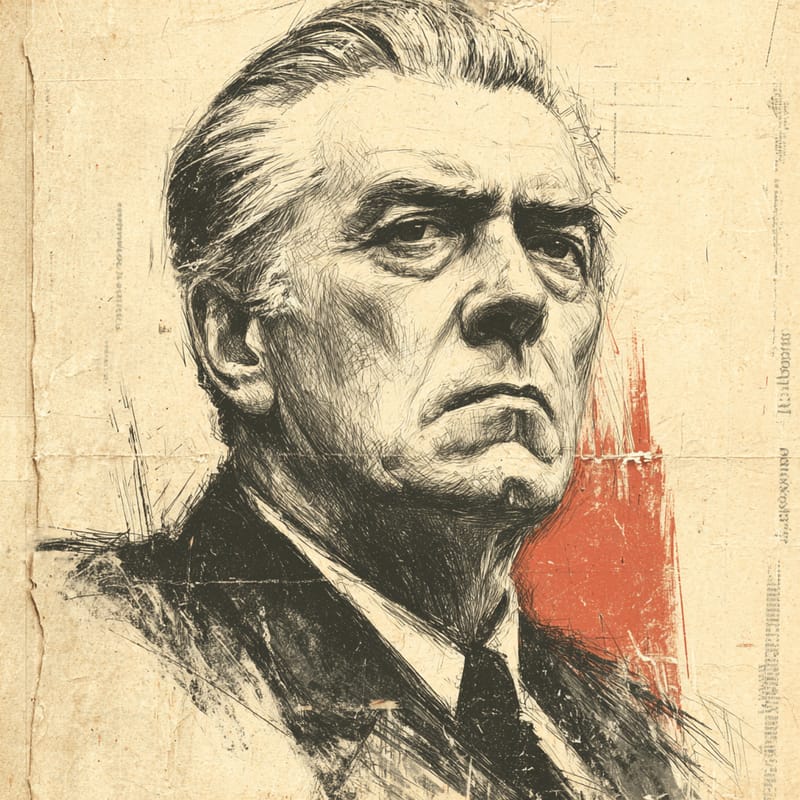
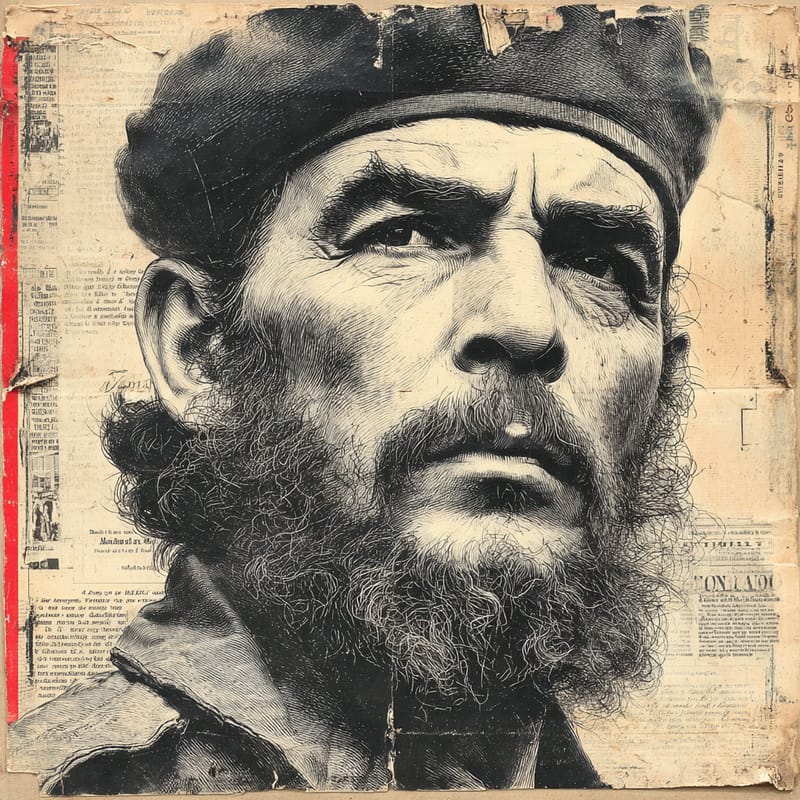
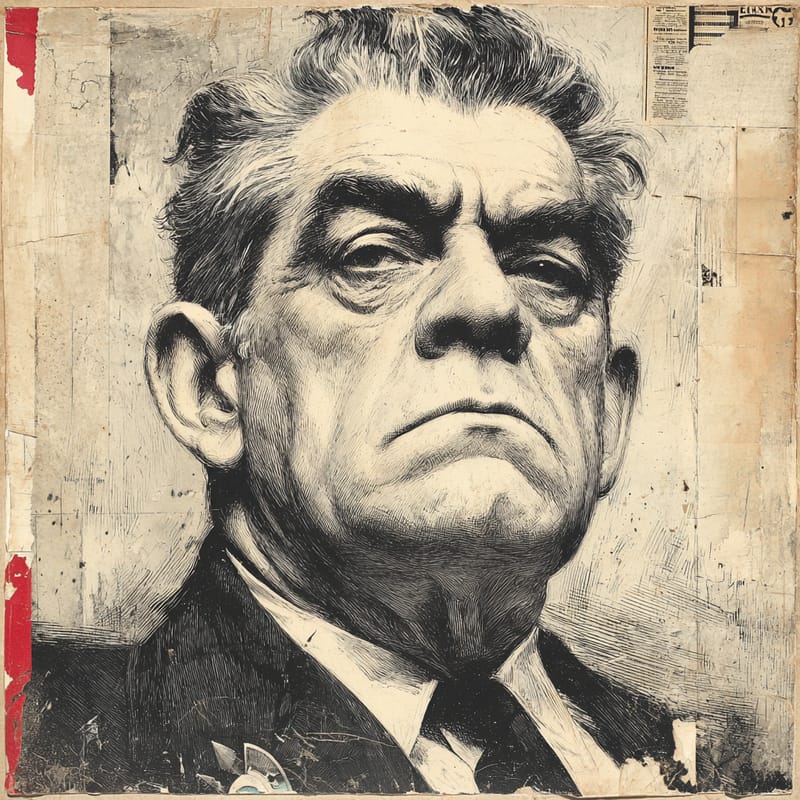

§ Also in the Leninist-Marxist hall
Enter the hall →§ Common questions
4 answersWhat was Josip Broz Tito's political ideology?
Tito was a Marxist-Leninist who developed his own independent model, often called Titoism: on the 99ideologies three-axis compass, a Leninist-Marxist. Economically he stood far to the left (−88), keeping industry socially owned while replacing Soviet-style planning with workers' self-management. On governance he was strongly authoritarian (+72), ruling a one-party state as president for life. Socially he sat near the centre (+10), a secular moderniser who allowed more cultural openness than the Soviet bloc.
Was Tito left-wing or right-wing?
Left-wing. Tito was a communist revolutionary who abolished capitalism in Yugoslavia and led a one-party socialist state for 35 years. His break with Stalin in 1948 and his non-aligned foreign policy led Western governments to treat him as a useful independent, and his self-management system was more decentralised than Soviet planning, but these were variations within communism rather than a move to the right.
Why did Tito split with Stalin?
Because Tito refused to subordinate Yugoslavia to Moscow. Unlike most Eastern European communists, he had come to power largely through his own Partisan army rather than Soviet occupation, and he pursued an independent line, including plans for a Balkan federation with Bulgaria and support for communist rebels in Greece. Stalin demanded obedience; when Tito resisted, the Cominform expelled Yugoslavia in June 1948. Tito survived years of Soviet pressure and later turned to non-alignment.
Which minds are closest to Josip Broz Tito?
On the 99ideologies three-axis compass, the minds closest to Josip Broz Tito are Ho Chi Minh (96% alike), O'Brien (93% alike) and Alexander Dugin (93% alike). The furthest is Hans-Hermann Hoppe (0% alike).