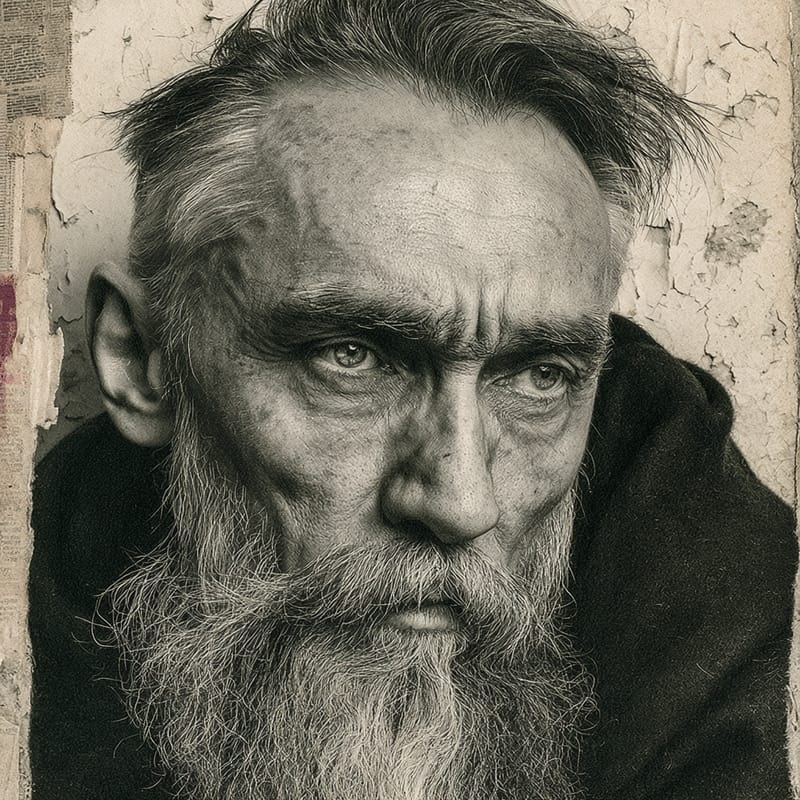
Alexander Dugin
National BolshevikOne of 729 ideologies · enter the National Bolshevik hall →- Role
- —
- Era
- —
- Region
- —
- Social band
- Centre (no modifier)
- Placement
- −75 · +75 · 0
§ Where Alexander Dugin stands
3 axesDugin's economics follow from his rejection of liberalism rather than from Marxism. The Fourth Political Theory (2009) treats free-market capitalism and globalisation as the core of the liberal order he wants overthrown, and his National Bolshevik and Eurasianist programmes subordinate the economy to the state and the civilisation it serves, hostile to both oligarchic and foreign capital.
Dugin openly rejects liberal democracy and universal human rights as Western impositions. Foundations of Geopolitics (1997) sketched a Russian-led Eurasian empire absorbing or neutralising neighbouring states, including Ukraine, and he supported Russia's 2008 war with Georgia and its 2014 annexation of Crimea, calling for strong, centralised authority grounded in tradition rather than elections.
Socially Dugin is a militant traditionalist. Influenced by the Traditionalist school of René Guénon and Julius Evola, and an adherent of the Old Rite in Russian Orthodoxy, he condemns individualism, feminism and LGBT rights as products of a decadent liberal West, and defends faith, ethnic identity and hierarchy as the foundations of any authentic society.
How close are you to Alexander Dugin?
Three statements, one per axis. Answer them and we’ll drop you on the compass next to them.
§ The story
HistoricalAlexander Gelyevich Dugin (born 1962) is a Russian political philosopher and the leading contemporary theorist of neo-Eurasianism. Born in Moscow, he moved in the late Soviet years through an underground circle of mystics and traditionalists, and in 1993 co-founded the National Bolshevik Party with the writer Eduard Limonov before breaking with him in 1998. He later founded the Eurasia Party and the International Eurasian Movement, and taught in Moscow State University's sociology faculty until 2014.
Dugin's 1997 book Foundations of Geopolitics, reportedly used as a textbook in Russian military education, argued that Russia must rebuild a Eurasian empire against an Atlantic world led by the United States, and his Fourth Political Theory (2009) proposed an alternative to liberalism, communism and fascism. His influence on the Kremlin is debated, but he is widely cited as an ideologist of Russian expansionism, and the US Treasury sanctioned him in 2015 over Ukraine. In August 2022 his daughter, Darya Dugina, was killed by a car bomb near Moscow; Russia blamed Ukraine, which denied involvement.
Key works & moments
- 1993Co-founds the National Bolshevik Party with the writer Eduard Limonov.
- 1997Publishes Foundations of Geopolitics, calling for a Russian-led Eurasian empire.
- 2002Founds the Eurasia Party, followed in 2003 by the International Eurasian Movement.
- 2009Publishes The Fourth Political Theory, proposing a post-liberal alternative to the three modern ideologies.
- 2015The US Treasury sanctions him over Russia's actions in Ukraine.
- 2022His daughter Darya Dugina is killed by a car bomb outside Moscow on 20 August.
§ Minds closest to Alexander Dugin
All minds →


§ Also in the National Bolshevik hall
Enter the hall →§ Common questions
4 answersWhat is Alexander Dugin's political ideology?
Alexander Dugin is a neo-Eurasianist and former National Bolshevik who calls his project the Fourth Political Theory: on the 99ideologies three-axis compass, a National Bolshevik. Economically he sits well left of centre (−75), hostile to liberal capitalism and globalisation. On governance he is strongly authoritarian (+75), rejecting liberal democracy in favour of a Russian-led Eurasian empire. Socially he is an uncompromising traditionalist, defending Orthodoxy, hierarchy and ethnic identity against Western liberalism.
Is Alexander Dugin left-wing or right-wing?
He rejects the distinction, but his ideas sit mainly on the far right. Dugin draws on Soviet-era anti-capitalism and began in the National Bolshevik Party, which mixed communist and nationalist symbols, yet his core commitments are to tradition, religion, empire and the rejection of liberal equality, and his books are published and promoted chiefly by far-right circles in Europe and the United States. His economics lean left; his politics and social outlook lean right.
Is Alexander Dugin Putin's adviser?
Not in any formal sense. Dugin has never held a government post, and Western nicknames such as Putin's brain overstate a relationship that has never been documented. He did advise the State Duma speaker Gennady Seleznyov in the late 1990s, and his ideas about Eurasia, a multipolar world and Russia's claim on Ukraine closely parallel Kremlin rhetoric, which is why analysts disagree about whether he shapes policy or simply amplifies it.
Which minds are closest to Alexander Dugin?
On the 99ideologies three-axis compass, the minds closest to Alexander Dugin are Karl Radek (94% alike), Hwang Jang-yop (93% alike) and Josip Broz Tito (93% alike). The furthest is Hans-Hermann Hoppe (2% alike).