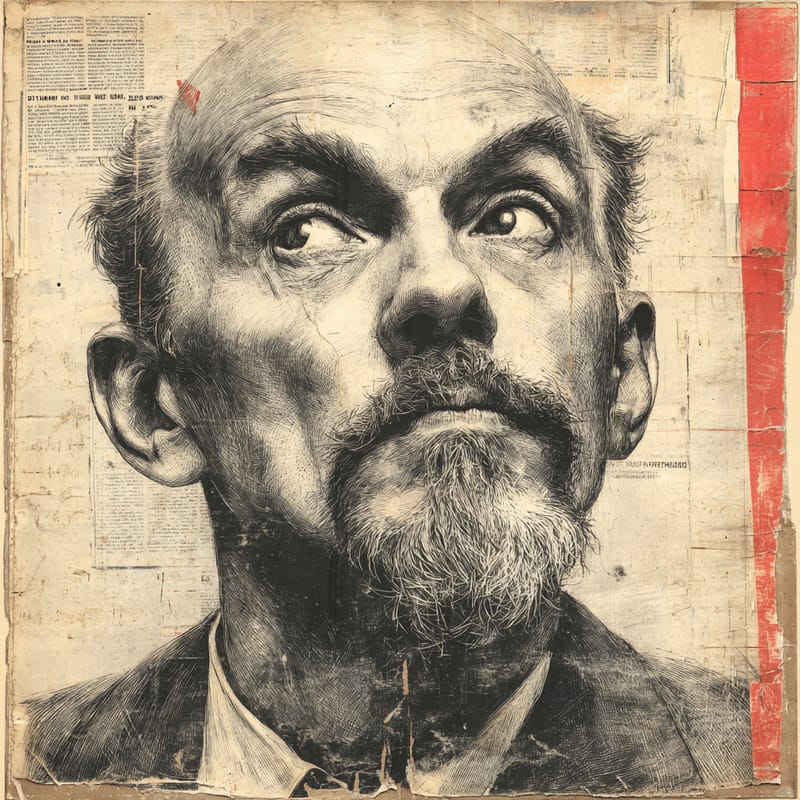
Nikolai Bukharin
The party's favourite
Gradualism, then the purge.
Heterodox Leninist-MarxistOne of 729 ideologies · enter the Leninist-Marxist hall →- Role
- Theorist & politician
- Era
- 1888–1938
- Region
- Russia
- Social band
- Heterodox
- Placement
- −90 · +70 · +35
§ Where Nikolai Bukharin stands
3 axesBukharin was a committed collectivist whose ABC of Communism, written with Yevgeni Preobrazhensky in 1919, laid out the abolition of private property, yet his lasting mark was gradualism. In the 1920s he argued that the Soviet Union could grow into socialism through the New Economic Policy, peasant cooperatives and market exchange with the countryside, and his Notes of an Economist (1928) warned against Stalin's breakneck industrialisation.
Bukharin helped build the dictatorship that later destroyed him. As editor of Pravda and a Politburo member he defended one-party rule, and his Economics of the Transition Period (1920) justified coercion as a method of building communism. He never challenged the ban on rival parties, and when he fell foul of Stalin there were no independent institutions left to protect him.
Bukharin belonged to the cosmopolitan, modernising generation of Bolshevik intellectuals. The ABC of Communism called for systematic anti-religious propaganda and for schools free of church influence, and at the 1934 Congress of Soviet Writers his report on poetry praised the lyric poet Boris Pasternak over more dogmatic proletarian poets.
How close are you to Nikolai Bukharin?
Three statements, one per axis. Answer them and we’ll drop you on the compass next to them.
§ The story
HistoricalNikolai Ivanovich Bukharin (1888–1938) was a Bolshevik theorist and Soviet leader. A Moscow-born student radical, he joined the Bolsheviks in 1906, escaped internal exile in 1911 and spent the war years abroad, editing a Russian-language socialist paper in New York in early 1917. After the revolution he edited Pravda from 1918 to 1929, co-wrote The ABC of Communism, rose to full membership of the Politburo and in 1926 replaced Grigory Zinoviev at the head of the Communist International.
Lenin called him the favourite of the whole party. In the mid-1920s Bukharin became the chief theorist of the New Economic Policy, allying with Stalin against Trotsky's Left Opposition, but when Stalin turned to forced collectivisation in 1928–29 Bukharin opposed him and was branded leader of a Right deviation. Expelled from the Politburo in 1929, he was arrested in 1937, made to confess at the last great Moscow show trial and shot in March 1938. The Soviet Supreme Court rehabilitated him in 1988.
Notable for
- 01Leading NEP advocate
- 02'The ABC of Communism'
- 03Victim of the 1938 show trial
Key works & moments
- 1918Leads the Left Communists against the Treaty of Brest-Litovsk and becomes editor of Pravda.
- 1919Writes The ABC of Communism with Yevgeni Preobrazhensky, which becomes the party's standard primer.
- 1925Urges peasants to grow prosperous, championing the New Economic Policy's alliance with the countryside.
- 1928–29Opposes Stalin's forced collectivisation; denounced as a Right deviationist and expelled from the Politburo.
- 1936Helps draft the new Soviet constitution while editing the government newspaper Izvestia.
- 1938Convicted at the third Moscow show trial and shot on 15 March.
§ Minds closest to Nikolai Bukharin
All minds →

§ Also in the Leninist-Marxist hall
Enter the hall →§ Common questions
4 answersWhat was Nikolai Bukharin's political ideology?
Bukharin was a Bolshevik Marxist who became the leading advocate of gradual, market-assisted socialism: on the 99ideologies three-axis compass, a Heterodox Leninist-Marxist. Economically he stood far to the left (−90), committed to collective ownership even while defending the New Economic Policy. On governance he was strongly authoritarian (+70) as one of the builders of the one-party state. Socially he leaned progressive (+35), as a cosmopolitan and anti-religious moderniser.
Was Nikolai Bukharin left-wing or right-wing?
Left-wing. Bukharin was a lifelong communist and a founder of the Soviet state; the label Right Opposition that Stalin's supporters pinned on him in 1928–29 was relative, meaning only that he favoured a slower, peasant-friendly road to socialism than forced collectivisation. Later reform communists, including the Gorbachev-era leadership that rehabilitated him in 1988, saw in his writings a model of market socialism, but he never abandoned the goal of a communist society.
Why was Nikolai Bukharin executed?
Because Stalin was destroying the old Bolshevik leadership in the Great Terror. Arrested in February 1937, Bukharin was tried in March 1938 alongside Alexei Rykov and others on charges of treason, espionage, sabotage and even plotting to kill Lenin in 1918. He confessed in general terms while contesting many specifics, was sentenced to death and shot. Historians regard the charges as fabricated, and in 1988 the Soviet Supreme Court quashed the verdict.
Which minds are closest to Nikolai Bukharin?
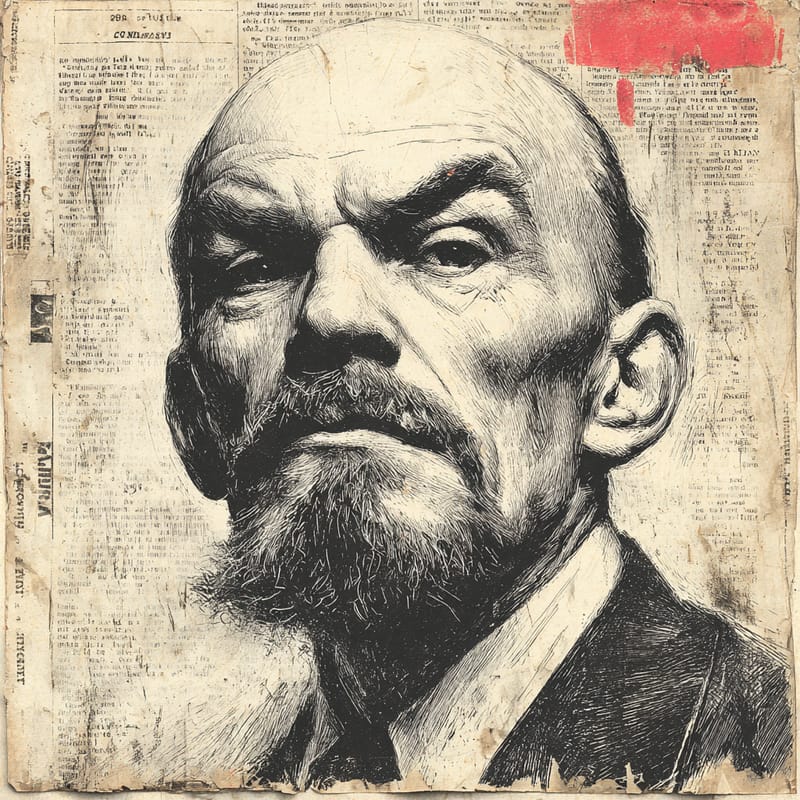
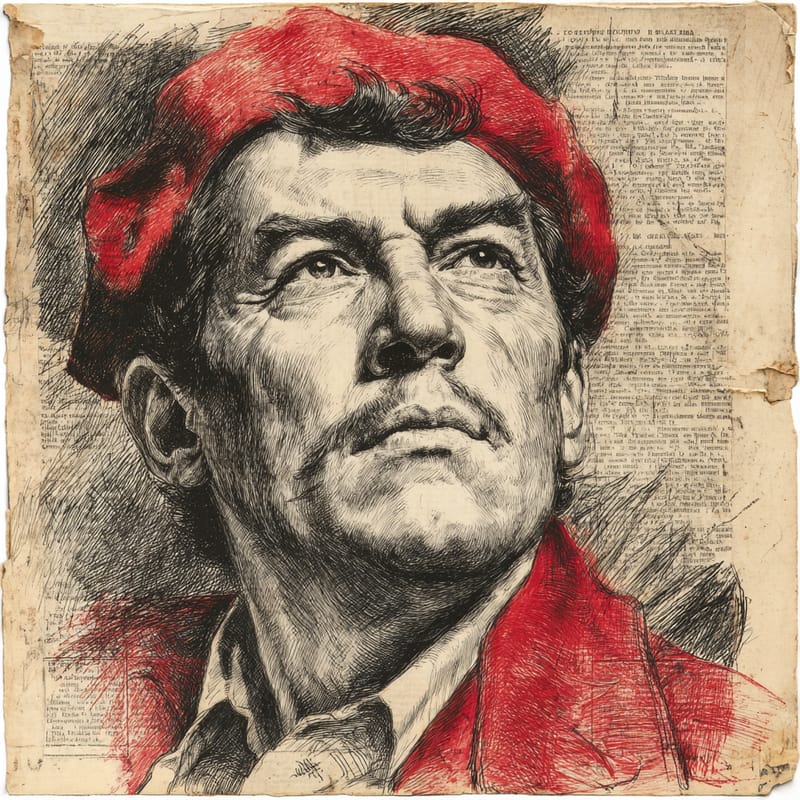
On the 99ideologies three-axis compass, the minds closest to Nikolai Bukharin are Fidel Castro (97% alike), Che Guevara (95% alike) and Ho Chi Minh (94% alike). The furthest is Hans-Hermann Hoppe (0% alike).