
John D. Rockefeller
Standard Oil
The monopoly perfected.
Rooted CapitalistOne of 729 ideologies · enter the Capitalist hall →- Role
- Industrialist
- Era
- 1839–1937
- Region
- United States
- Social band
- Rooted
- Placement
- +96 · +10 · −25
§ Where John D. Rockefeller stands
3 axesRockefeller believed combination was more efficient than what he saw as ruinous competition: the Standard Oil Trust of 1882 placed some forty companies under nine trustees, and secret railroad rebates helped drive rivals to sell out. His placement near the market pole reflects a wholly private, unregulated vision of enterprise, though its goal was concentrated control rather than open competition.
Rockefeller ran Standard Oil as a tightly centralised empire and resisted public control, fighting state antitrust suits and congressional inquiries, while the company's money flowed to Republican campaigns such as William McKinley's in 1896. But he accepted the courts' authority, complying with the Supreme Court's 1911 dissolution order, and never sought public office.
A devout Baptist who tithed from his first wages, taught Sunday school and abstained from alcohol, Rockefeller lived by a traditional Protestant discipline. His giving reflected a faith in improvement: he funded Spelman College for Black women in Atlanta from 1884, the General Education Board's support for Southern schools from 1902 and the 1909 campaign against hookworm, which tempers his traditionalism.
How close are you to John D. Rockefeller?
Three statements, one per axis. Answer them and we’ll drop you on the compass next to them.
§ The story
HistoricalJohn Davison Rockefeller (1839–1937) was an American businessman who founded Standard Oil and became the richest person of his era. Raised in upstate New York and Ohio by a devout Baptist mother and an often absent, itinerant father, he started as a bookkeeper in Cleveland at 16, ran a produce commission business and entered oil refining in 1863. In 1870 he and his partners, among them Henry Flagler, incorporated the Standard Oil Company, which by the 1880s refined around 90 per cent of America's oil.
Rockefeller's methods, including secret railroad rebates, aggressive buy-outs of rivals and the 1882 trust agreement that centralised control of dozens of companies, made Standard Oil the symbol of monopoly. Ida Tarbell's exposé of 1904 helped turn public opinion, and in 1911 the Supreme Court ordered the company broken up under the Sherman Antitrust Act; the break-up increased the value of his shares. Retired from management by the late 1890s, he gave away more than $500 million, founding the University of Chicago, the Rockefeller Institute for Medical Research and the Rockefeller Foundation.
Notable for
- 01Founded Standard Oil
- 02First US billionaire
- 03Rockefeller Foundation
Key works & moments
- 1863Enters the oil-refining business in Cleveland.
- 1870Incorporates the Standard Oil Company with Henry Flagler and other partners.
- 1882Creates the Standard Oil Trust, centralising control of dozens of companies.
- 1890Provides the founding gift for the University of Chicago.
- 1911The Supreme Court orders Standard Oil broken up under the Sherman Antitrust Act.
- 1913Establishes the Rockefeller Foundation.
§ Minds closest to John D. Rockefeller
All minds →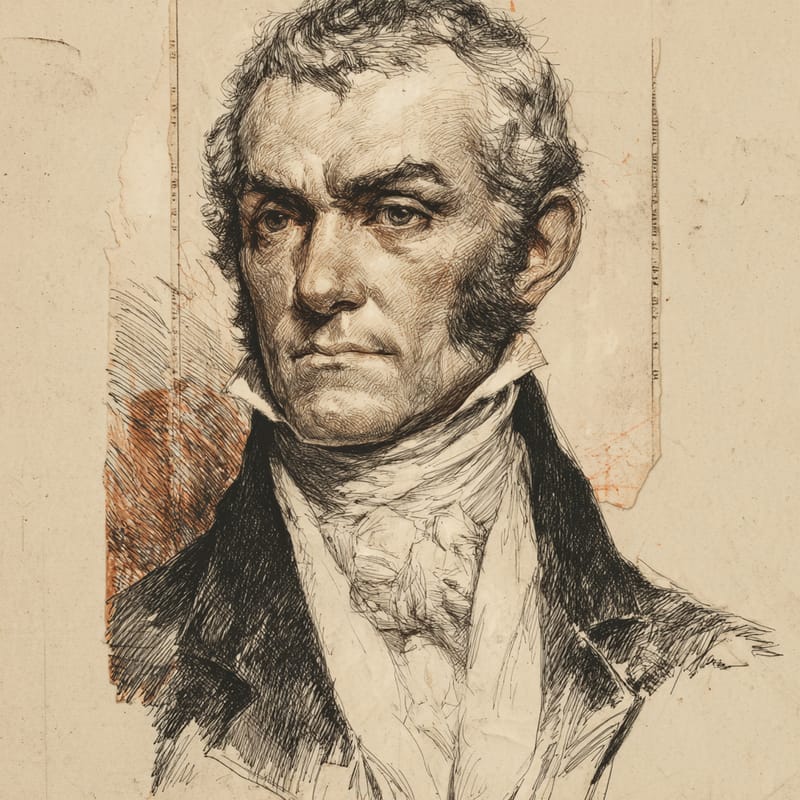



§ Also in the Capitalist hall
Enter the hall →§ Common questions
4 answersWhat was John D. Rockefeller's political ideology?
John D. Rockefeller was a Gilded Age industrialist whose creed was private enterprise organised on a vast scale: on the 99ideologies three-axis compass, a Rooted Capitalist. Economically he sat near the market pole (+96), building the Standard Oil monopoly through consolidation and resisting public regulation. On governance he leaned slightly authoritarian (+10), running a centralised corporate empire with political influence while obeying the courts, and socially he was moderately traditional (−25), a devout Baptist whose philanthropy funded education and medicine.
Was John D. Rockefeller left-wing or right-wing?
Right-wing in the economic sense. Rockefeller was a Republican who believed in private property, business consolidation and minimal government interference, and Standard Oil became the chief target of the antitrust and progressive movements. But his philanthropy was ambitious and reformist, funding public-health campaigns, medical research and Black education in the South, and his grandson Nelson Rockefeller later led the liberal wing of the Republican Party.
Was John D. Rockefeller a monopolist?
Yes, by any practical measure. By the 1880s Standard Oil controlled around 90 per cent of American oil refining, achieved through buy-outs of rivals, secret railroad rebates and the 1882 trust that centralised control of dozens of companies. In 1911 the Supreme Court ruled that Standard Oil had illegally monopolised the industry under the Sherman Antitrust Act and ordered it split into 34 companies. Rockefeller and his defenders argued that consolidation lowered the price of kerosene and brought order to a chaotic industry.
Which minds are closest to John D. Rockefeller?
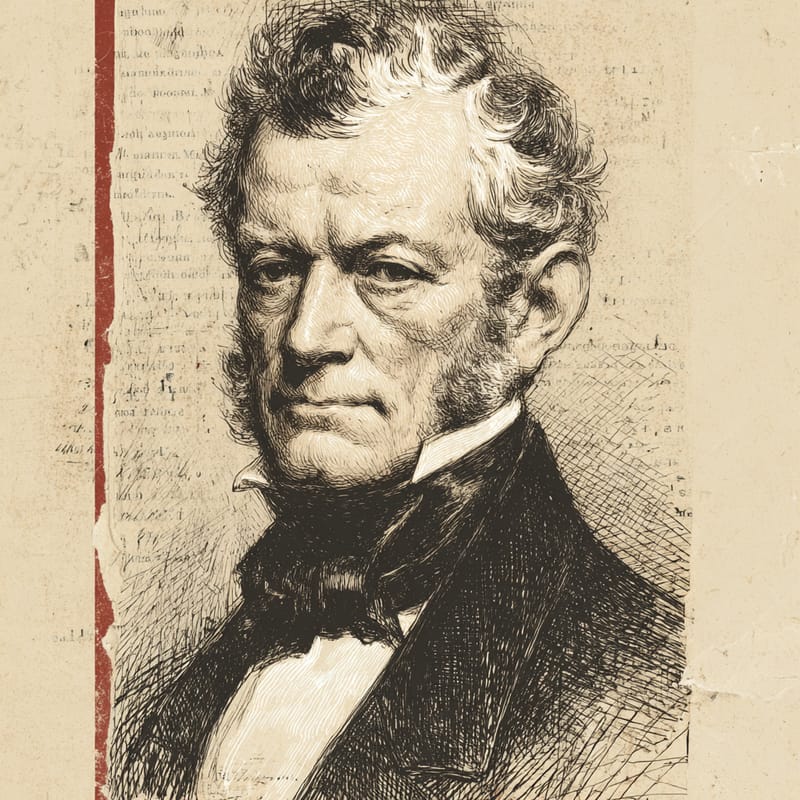
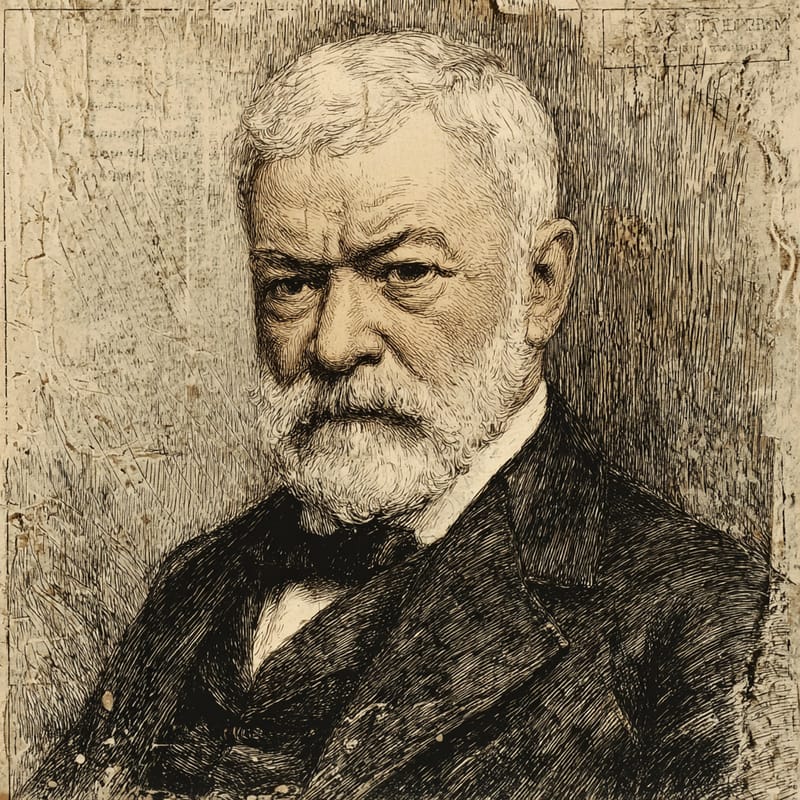
On the 99ideologies three-axis compass, the minds closest to John D. Rockefeller are John Jacob Astor (98% alike), Cornelius Vanderbilt (98% alike) and Charles Foster Kane (97% alike). The furthest is Emma Goldman (3% alike).