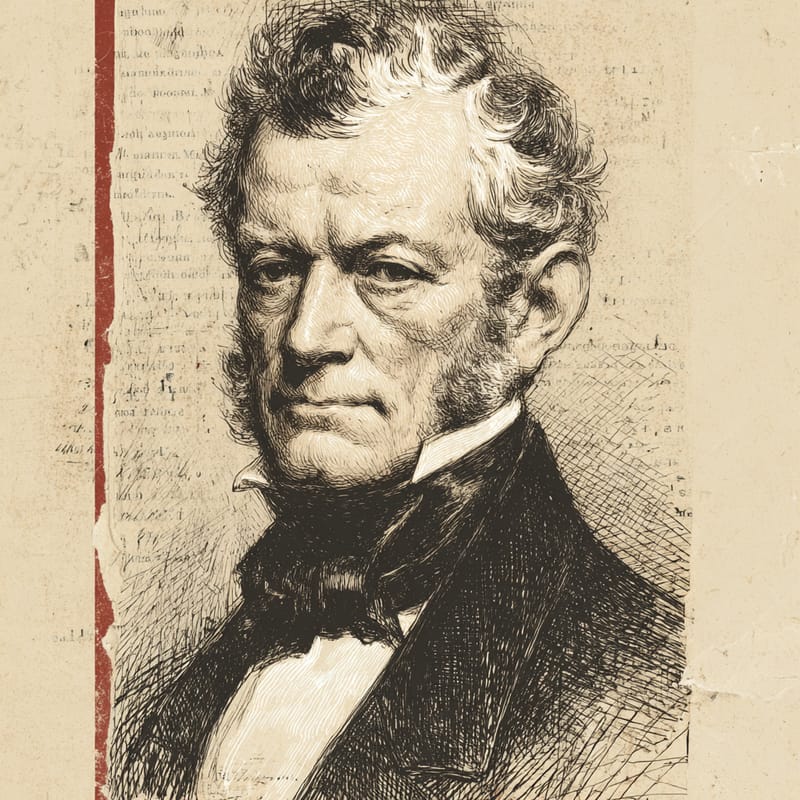
Cornelius Vanderbilt
The Commodore
Steamships, then railroads.
Rooted CapitalistOne of 729 ideologies · enter the Capitalist hall →- Role
- Magnate
- Era
- 1794–1877
- Region
- United States
- Social band
- Rooted
- Placement
- +94 · +8 · −20
§ Where Cornelius Vanderbilt stands
3 axesVanderbilt broke into markets by undercutting incumbents, from the Hudson River steamboat trade to the California route of the 1850s, where the established Pacific Mail line paid him to stay out. Once established, he consolidated rather than competed: the 1869 merger of the New York Central and Hudson River railroads created a dominant system linking New York City to the Great Lakes.
Vanderbilt operated in a lightly regulated economy and treated courts and legislatures as weapons: the 1868 Erie War was fought with rival injunctions and lobbying of the New York legislature, which both sides were accused of bribing. He never sought office, though he backed the Union in the Civil War, donating his largest steamship to the navy in 1862.
Vanderbilt was a rough-hewn, barely schooled self-made man with a patriarch's view of family, leaving almost his entire fortune to his eldest son William and far less to his daughters. Yet he had an unconventional side: he consulted spiritualists and in 1870 backed Victoria Woodhull and Tennessee Claflin in opening the first Wall Street brokerage run by women, which keeps him only moderately traditional.
How close are you to Cornelius Vanderbilt?
Three statements, one per axis. Answer them and we’ll drop you on the compass next to them.
§ The story
HistoricalCornelius Vanderbilt (1794–1877) was an American shipping and railroad magnate and the richest man in the United States at his death. Born to a modest family on Staten Island, he left school young and at 16 began ferrying passengers to Manhattan in a sailing boat. He learned the steamboat business working for Thomas Gibbons, whose challenge to a state-granted monopoly led to the Supreme Court's 1824 ruling in Gibbons v. Ogden, and then built his own lines on the Hudson, Long Island Sound and, during the Gold Rush, a route to California across Nicaragua.
Known as the Commodore, Vanderbilt won market after market by cutting fares until rivals paid him to withdraw or sold out. In the 1860s he moved into railroads, taking control of the New York Central and merging it with the Hudson River Railroad in 1869 to create one of the country's great rail systems, and he built the first Grand Central Depot. His 1868 battle with Jay Gould, Jim Fisk and Daniel Drew for the Erie Railroad became a byword for Gilded Age stock manipulation. He left most of his roughly $100 million fortune to his son William.
Notable for
- 01Built a shipping and rail empire
- 02New York Central Railroad
- 03One of the richest Americans ever
Key works & moments
- 1810At 16, starts a ferry service between Staten Island and Manhattan.
- 1824Works for Thomas Gibbons as Gibbons v. Ogden breaks New York's steamboat monopoly.
- 1851Opens a route to Gold Rush California across Nicaragua.
- 1868Battles Jay Gould, Jim Fisk and Daniel Drew for control of the Erie Railroad.
- 1869Merges the New York Central and Hudson River railroads.
- 1873Gives $1 million to found Vanderbilt University in Nashville.
§ Minds closest to Cornelius Vanderbilt
All minds →



§ Also in the Capitalist hall
Enter the hall →§ Common questions
4 answersWhat was Cornelius Vanderbilt's political ideology?
Cornelius Vanderbilt was a laissez-faire businessman rather than a political thinker: on the 99ideologies three-axis compass, a Rooted Capitalist. Economically he sat near the market pole (+94), winning by cutthroat competition before consolidating his railroads into a dominant system. On governance he was close to the centre (+8), using courts and legislatures as tools without seeking office, and socially he was moderately traditional (−20), a rough-hewn patriarch with an unconventional streak.
Was Cornelius Vanderbilt left-wing or right-wing?
He is best described as a pro-business pragmatist of the right, though he took little part in party politics. Vanderbilt believed in competition, private enterprise and his own judgement, and he backed the Union in the Civil War, but he never sought office or developed a political programme. His career is cited by admirers as proof of what a self-made man could achieve and by critics as an example of the monopoly power that later provoked railroad regulation and antitrust law.
Did Cornelius Vanderbilt say 'The public be damned'?
No. The remark is attributed to his son William Henry Vanderbilt, who inherited the New York Central and is reported to have said it to a newspaper reporter in 1882, when asked whether a fast passenger train was run for the public benefit. It became a slogan of the anti-monopoly movement and is often wrongly credited to the Commodore, who died in 1877. Cornelius Vanderbilt was blunt and combative, but the line belongs to the next generation of the family's railroad empire.
Which minds are closest to Cornelius Vanderbilt?
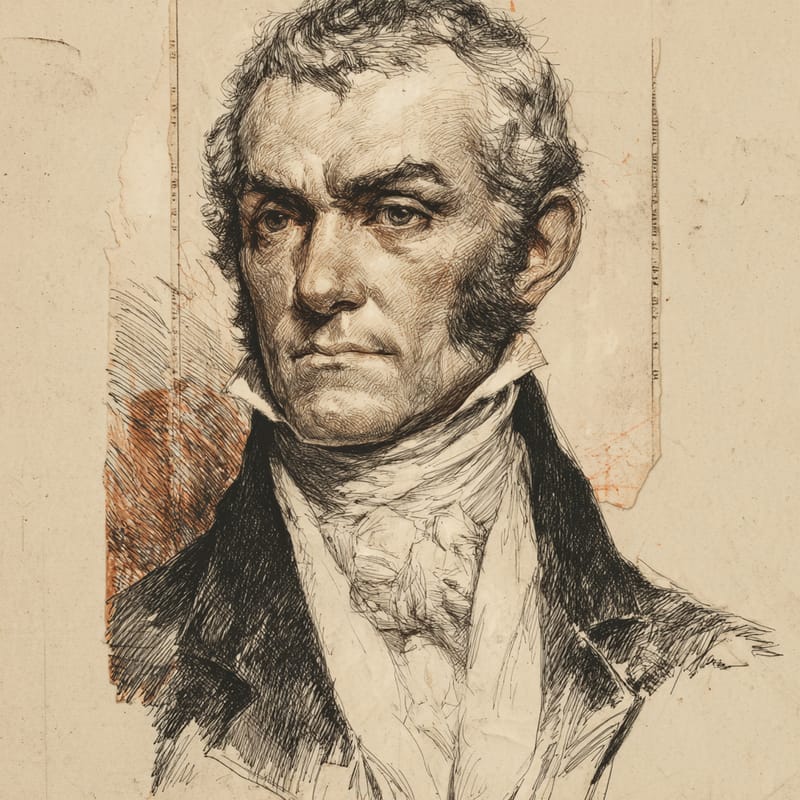
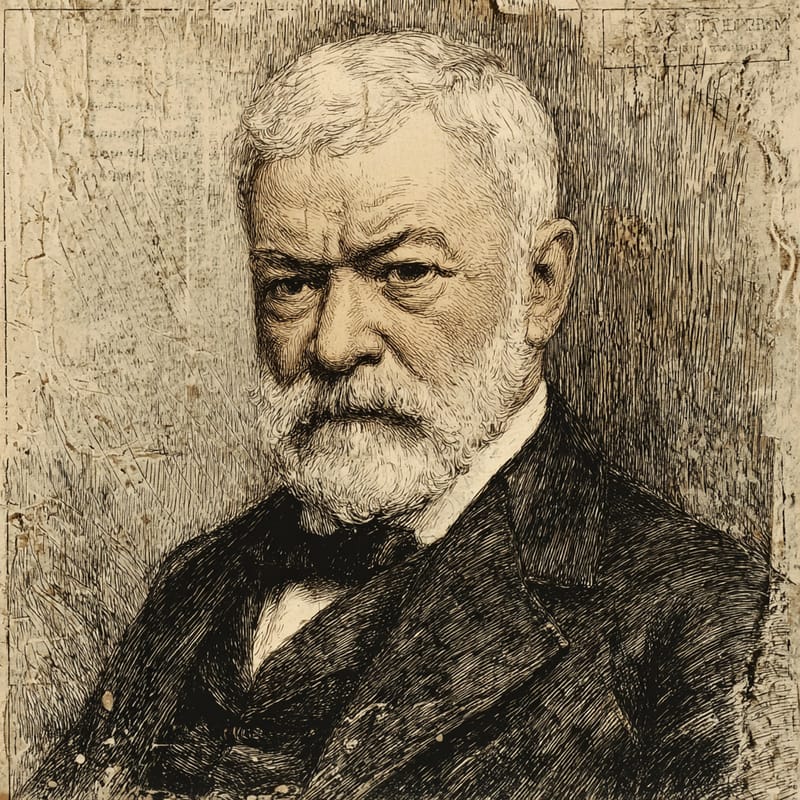
On the 99ideologies three-axis compass, the minds closest to Cornelius Vanderbilt are John D. Rockefeller (98% alike), John Jacob Astor (98% alike) and Charles Foster Kane (96% alike). The furthest is Emma Goldman (5% alike).