
J. P. Morgan
The banker as central bank
Finance that steadied a nation.
Rooted CapitalistOne of 729 ideologies · enter the Capitalist hall →- Role
- Financier
- Era
- 1837–1913
- Region
- United States
- Social band
- Rooted
- Placement
- +92 · +8 · −30
§ Where J. P. Morgan stands
3 axesMorgan believed in replacing what he saw as destructive competition with consolidated, well-financed corporations: his firm reorganised railroads in the 1890s and merged Carnegie Steel with its rivals into U.S. Steel in 1901. That private, banker-led ordering of industry puts him near the market pole, though his goal was stability and combination rather than open competition.
With no central bank in the United States, Morgan acted as one: in 1895 his syndicate replenished the Treasury's gold reserves, and in 1907 he organised the bankers' rescue that ended the panic. Theodore Roosevelt's administration challenged his power by suing to dissolve his Northern Securities railroad trust, which the Supreme Court broke up in 1904, and the Federal Reserve Act of 1913 transferred his role to a public institution.
Morgan was a patrician of the Gilded Age elite, a devout Episcopalian who served as a vestryman of St George's Church in Manhattan and attended his church's national conventions. He presided over the Metropolitan Museum of Art from 1904 and amassed one of the world's great collections of manuscripts and old masters, while his clubs and yachts defined the exclusive world of New York society.
How close are you to J. P. Morgan?
Three statements, one per axis. Answer them and we’ll drop you on the compass next to them.
§ The story
HistoricalJohn Pierpont Morgan (1837–1913) was the dominant American financier of his age. The son of the banker Junius Spencer Morgan, whose London house sold American securities to European investors, he was educated in Boston, Switzerland and Göttingen and began his career in New York in 1857. Through Drexel, Morgan & Co., founded in 1871 and renamed J.P. Morgan & Co. in 1895, he channelled European capital into American railroads and industry and became the country's most powerful private banker.
Morgan reorganised bankrupt railroads and assembled giant corporations, including General Electric in 1892 and U.S. Steel in 1901, the first company capitalised at more than $1 billion. In 1895 his syndicate supplied gold to replenish the Treasury's reserves, and in the Panic of 1907 he marshalled New York's bankers to stop runs on banks and trust companies. Critics saw a dangerous money trust, and the Pujo Committee of the House questioned him in 1912. The 1907 crisis convinced many that the country needed a central bank, and the Federal Reserve was created months after his death.
Notable for
- 01Halted the Panics of 1893 and 1907
- 02Formed U.S. Steel
- 03Dominated American finance
Key works & moments
- 1871Founds Drexel, Morgan & Co. with the Philadelphia banker Anthony Drexel.
- 1892Arranges the merger that creates General Electric.
- 1895His syndicate supplies gold to rescue the Treasury's reserves during a depression.
- 1901Forms U.S. Steel, the first billion-dollar corporation, after buying Carnegie Steel.
- 1907Organises New York bankers to halt the panic and support failing trust companies.
- 1912Testifies to the Pujo Committee's investigation of the money trust.
In their own words
“The first thing is character.”
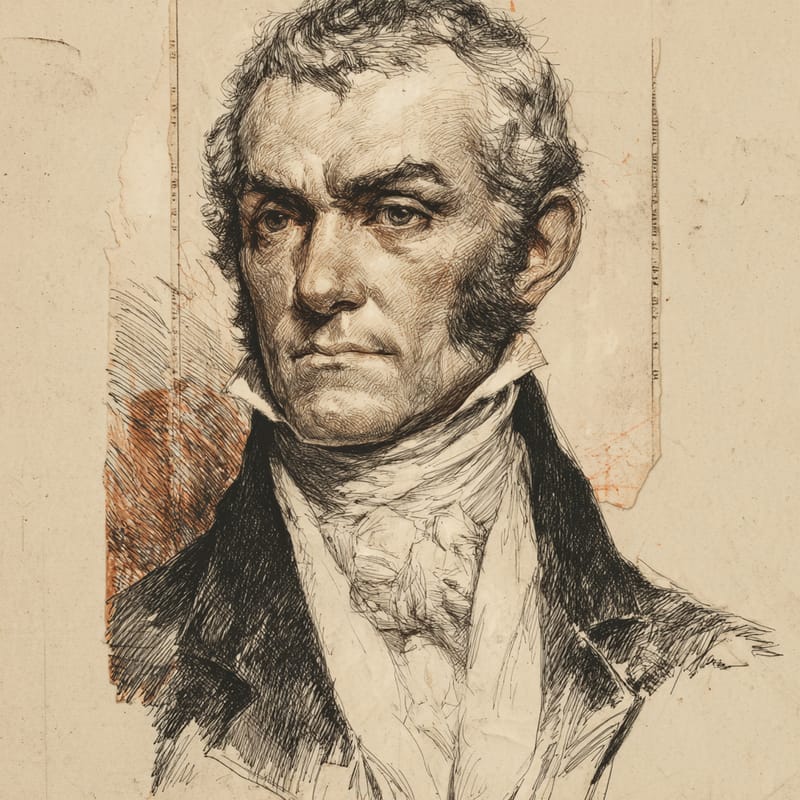
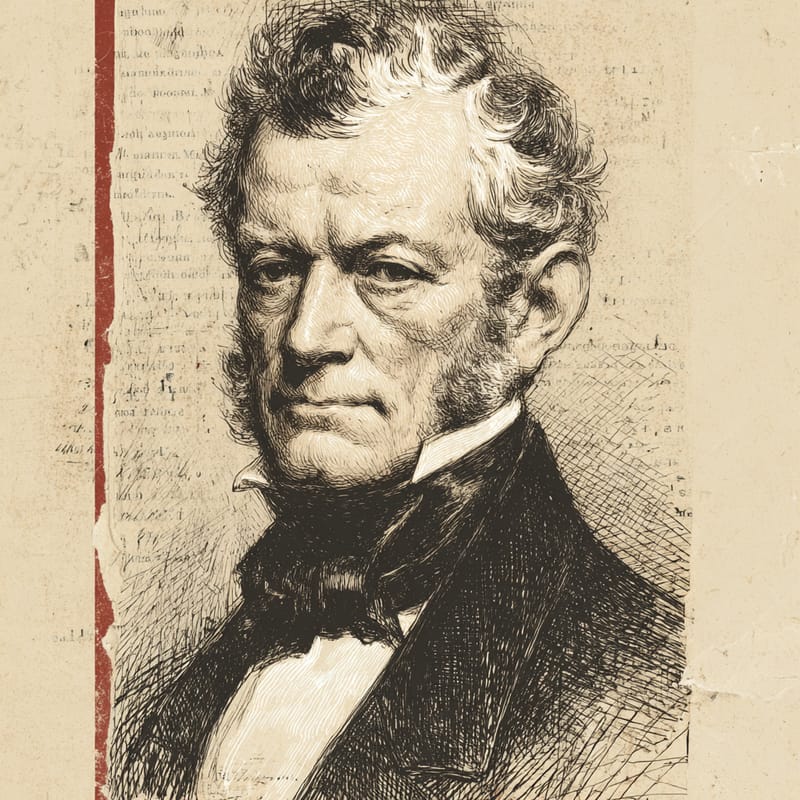
§ Minds closest to J. P. Morgan
All minds →




§ Also in the Capitalist hall
Enter the hall →§ Common questions
4 answersWhat was J. P. Morgan's political ideology?
J. P. Morgan was a conservative financier who believed in order, consolidation and private leadership of the economy: on the 99ideologies three-axis compass, a Rooted Capitalist. Economically he sat near the market pole (+92), building giant corporations such as U.S. Steel and General Electric. On governance he leaned slightly authoritarian (+8), acting as a private central bank in 1895 and 1907, and socially he was moderately traditional (−30), an Episcopalian patrician of the Gilded Age elite.
Was J. P. Morgan left-wing or right-wing?
Right-wing. Morgan was a Republican financier who defended concentrated private capital, resisted trust-busting and dealt with presidents almost as an equal. Populists and progressives, from William Jennings Bryan to Theodore Roosevelt's trust-busters, saw him as the embodiment of the money power. Yet his rescues of 1895 and 1907 served public ends, and the debate over his power led to the creation of a public central bank, the Federal Reserve, a step toward the regulated capitalism he had resisted.
Did J. P. Morgan save the economy in 1907?
He is widely credited with ending the Panic of 1907. When runs on New York trust companies threatened a wider collapse in October 1907, Morgan, then 70, gathered the city's leading bankers, decided which institutions were sound enough to save and organised pools of money to support them, the stock exchange and the city of New York. The Treasury also deposited federal funds in banks. The episode showed how much the country depended on one private banker in a crisis, and it led to the National Monetary Commission and the Federal Reserve Act of 1913.
Which minds are closest to J. P. Morgan?
On the 99ideologies three-axis compass, the minds closest to J. P. Morgan are Charles Foster Kane (99% alike), John Jacob Astor (98% alike) and Hetty Green (98% alike). The furthest is Emma Goldman (4% alike).