
Charles Foster Kane
Power, and its emptiness
The tycoon who had everything but enough.
Rooted CapitalistOne of 729 ideologies · enter the Capitalist hall →- Role
- Press magnate (fiction)
- From
- Citizen Kane
- Region
- United States
- Social band
- Rooted
- Placement
- +90 · +10 · −28
§ Where Charles Foster Kane stands
3 axesKane inherits one of the world's great fortunes and spends his life acquiring more: newspapers, magazines and a vast hoard of statues and art crated up at Xanadu. His youthful newspaper crusade against the traction trust, which runs against his own shareholdings, shows a populist streak, but the film presents him above all as a man for whom ownership is the measure of everything.
Kane wields private media power as a political weapon, using the Inquirer to stir up war fever over Cuba, and in his campaign for governor he promises to have the political boss Jim Gettys indicted and convicted. His paternalism, speaking for the people while believing he alone knows their interests, tilts him toward authority, though his ambitions run through elections and newspapers rather than force.
Kane is a possessive traditionalist whose relationships become acquisitions: he marries Emily Norton, the niece of a president, then pushes his second wife, Susan Alexander, into an opera career she cannot sustain and isolates her at Xanadu. He hoards the art and statuary of old Europe, and the film suggests that what he truly mourns is the lost world of his childhood, symbolised by Rosebud.
How close are you to Charles Foster Kane?
Three statements, one per axis. Answer them and we’ll drop you on the compass next to them.
§ The story
FictionCharles Foster Kane is the newspaper magnate at the centre of Citizen Kane, the 1941 film directed by Orson Welles, who co-wrote it with Herman J. Mankiewicz and played Kane himself. The film opens with Kane's death at Xanadu, his vast Florida estate, as he utters the word Rosebud, and follows a reporter piecing together his life: a Colorado boyhood cut short by a gold-mine fortune, a crusading newspaper empire, a failed run for governor and two broken marriages.
Kane was modelled chiefly on the press baron William Randolph Hearst, whose newspapers refused to advertise the film and whose allies tried to have it suppressed, with touches drawn from other tycoons. A box-office disappointment on release, Citizen Kane later topped critics' polls for decades as the greatest film ever made, and Kane became cinema's defining portrait of the press baron and of wealth that cannot buy love. The revelation that Rosebud was his childhood sled made the word shorthand for lost innocence.
Notable for
- 01Hero of 'Citizen Kane'
- 02'Rosebud'
- 03Archetype of the press baron
Key works & moments
- 1941Orson Welles's Citizen Kane premieres, with Welles as the newspaper magnate Charles Foster Kane.
- ChildhoodA gold-mine windfall sends him from his Colorado home to be raised by the banker Walter Thatcher.
- Early careerTakes over the New York Inquirer and crusades against the trusts in the name of the people.
- Middle yearsLoses the race for governor of New York after his affair with Susan Alexander is exposed.
- Final yearsDies alone at his Florida estate, Xanadu, whispering the word Rosebud.
- 1942Welles and Herman J. Mankiewicz win the Academy Award for Best Original Screenplay.
In Charles Foster Kane's words
“I think it would be fun to run a newspaper.”
“Rosebud.”
§ Minds closest to Charles Foster Kane
All minds →
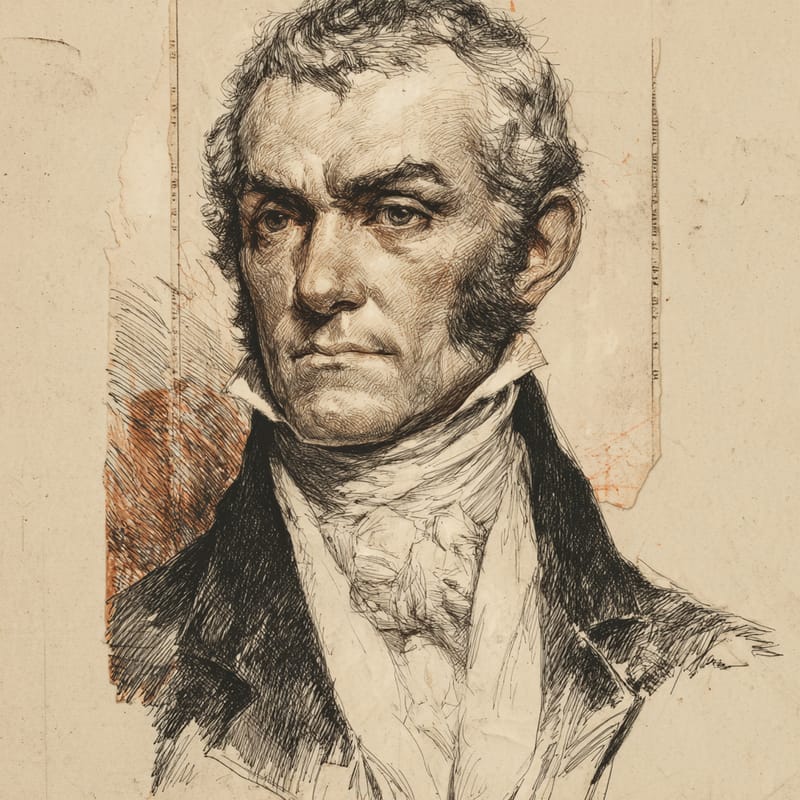


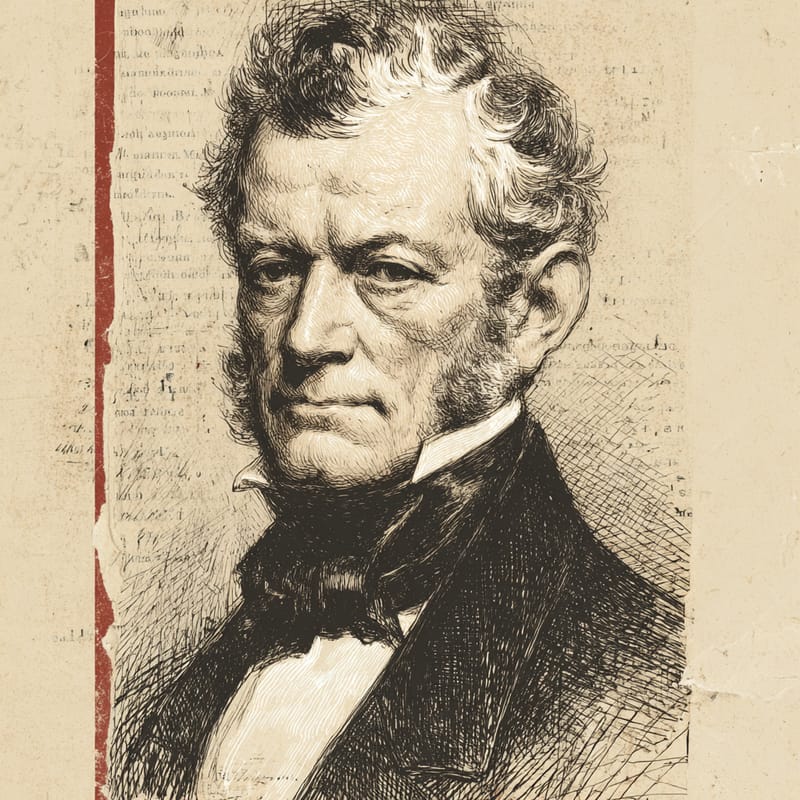


§ Also in the Capitalist hall
Enter the hall →§ Common questions
4 answersWhat is Charles Foster Kane's political ideology?
Charles Foster Kane is a capitalist populist whose politics serve his ego: on the 99ideologies three-axis compass, a Rooted Capitalist. Economically he sits near the market pole (+90), an heir and acquirer who measures life by ownership, despite early crusades against the trusts. On governance he leans authoritarian (+10), using his newspapers as a political weapon and claiming to speak for the people, and socially he is moderately traditional (−28), possessive, status-conscious and nostalgic for a lost past.
Is Charles Foster Kane left-wing or right-wing?
The film deliberately makes him both and neither. In the opening newsreel his banker guardian denounces him as a communist while a labour speaker calls him a fascist, and Kane insists he is simply an American. As a young publisher he crusades against monopolies and for working people, but he grows into an isolated tycoon who has lost touch with them. Welles presents him as a study of power and egotism rather than of any fixed ideology.
Was Citizen Kane based on William Randolph Hearst?
Largely. Kane's newspaper empire, his role in stirring up war with Spain, his failed run for governor of New York, his enormous art collection and his castle-like estate all echo William Randolph Hearst, and his treatment of Susan Alexander was widely read as a cruel version of Hearst's relationship with the actress Marion Davies. Welles and Herman J. Mankiewicz also drew on other tycoons, including Samuel Insull, who built Chicago's Civic Opera House. Hearst's newspapers refused to carry advertisements for the film.
Which minds are closest to Charles Foster Kane?
On the 99ideologies three-axis compass, the minds closest to Charles Foster Kane are J. P. Morgan (99% alike), John Jacob Astor (98% alike) and John D. Rockefeller (97% alike). The furthest is Emma Goldman (5% alike).