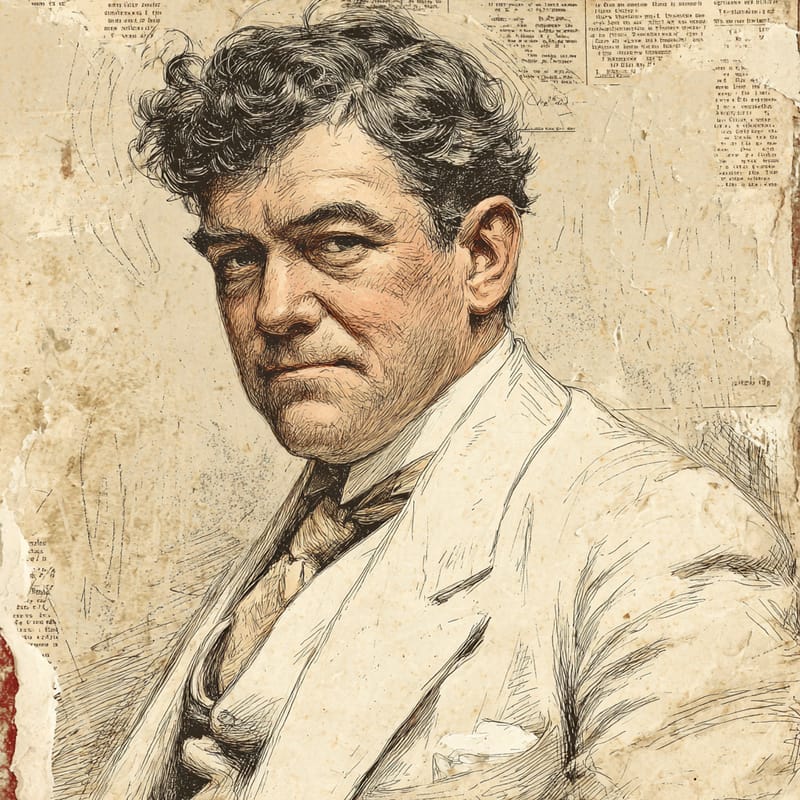
Huey Long
Share our wealth
Every man a king.
Rooted LongistOne of 729 ideologies · enter the Longist hall →- Role
- Senator & Governor
- Era
- 1893–1935
- Region
- United States
- Social band
- Rooted
- Placement
- −58 · +48 · −20
§ Where Huey Long stands
3 axesLong's Share Our Wealth plan, launched in a February 1934 radio address, proposed capping personal fortunes and inheritances and using the proceeds to guarantee every family a homestead allowance and a minimum income, along with old-age pensions, free college and a shorter working week. It was radical redistribution, but within capitalism: Long rejected socialism and never proposed public ownership of industry.
Long governed Louisiana as a political boss. After surviving impeachment by the state House in 1929, he built a machine that controlled patronage, the state police and election officials, and in rapid special sessions in 1934–35 his legislature handed him sweeping control over local governments and appointments. He won genuine elections, but tolerated few limits on his power once in office.
Socially Long was a folksy, Bible-quoting product of the rural Baptist South who left Jim Crow segregation untouched. Yet he largely avoided the race-baiting that defined many Southern demagogues of his era, and his free textbooks of 1928 and adult literacy classes of the early 1930s served poor Black and white Louisianans alike.
How close are you to Huey Long?
Three statements, one per axis. Answer them and we’ll drop you on the compass next to them.
§ The story
HistoricalHuey Pierce Long Jr. (1893–1935) was governor of Louisiana from 1928 to 1932 and a United States senator from 1932 until his assassination. A travelling salesman turned largely self-taught lawyer from Winnfield, in the state's poor northern hill country, he made his name on the state railroad commission attacking Standard Oil and the utilities, then won the governorship by promising farmers, labourers and the rural poor that he would break the grip of the planter and business elite.
As governor he built roads, bridges and hospitals, gave schoolchildren free textbooks and expanded Louisiana State University, paying for it partly with taxes on oil companies. He also built a machine that controlled the legislature, courts, police and election officials, and governed through a pliant successor after he went to the Senate. His Share Our Wealth movement made him a potential threat to Franklin Roosevelt before he was fatally shot in the state capitol in September 1935; the accused gunman, Carl Weiss, was killed on the spot by Long's bodyguards.
Notable for
- 01The 'Share Our Wealth' programme
- 02Dominated Louisiana politics
- 03Threatened FDR from the left
Key works & moments
- 1928Elected governor of Louisiana, promising free textbooks, paved roads and an end to oligarchic rule.
- 1929Survives impeachment when enough state senators sign a pledge refusing to convict him.
- 1932Takes his seat in the US Senate and backs Franklin Roosevelt's presidential nomination.
- 1933Publishes his autobiography, Every Man a King.
- 1934Launches the Share Our Wealth Society in a national radio address.
- 1935Shot in the Louisiana State Capitol on 8 September; dies two days later.
§ Minds closest to Huey Long
All minds →
§ Also in the Longist hall
Enter the hall →§ Common questions
4 answersWhat was Huey Long's political ideology?
Huey Long was a redistributive Southern populist whose programme gave its name to Longism: on the 99ideologies three-axis compass, a Rooted Longist. Economically he sat left of centre (−58), proposing to cap great fortunes and guarantee every family a homestead and income; on governance he leaned clearly authoritarian (+48), running Louisiana through a personal machine; and socially he leaned traditional (−20), a folksy rural Southerner who left segregation untouched while avoiding race-baiting.
Was Huey Long left-wing or right-wing?
Economically left-wing, but not a socialist. Long attacked concentrated wealth, taxed oil companies and proposed redistributing large fortunes to every family, criticising Roosevelt's New Deal as too timid. Yet he defended private property, rejected socialism and governed as a populist boss with a socially traditional Southern outlook. He is best seen as a left-populist who also tested the limits of democratic restraint, which is why he alarmed both the business right and New Deal liberals.
What was Huey Long's Share Our Wealth plan?
It was Long's national programme for ending the Depression by redistributing wealth, launched in a radio address in February 1934. It proposed capping personal fortunes, annual incomes and inheritances, and using the proceeds to give every family a homestead allowance and a guaranteed minimum income, together with old-age pensions, free college education, veterans' benefits and a shorter working week. Share Our Wealth clubs spread across the country, and the pressure is often credited with pushing Roosevelt toward the Social Security Act and higher taxes on the rich in 1935.
Which minds are closest to Huey Long?
On the 99ideologies three-axis compass, the minds closest to Huey Long are Willie Stark (96% alike), Juan Perón (95% alike) and Sukarno (95% alike). The furthest is Murray Rothbard (15% alike).