
William Aberhart
Social Credit
A dividend for every citizen.
Traditional LongistOne of 729 ideologies · enter the Longist hall →- Role
- Premier of Alberta
- Era
- 1878–1943
- Region
- Canada
- Social band
- Traditional
- Placement
- −48 · +44 · −46
§ Where William Aberhart stands
3 axesAberhart adapted C. H. Douglas's Social Credit theory, promising in the 1935 campaign a monthly dividend of $25 to every adult Albertan to cure the Depression's shortage of purchasing power. In office he issued depreciating prosperity certificates in 1936, defaulted on provincial bonds and passed laws to control banks and credit, which Ottawa disallowed in 1937. He attacked bankers, not private property.
A charismatic radio preacher, Aberhart ran a tightly controlled government and bridled at checks on it. His 1937 Accurate News and Information Act would have forced newspapers to print government replies and reveal their sources; the Supreme Court of Canada ruled it beyond the province's powers in 1938, and the Edmonton Journal won a special Pulitzer Prize for opposing it. He governed, though, through regular elections.
Aberhart's politics grew out of evangelical fundamentalism. He preached biblical prophecy and literalism from the Calgary Prophetic Bible Institute and on his weekly Back to the Bible Hour broadcasts, mixing Sunday sermons with Social Credit economics. His appeal rested on moral traditionalism and suspicion of distant eastern financiers rather than on any programme of social change.
How close are you to William Aberhart?
Three statements, one per axis. Answer them and we’ll drop you on the compass next to them.
§ The story
HistoricalWilliam Aberhart (1878–1943) was premier of Alberta from 1935 until his death. Born in Ontario, he became a high-school principal in Calgary and a self-taught lay preacher whose Sunday radio sermons reached homes across the prairies. Known as Bible Bill, he founded the Calgary Prophetic Bible Institute in 1927, and in 1932, as drought and depression ruined Alberta's farmers, he began preaching the Social Credit monetary theories of the British engineer C. H. Douglas.
In 1935 his new Social Credit League swept the provincial election, winning 56 of 63 seats and forming the world's first Social Credit government. The promised dividends never arrived, and his attempts to regulate banks and the press were disallowed by Ottawa or struck down by the courts, yet he remained popular and won re-election in 1940. Social Credit governed Alberta until 1971, from 1943 to 1968 under his successor Ernest Manning, gradually shedding its monetary radicalism for conservative orthodoxy, and the movement also governed British Columbia for decades.
Notable for
- 01Led the Social Credit movement
- 02Premier of Alberta
- 03Radio-preacher politics
Key works & moments
- 1925Begins broadcasting Sunday sermons on Calgary radio, building a prairie-wide following.
- 1927Opens the Calgary Prophetic Bible Institute to train lay preachers.
- 1932Discovers C. H. Douglas's Social Credit theory and begins preaching it on air.
- 1935Social Credit wins 56 of 63 seats; Aberhart becomes premier of Alberta.
- 1937Passes the Accurate News and Information Act; Ottawa disallows his banking and credit laws.
- 1943Dies in office; his protégé Ernest Manning succeeds him as premier.
§ Minds closest to William Aberhart
All minds →


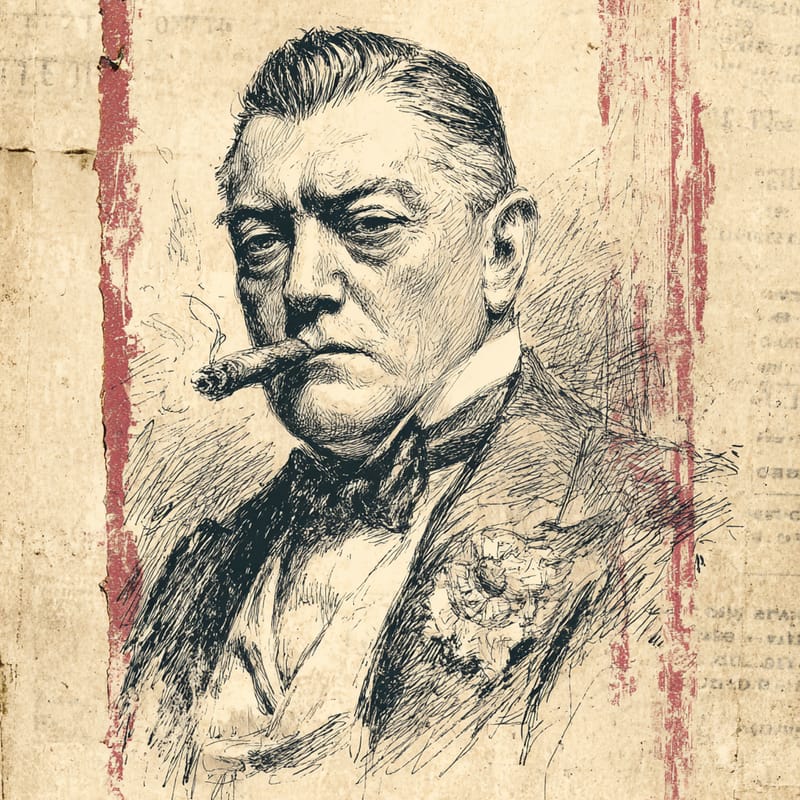


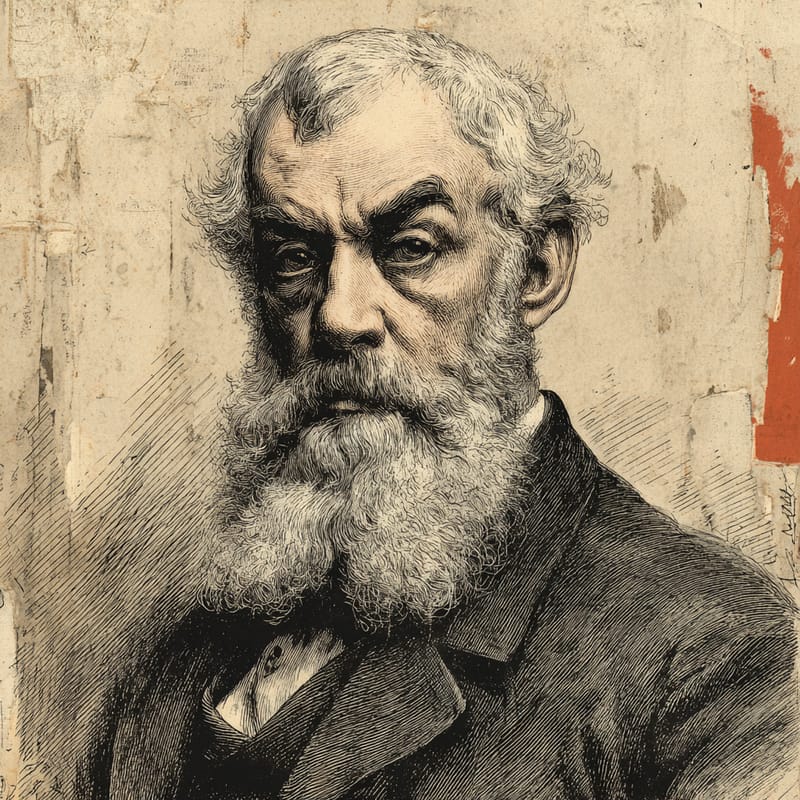
§ Also in the Longist hall
Enter the hall →§ Common questions
4 answersWhat was William Aberhart's political ideology?
William Aberhart was a Social Credit populist and evangelical: on the 99ideologies three-axis compass, a Traditional Longist. Economically he sat moderately left of centre (−48), promising monetary dividends for every citizen and attacking the power of banks; on governance he leaned authoritarian (+44), running a tightly controlled government that tried to muzzle the press; and socially he was clearly traditional (−46), a fundamentalist radio preacher whose politics grew from his religion.
Was William Aberhart left-wing or right-wing?
Neither in the usual Canadian sense. His attacks on banks, promise of dividends for every adult and debt-relief laws put him on the populist economic left, and Alberta's bankers and newspapers bitterly opposed him. But he was an evangelical traditionalist hostile to socialism, and the party he founded became a conservative force under Ernest Manning. He is best described as a cultural traditionalist and monetary radical whose movement drifted rightward after his death.
What is Social Credit?
Social Credit is an economic theory devised by the British engineer C. H. Douglas after the First World War. Douglas argued that industry always pays out less in wages and dividends than the price of what it produces, so consumers can never buy everything made, and that the state should fill the gap by issuing credit directly to citizens as a national dividend and setting a just price. Economists rejected the theory, but in Depression-era Alberta Aberhart turned it into a mass movement and won power in 1935.
Which minds are closest to William Aberhart?
On the 99ideologies three-axis compass, the minds closest to William Aberhart are Tom Watson (98% alike), Charles Coughlin (96% alike) and Wendell Berry (92% alike). The furthest is Lysander Spooner (16% alike).