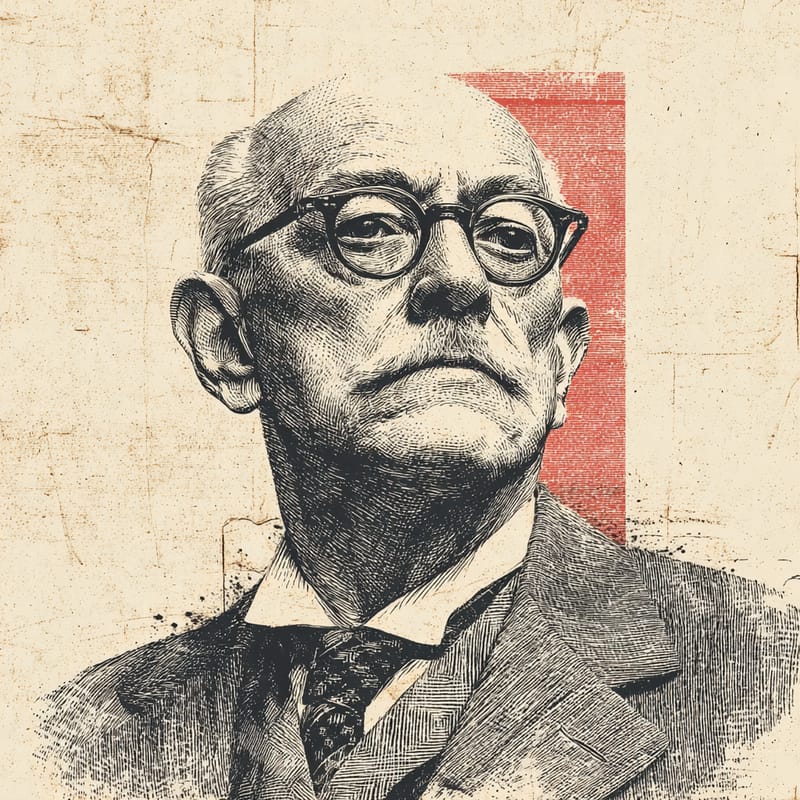
Salah al-Din al-Bitar
The other founder
Ba'athism's more moderate face.
Ba'athistOne of 729 ideologies · enter the Ba'athist hall →- Role
- Co-founder & PM
- Era
- 1912–1980
- Region
- Syria
- Social band
- Centre (no modifier)
- Placement
- −52 · +66 · −6
§ Where Salah al-Din al-Bitar stands
3 axesBitar's socialism was moderate and nationalist. The party constitution adopted at the 1947 founding congress promised land reform, workers' rights and public ownership of major utilities and industries while protecting private property within limits, and in 1963 his government nationalised Syria's banks; but he belonged to the party's gradualist wing, wary of the sweeping state takeovers favoured by its military radicals.
Bitar accepted the Ba'ath vision of a single vanguard party leading the Arab nation and took office through the military coup of 1963, so he stood well on the authoritarian side. Yet he repeatedly tried to subordinate the officers to civilian party leadership, lost that struggle in 1966, and spent his exile denouncing the security state his former comrades had built.
Bitar was a secular nationalist who treated Arab identity, including its Islamic heritage, as the foundation of political community. The Ba'ath programme he helped shape called for a unified, non-sectarian Arab state and modern public education, but it framed reform as the renaissance of an ancient nation rather than a break with tradition, leaving him close to the social centre.
How close are you to Salah al-Din al-Bitar?
Three statements, one per axis. Answer them and we’ll drop you on the compass next to them.
§ The story
HistoricalSalah al-Din al-Bitar (1912–1980) was a Syrian politician who co-founded the Ba'ath Party with Michel Aflaq. Born into a Sunni Muslim family in Damascus, he studied physics at the Sorbonne in the early 1930s, where he met Aflaq, and on returning home both taught at a Damascus secondary school while organising a pan-Arab movement. The party held its founding congress in 1947, and Bitar served as Syria's foreign minister in 1956–58, championing the union with Egypt that created the United Arab Republic.
After the Ba'athist coup of March 1963 Bitar became prime minister, and he led several governments over the next three years as the party's civilian old guard struggled with its military wing. The February 1966 coup led by Salah Jadid and Hafez al-Assad overthrew the founders and drove Bitar into exile. From Paris he became a critic of the repression of Ba'athist Syria and published an opposition journal, and on 21 July 1980 he was shot dead in the city, a killing widely attributed to Syrian intelligence.
Notable for
- 01Co-founded the Ba'ath Party
- 02Early Syrian PM
- 03Dissident in exile
Key works & moments
- 1940sWith Michel Aflaq, organises the pan-Arab Ba'ath movement among Damascus students and teachers.
- 1947Co-founds the Arab Ba'ath Party at its first congress in Damascus.
- 1958As foreign minister, champions Syria's merger with Egypt in the United Arab Republic.
- 1963Becomes prime minister after the Ba'athist coup of 8 March.
- 1966Ousted with the party's founders by the military coup of 23 February; goes into exile.
- 1980Assassinated in Paris on 21 July.
§ Minds closest to Salah al-Din al-Bitar
All minds →

§ Also in the Ba'athist hall
Enter the hall →§ Common questions
4 answersWhat was Salah al-Din al-Bitar's political ideology?
Salah al-Din al-Bitar was a co-founder of Ba'athism, the pan-Arab, secular and socialist movement: on the 99ideologies three-axis compass, a Ba'athist. Economically he sat left of centre (−52), backing state-led Arab socialism while protecting private property within limits. On governance he leaned strongly authoritarian (+66), accepting single-party rule though resisting military domination. Socially he sat near the centre (−6), a secular nationalist who grounded reform in Arab heritage.
Was Salah al-Din al-Bitar left-wing or right-wing?
Moderately left-wing. Bitar's Ba'athism combined socialist economics, including land reform and nationalisation of major industries, with Arab nationalism rather than class struggle, and it rejected communism. Within the party he represented the more moderate, civilian wing, which is why the radical officers who seized power in 1966 treated him as a figure of the right, even though his programme placed him on the nationalist left of Arab politics.
Why was Salah al-Din al-Bitar assassinated?
Because, in the most widely held view, he had become a prominent critic of Hafez al-Assad's regime. In exile Bitar condemned the militarisation and repression of Ba'athist Syria and published an opposition journal in Paris, giving dissidents a respected voice from the party's founding generation. He was shot dead in Paris on 21 July 1980, and the killing was widely attributed to Syrian intelligence acting to silence a dangerous critic.
Which minds are closest to Salah al-Din al-Bitar?
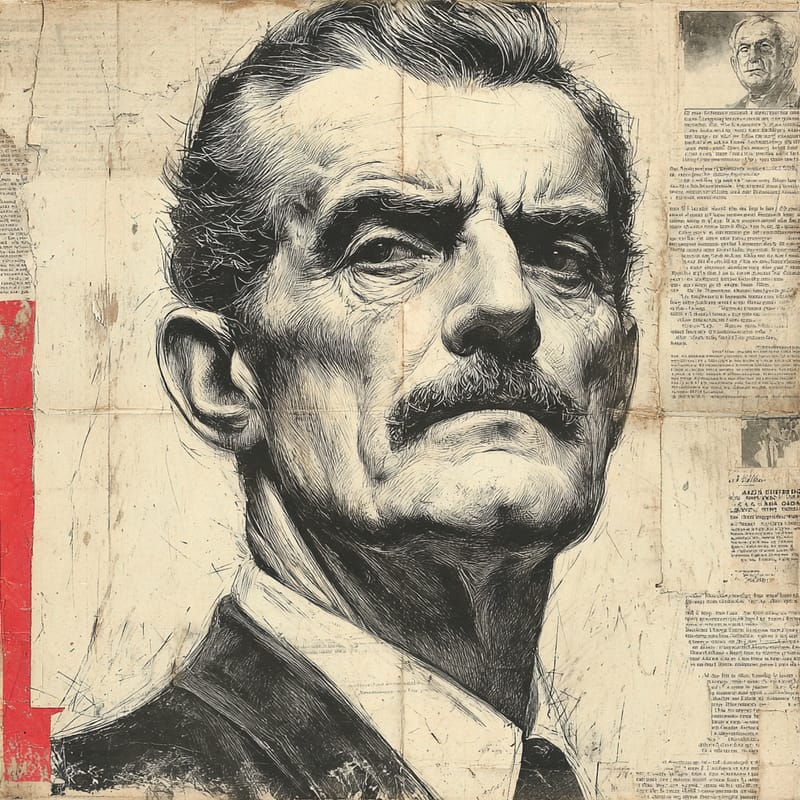
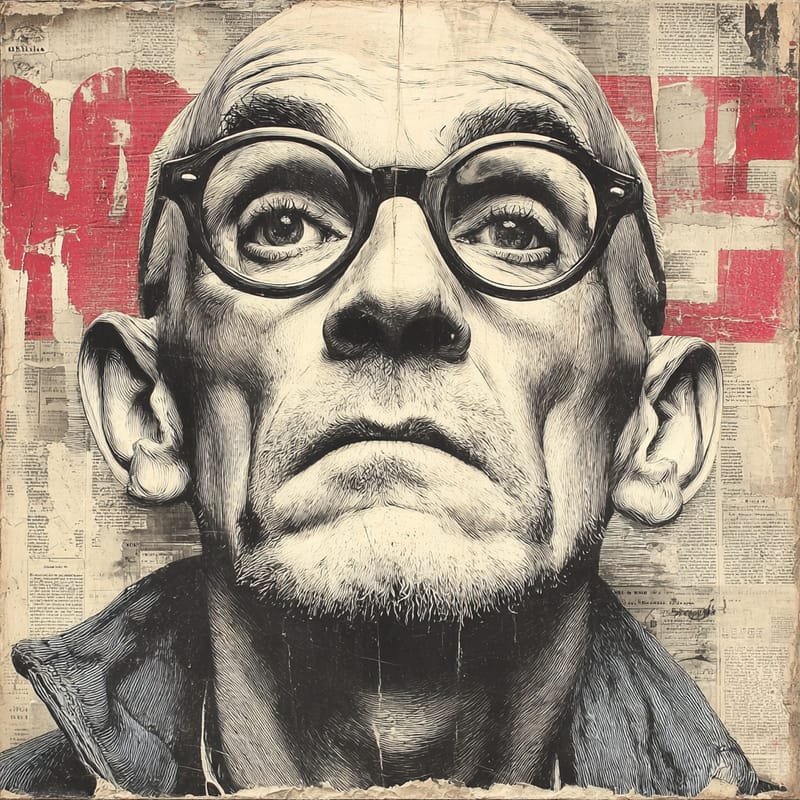
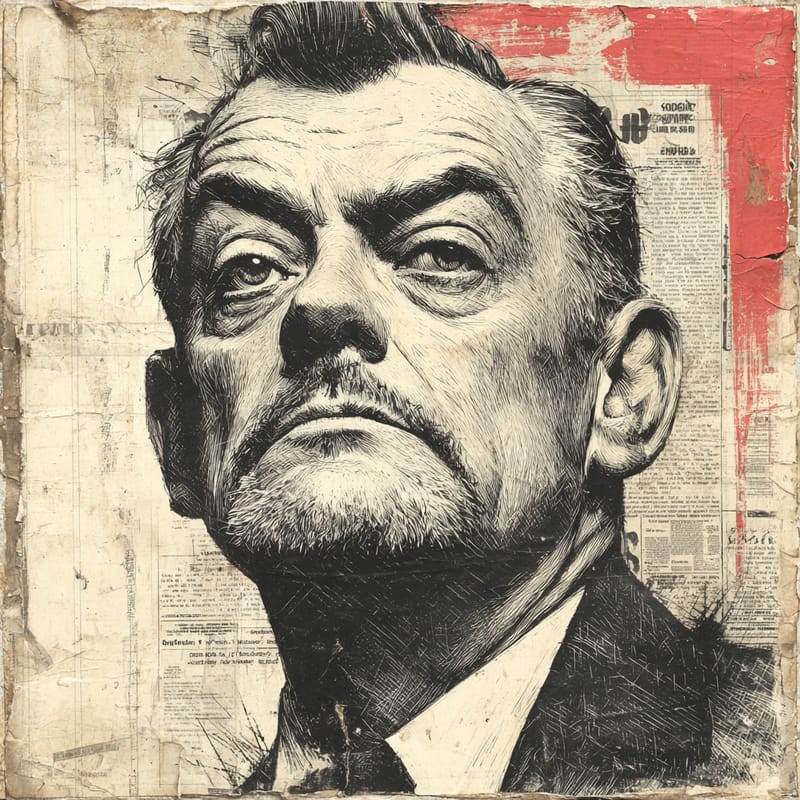
On the 99ideologies three-axis compass, the minds closest to Salah al-Din al-Bitar are Michel Aflaq (98% alike), Ahmed Hassan al-Bakr (95% alike) and Sukarno (92% alike). The furthest is Hans-Hermann Hoppe (11% alike).