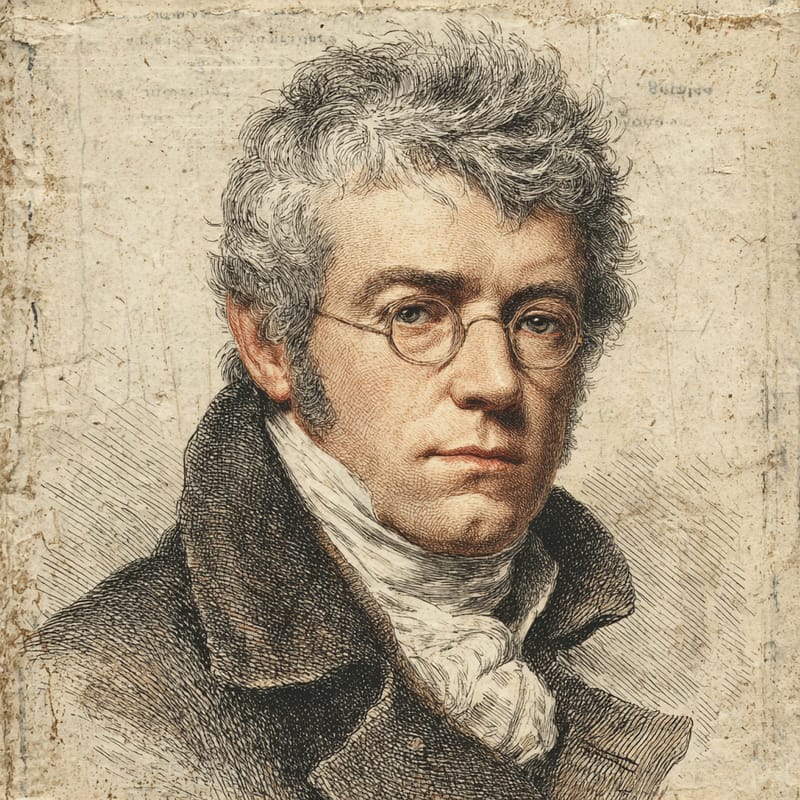
Edmund Burke
Father of conservatism
Reform to preserve — order, custom, and the wisdom of generations.
Traditional ConservativeOne of 729 ideologies · enter the Conservative hall →- Role
- Statesman & philosopher
- Era
- 1729–1797
- Region
- Britain / Ireland
- Social band
- Traditional
- Placement
- +45 · +28 · −58
§ Where Edmund Burke stands
3 axesBurke admired commercial society and shared much of Adam Smith's economics. In Thoughts and Details on Scarcity (1795) he argued against state regulation of wages and grain prices during a time of dearth, and he backed freer trade for Ireland in 1778 at the cost of support in Bristol. Yet he defended inherited landed property and the established order it underpinned, which keeps him moderately rather than radically pro-market.
Burke defended ordered liberty under a mixed constitution of Crown, Lords and Commons, with power restrained by law and custom rather than by abstract rights. His 'economical reform' legislation of 1782 abolished sinecures and curbed royal patronage, but he condemned the French revolutionaries' wholesale remaking of the state and urged war against revolutionary France in his Letters on a Regicide Peace (1795–97).
Burke is the classic defender of tradition. Reflections on the Revolution in France (1790) presents society as a partnership between the living, the dead and those yet to be born, and prizes custom, religion and inherited 'prejudice' over abstract reason. He was no reactionary on every issue: he pressed for relief for Irish Catholics, attacked abuses in India and drafted a scheme for gradually ending the slave trade and slavery.
How close are you to Edmund Burke?
Three statements, one per axis. Answer them and we’ll drop you on the compass next to them.
§ The story
HistoricalEdmund Burke (1729–1797) was an Irish-born statesman, orator and political writer who sat in the British House of Commons from 1765 to 1794. The son of a Protestant lawyer and a Catholic mother in Dublin, he studied at Trinity College Dublin, made his name in London with a treatise on the sublime and the beautiful, and became private secretary to the Marquess of Rockingham, leader of a Whig faction. He sat for Wendover, Bristol and Malton, and briefly served as Paymaster of the Forces.
Burke spent most of his career in opposition, attacking royal patronage, urging conciliation with the American colonists and leading the impeachment of Warren Hastings for misrule in India, which ended in acquittal in 1795. His Reflections on the Revolution in France (1790) condemned the revolution before the Terror, ended his friendship with Charles James Fox and split the Whigs. Later thinkers adopted him as the founder of modern conservatism, though in his lifetime he was a reforming Whig, and critics then and since have called his defence of aristocracy and tradition a rationalisation of privilege.
Notable for
- 01'Reflections on the Revolution in France'
- 02Defended the American colonists' grievances
- 03Theory of ordered, prescriptive liberty
Key works & moments
- 1757Publishes A Philosophical Enquiry into the Origin of Our Ideas of the Sublime and Beautiful.
- 1770Thoughts on the Cause of the Present Discontents defends party government against royal influence.
- 1774Tells the electors of Bristol that an MP owes them his judgement, not obedience to instructions.
- 1775Delivers his speech on conciliation with the American colonies in the Commons.
- 1788Opens the impeachment of Warren Hastings in Westminster Hall.
- 1790Publishes Reflections on the Revolution in France.
In their own words
“A state without the means of some change is without the means of its conservation.”
“Your representative owes you, not his industry only, but his judgment; and he betrays, instead of serving you, if he sacrifices it to your opinion.”
§ Minds closest to Edmund Burke
All minds →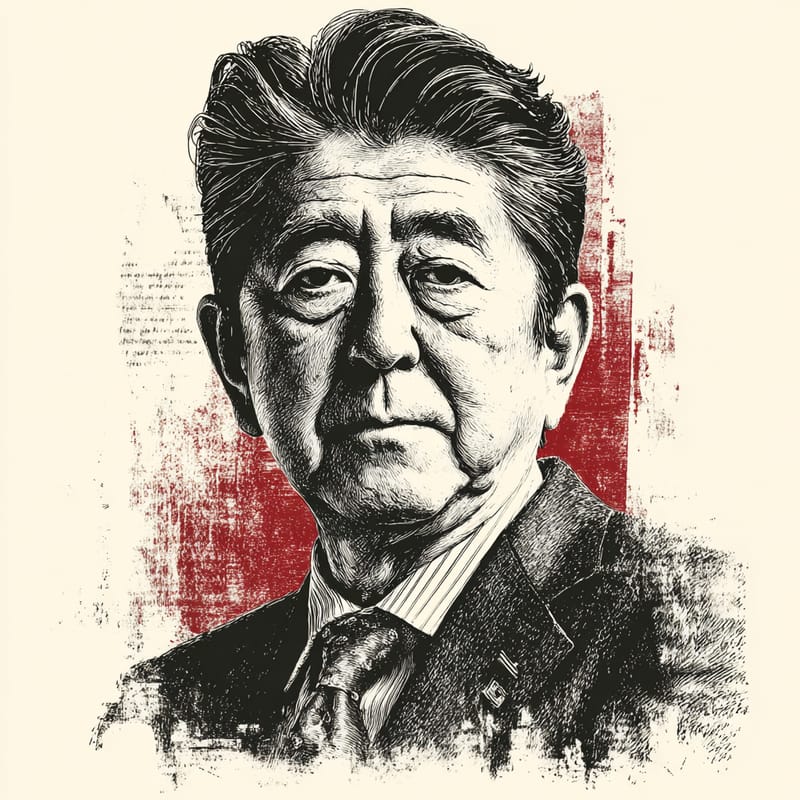

§ Also in the Conservative hall
Enter the hall →§ Common questions
4 answersWhat was Edmund Burke's political ideology?
Burke is regarded as the founder of modern conservatism, though he sat as a Whig: on the 99ideologies three-axis compass, a Traditional Conservative. Economically he leaned right of centre (+45), favouring commerce, property and free markets in grain and labour. On governance he defended established authority (+28), a mixed constitution of Crown, Lords and Commons under law, and socially he was strongly traditional (−58), prizing custom, religion and inherited institutions over abstract rights.
Was Edmund Burke left-wing or right-wing?
Right-wing in the tradition he founded, though the labels postdate him: 'left' and 'right' came from the seating of the French revolutionary assembly he opposed. In his own day Burke was a Whig reformer who curbed royal patronage, sympathised with the American colonists and Irish Catholics, and attacked imperial abuses in India. His fierce opposition to the French Revolution, and his defence of tradition, religion and property, made him the touchstone of conservatives ever since.
Did Edmund Burke support the American Revolution?
Partly. Burke defended the American colonists' grievances and opposed the policies that drove them to revolt, arguing in his speeches on American taxation (1774) and on conciliation with the colonies (1775) that Britain should stop trying to tax them and govern by consent and prudence. He did not embrace independence as a principle or the revolutionaries' natural-rights theory; he saw the Americans as defending traditional English liberties. That is why he could back them yet condemn the French Revolution, which he believed sought to destroy an entire inherited order.
Which minds are closest to Edmund Burke?
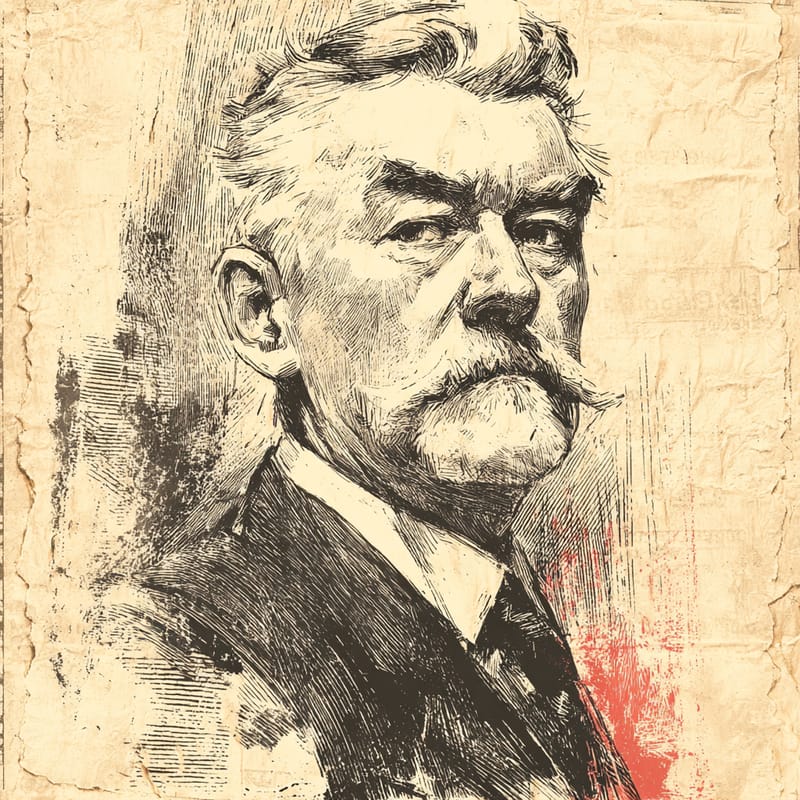
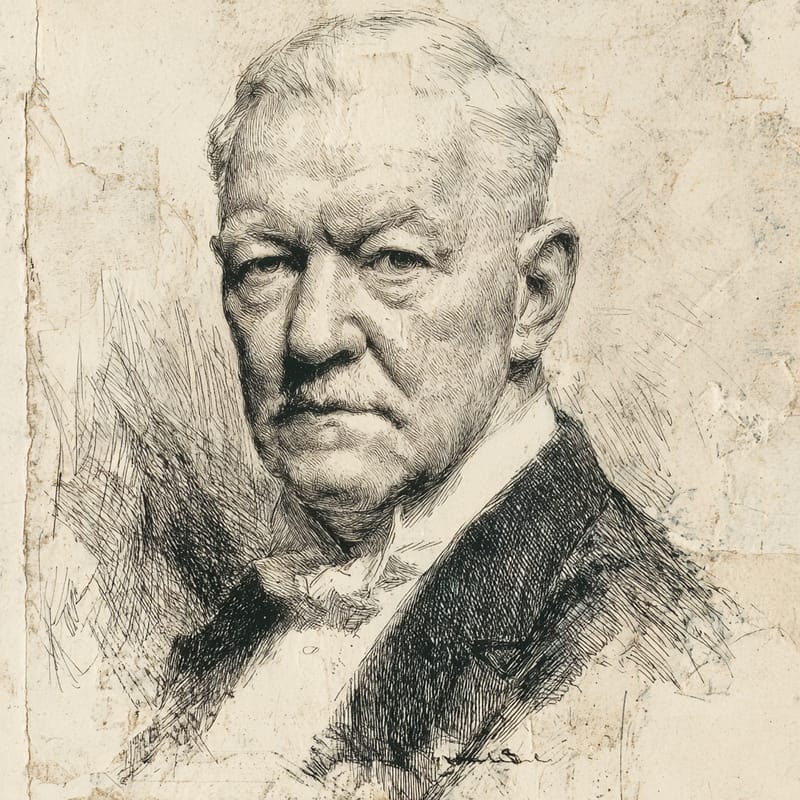
On the 99ideologies three-axis compass, the minds closest to Edmund Burke are Shinzo Abe (96% alike), Robert Menzies (96% alike) and Konrad Adenauer (95% alike). The furthest is Emma Goldman (7% alike).