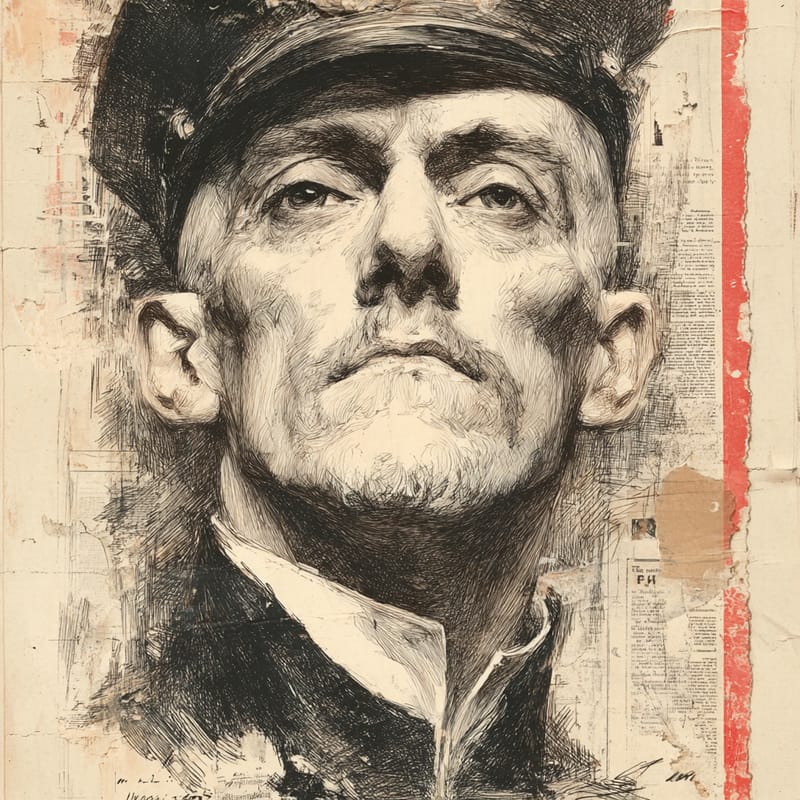
Charles de Gaulle
Grandeur and the strong state
National independence above party and faction.
Traditional ConservativeOne of 729 ideologies · enter the Conservative hall →- Role
- President
- Era
- 1890–1970
- Region
- France
- Social band
- Traditional
- Placement
- +46 · +34 · −38
§ Where Charles de Gaulle stands
3 axesDe Gaulle saw the economy as an instrument of national power. His provisional government nationalised Renault, the northern coal mines, the Banque de France and the main deposit banks in 1944–45 and created a national planning commission, but after 1958 the Pinay–Rueff plan devalued the franc, cut spending and opened France to the Common Market, a dirigiste yet market-based model.
De Gaulle built the Fifth Republic around a powerful presidency: the 1958 constitution, approved by referendum, gave the head of state emergency powers under Article 16 and the right to dissolve parliament, and a 1962 referendum introduced direct presidential elections. He governed by appeal to the nation over the parties, but he submitted to the voters and resigned after losing a referendum in 1969.
A devout Catholic and patriot with a mystical sense of French destiny, de Gaulle stood for order, family and national grandeur, and in May 1968 he faced down student and worker revolts with a mass rally of supporters and snap elections. Yet his wartime authorities granted French women the vote in 1944, and he accepted the legalisation of contraception in 1967.
How close are you to Charles de Gaulle?
Three statements, one per axis. Answer them and we’ll drop you on the compass next to them.
§ The story
HistoricalCharles de Gaulle (1890–1970) was a French army officer and statesman who led Free France during the Second World War and founded the Fifth Republic. A career soldier from a Catholic family in Lille, he was wounded and captured at Verdun in 1916 and between the wars argued for mechanised armoured forces. In June 1940, as a junior minister, he refused France's armistice with Germany, flew to London and broadcast his appeal to continue the fight, then led the Free French and, in 1944–46, the provisional government of liberated France.
De Gaulle resigned in 1946, opposing the Fourth Republic's party-dominated system, but returned in 1958 amid the Algerian crisis, overseeing the drafting of a new constitution and serving as president from 1959 to 1969. He ended the Algerian war, accepting independence in 1962 despite fierce opposition from settlers and army rebels who tried to assassinate him, built an independent nuclear force, vetoed British entry to the European Economic Community and withdrew France from NATO's integrated command in 1966. He survived the upheaval of May 1968 but resigned after losing a referendum in 1969.
Notable for
- 01Led Free France in WWII
- 02Founded the Fifth Republic
- 03Withdrew France from NATO command
Key works & moments
- 1940Broadcasts the Appeal of 18 June from London, rallying the Free French.
- 1944Leads the provisional government after the liberation of Paris; French women gain the vote.
- 1958Returns to power amid the Algerian crisis; voters approve the Fifth Republic's constitution.
- 1962The Évian Accords end the Algerian war; a referendum approves direct presidential elections.
- 1966Withdraws France from NATO's integrated military command.
- 1969Resigns after losing a referendum on Senate and regional reform.
In their own words
“Whatever happens, the flame of French resistance must not be extinguished and will not be extinguished.”
“Vive le Québec libre!”
§ Minds closest to Charles de Gaulle
All minds →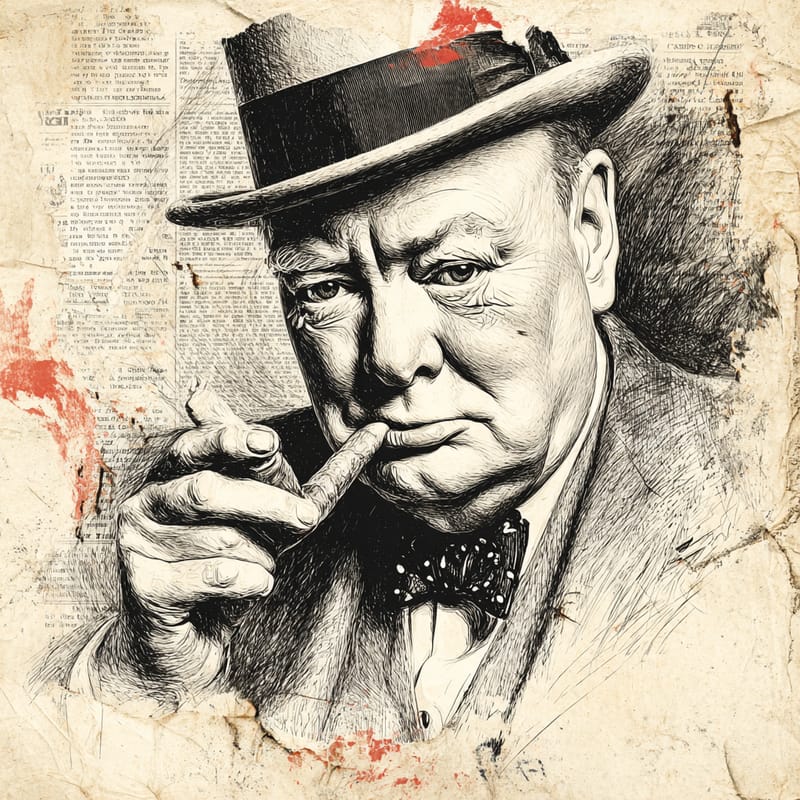

§ Also in the Conservative hall
Enter the hall →§ Common questions
4 answersWhat was Charles de Gaulle's political ideology?
Charles de Gaulle was the founder of Gaullism, a nationalist conservatism built on a strong state and national independence: on the 99ideologies three-axis compass, a Traditional Conservative. Economically he sat right of centre (+46), combining market reforms with state planning and nationalised industries. On governance he leaned clearly towards executive authority (+34), creating the powerful presidency of the Fifth Republic, and socially he was a traditionalist (−38), a Catholic patriot devoted to order and national grandeur.
Was Charles de Gaulle left-wing or right-wing?
Right of centre, though he refused to be defined by left and right. De Gaulle came from the Catholic, military right and his movement drew conservative voters, yet his provisional government nationalised key industries, created the social security system and gave women the vote, and he championed worker participation in company profits. Many on the left saw his strong presidency as authoritarian, while the far right, especially over Algeria, regarded him as a traitor.
Why did de Gaulle withdraw France from NATO?
To restore French military independence. De Gaulle resented American dominance of the alliance and wanted France to control its own forces and its new nuclear deterrent. In 1966 he withdrew France from NATO's integrated military command, though not from the alliance itself, and required allied forces and headquarters to leave French soil; NATO's headquarters moved to Belgium in 1967. France rejoined the integrated command only in 2009.
Which minds are closest to Charles de Gaulle?
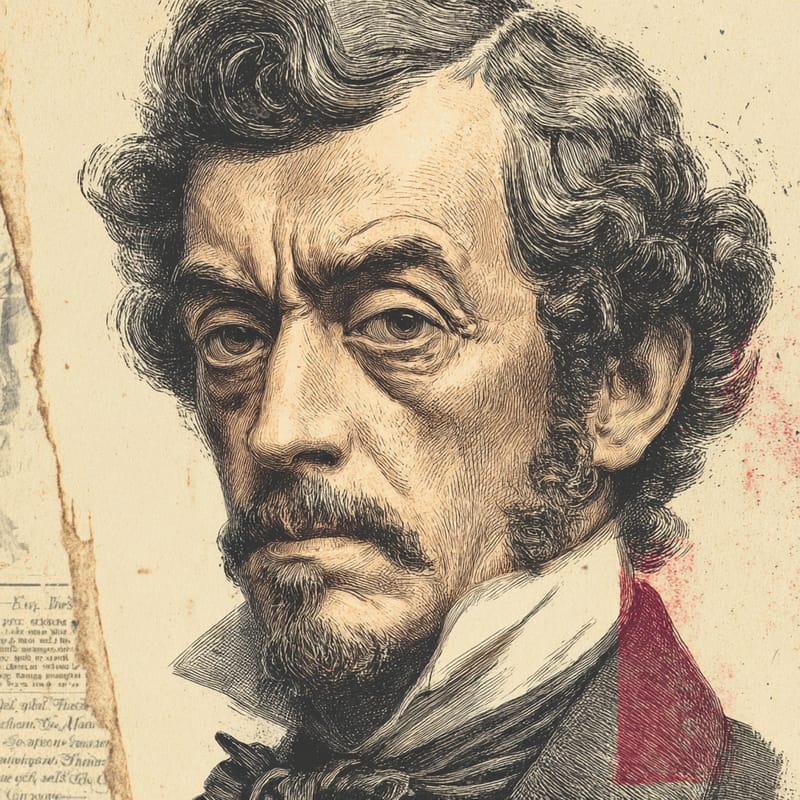
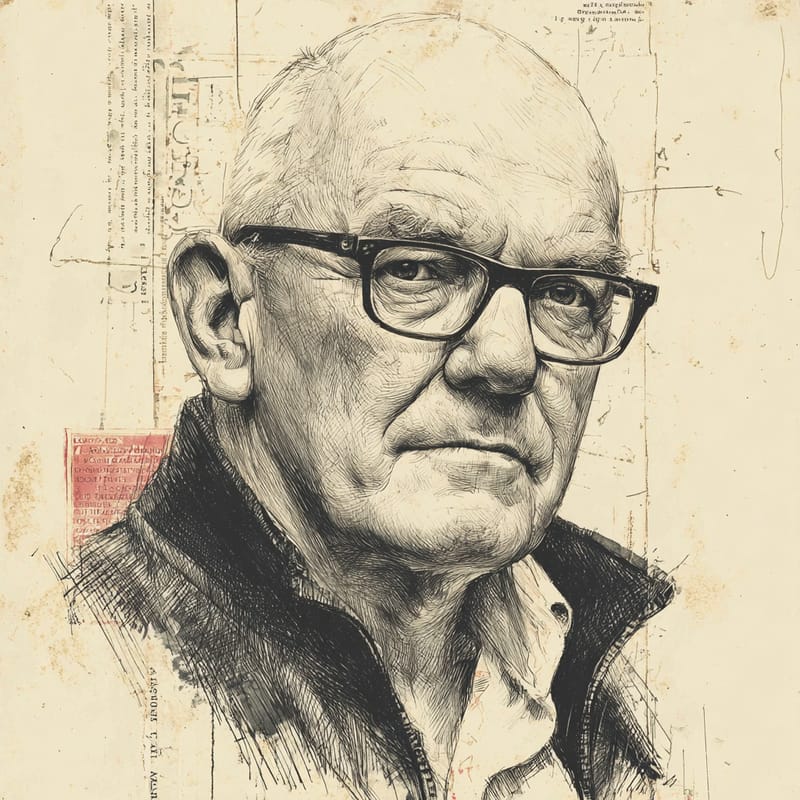
On the 99ideologies three-axis compass, the minds closest to Charles de Gaulle are Winston Churchill (98% alike), Benjamin Disraeli (95% alike) and John Howard (94% alike). The furthest is Emma Goldman (10% alike).