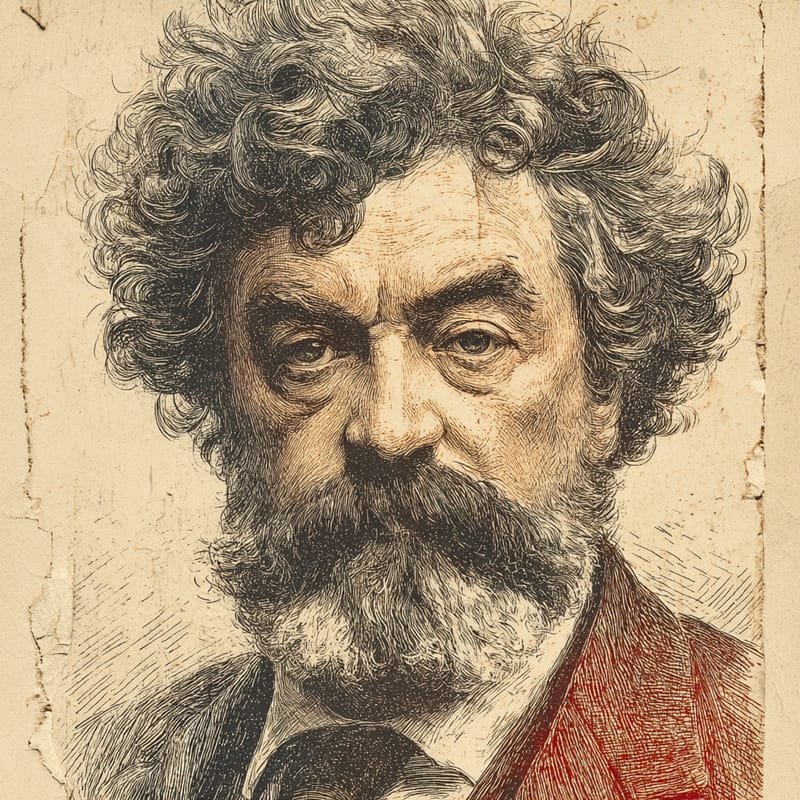
William Morris
Useful work, beautiful life
Craft, nature and socialism entwined.
Reformist Eco-SocialistOne of 729 ideologies · enter the Eco-Socialist hall →- Role
- Artist & socialist
- Era
- 1834–1896
- Region
- United Kingdom
- Social band
- Reformist
- Placement
- −80 · −50 · +55
§ Where William Morris stands
3 axesMorris wanted the means of production held in common and work organised for use rather than profit. In his lecture Useful Work versus Useless Toil (1884) he condemned capitalism for forcing people into degrading labour to make shoddy goods and useless luxuries, and News from Nowhere (1890) imagines a society without money, wages or private property, where people make things well because they enjoy it.
Morris distrusted the state and parliamentary politics, and the Socialist League he led refused to run candidates, preferring to educate for revolution. In News from Nowhere the Houses of Parliament serve as a storehouse for manure and decisions are taken by local assemblies. Yet he broke with the anarchists who captured the League in 1890, defending collective organisation over pure individual liberty.
Morris was egalitarian and internationalist, campaigning against war with Russia through the Eastern Question Association in 1876 and against imperial adventures abroad. His progressivism was romantic rather than modernist: he idealised medieval craft, founded the Society for the Protection of Ancient Buildings in 1877, and wanted art and beauty restored to everyday life for everyone.
How close are you to William Morris?
Three statements, one per axis. Answer them and we’ll drop you on the compass next to them.
§ The story
HistoricalWilliam Morris (1834–1896) was an English designer, poet, novelist and socialist, born into a wealthy family in Walthamstow and educated at Exeter College, Oxford, where he befriended Edward Burne-Jones and absorbed the ideas of John Ruskin. In 1861 he co-founded the decorative-arts firm that became Morris & Co., whose wallpapers, textiles and stained glass revived handcraft, and he won fame as a poet with The Earthly Paradise (1868–70).
Morris came to socialism in middle age, joining the Democratic Federation in 1883 and founding the Socialist League at the end of 1884. He lectured tirelessly, edited the League's paper Commonweal and wrote News from Nowhere (1890), a utopia of a moneyless, decentralised England where work has become a pleasure. He inspired the Arts and Crafts movement and is seen as a forerunner of ecological socialism, though critics noted a contradiction he acknowledged himself: his firm's handmade goods were affordable mainly to the rich.
Notable for
- 01'News from Nowhere'
- 02Arts and Crafts movement
- 03Founded the Socialist League
Key works & moments
- 1861Co-founds Morris, Marshall, Faulkner & Co., the decorative-arts firm later renamed Morris & Co.
- 1877Founds the Society for the Protection of Ancient Buildings.
- 1884–85Breaks with the Social Democratic Federation to found the Socialist League and its paper Commonweal.
- 1887Marches for the Trafalgar Square demonstration crushed by police and troops on Bloody Sunday.
- 1890News from Nowhere is serialised in Commonweal, picturing a future communist England.
- 1891Founds the Kelmscott Press, whose Kelmscott Chaucer appears in 1896.
In their own words
“Have nothing in your houses that you do not know to be useful, or believe to be beautiful.”
“Fellowship is life, and lack of fellowship is death.”
§ Minds closest to William Morris
All minds →
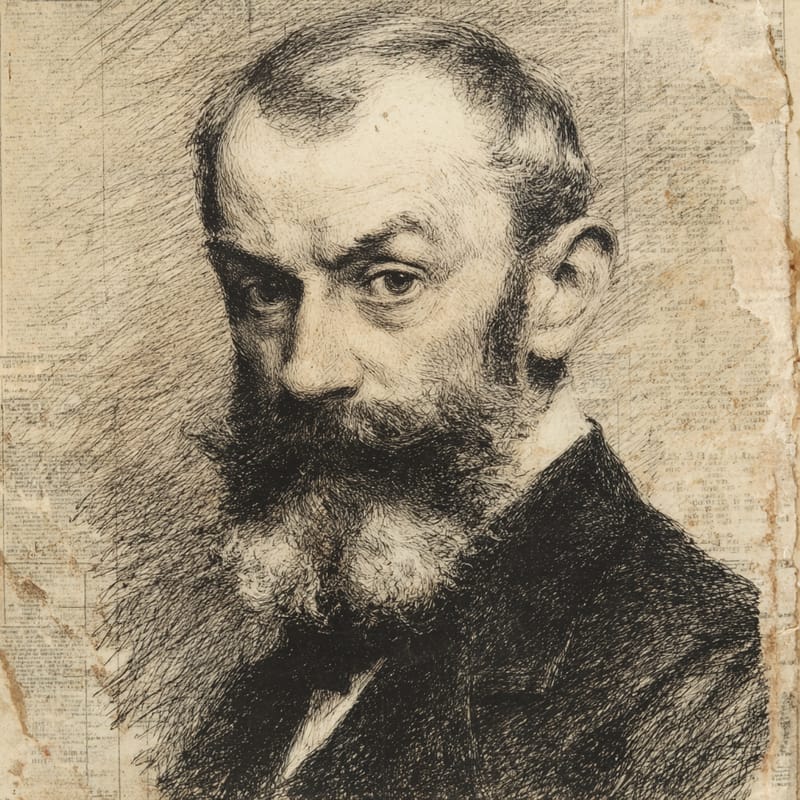
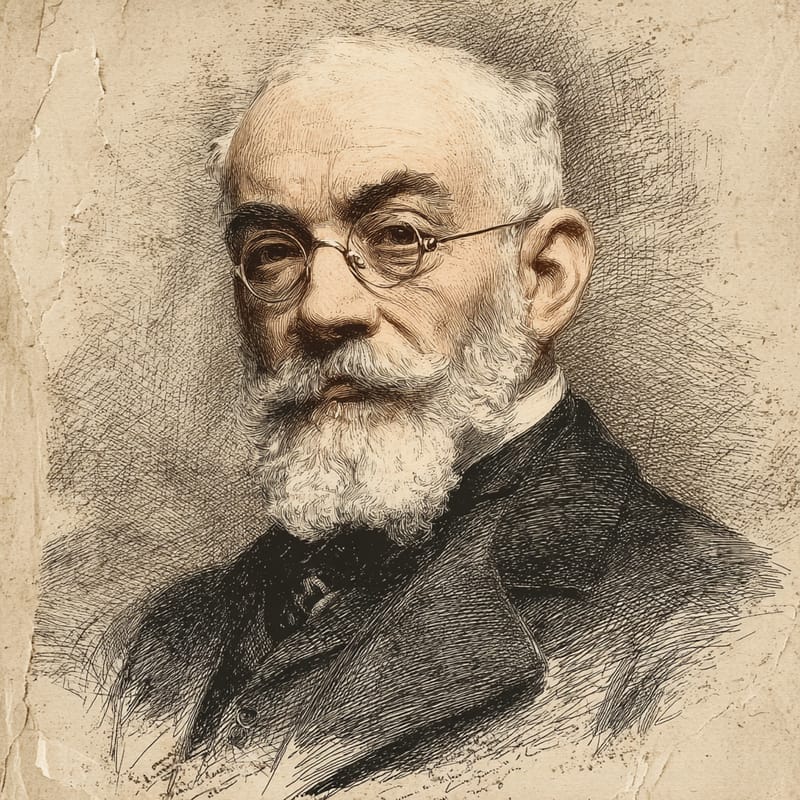
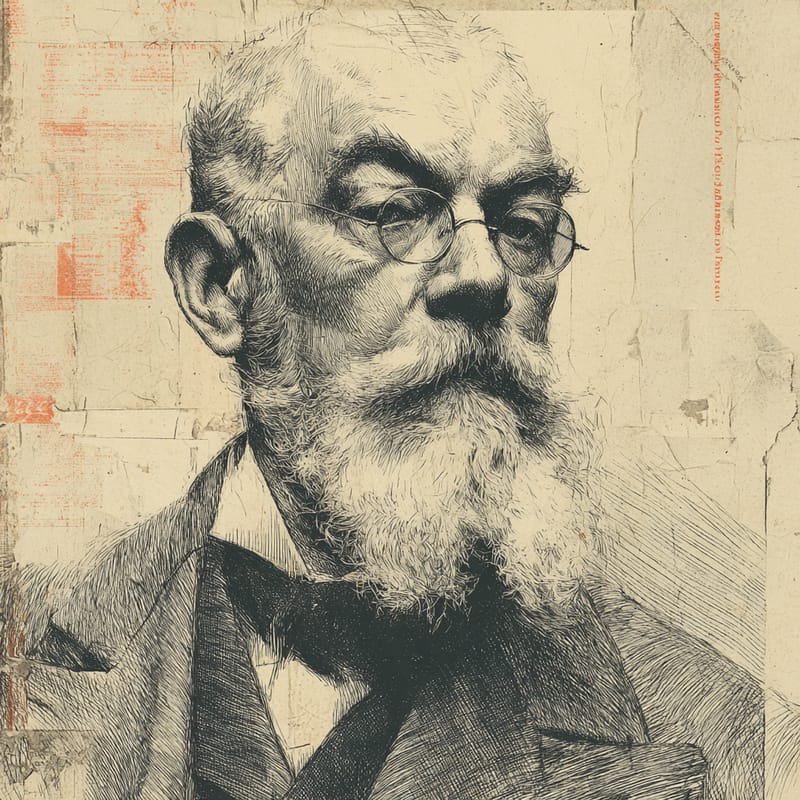

§ Also in the Eco-Socialist hall
Enter the hall →§ Common questions
4 answersWhat was William Morris's political ideology?
William Morris was a revolutionary socialist with an ecological, craft-centred vision: on the 99ideologies three-axis compass, a Reformist Eco-Socialist. Economically he sat far to the left (−80), seeking common ownership and an end to production for profit. On governance he leaned libertarian (−50), distrusting Parliament and imagining a decentralised society of local assemblies, though he rejected anarchism. Socially he was progressive (+55), an internationalist who wanted beauty and creative work available to all.
Was William Morris left-wing or right-wing?
Left-wing. Morris was one of the founders of British socialism, a Marxist-influenced revolutionary who joined the Democratic Federation, founded the Socialist League and marched on Bloody Sunday in 1887. His medievalism and love of old buildings sometimes appealed to conservatives, and his anti-industrial outlook differed from that of Fabian and Marxist modernisers, but his politics aimed at a classless commonwealth without private property. He is claimed as an ancestor by eco-socialists and libertarian socialists alike.
Was William Morris a Marxist?
Largely, yes, though in his own way. Morris read Marx's Capital in French in the early 1880s, worked alongside Eleanor Marx in founding the Socialist League, and described history in terms of class struggle in works such as Socialism: Its Growth and Outcome (1893), written with Ernest Belfort Bax. But he fused Marx with John Ruskin's critique of industrial labour, and his vision of joyful work, beauty and decentralised communities differed sharply from the state-centred Marxism that came to dominate the twentieth century.
Which minds are closest to William Morris?
On the 99ideologies three-axis compass, the minds closest to William Morris are Chico Mendes (98% alike), André Gorz (97% alike) and John Bellamy Foster (97% alike). The furthest is Adam Sutler (0% alike).