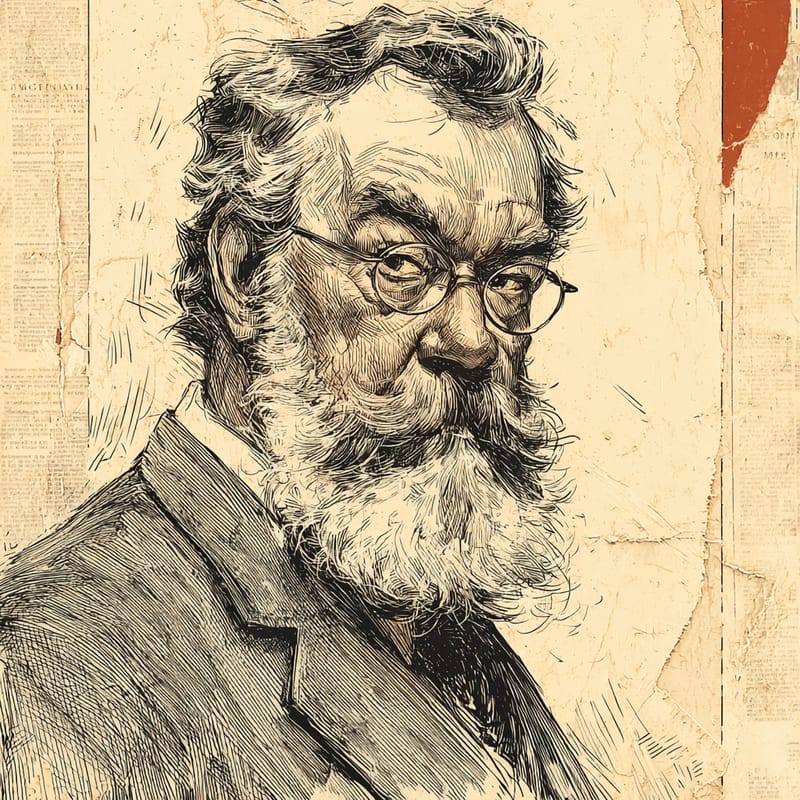
Samuel T. Francis
Middle American radicals
Populist nationalism, theorised.
Reactionary Paleo-ConservativeOne of 729 ideologies · enter the Paleo-Conservative hall →- Role
- Columnist
- Era
- 1947–2005
- Region
- United States
- Social band
- Reactionary
- Placement
- +64 · +50 · −70
§ Where Samuel T. Francis stands
3 axesFrancis rejected the free-market conservatism of the Reagan era as the creed of the business wing of the managerial elite. In Beautiful Losers (1993) and Revolution from the Middle (1997) he urged the right to champion the economic interests of Middle Americans through economic nationalism and protection of American industry rather than free trade, while remaining hostile to welfare bureaucracies and to socialism.
Following Burnham, Francis saw the managerial state as a regime that governed through bureaucracy, schools and mass media. His answer was not a smaller state but a new ruling class: a Middle American movement that would take power and use it against crime, illegal immigration and elite culture. He coined anarcho-tyranny for a state that fails to punish real criminals while regulating the law-abiding.
Francis began as a traditionalist critic of liberalism and ended as an open advocate of white racial identity politics. He argued that Middle American culture, rooted in the country's European-descended majority, was being dispossessed by multiculturalism and mass immigration, and his later writing called on white Americans to organise politically as a racial group, a stance that put him outside mainstream conservatism.
How close are you to Samuel T. Francis?
Three statements, one per axis. Answer them and we’ll drop you on the compass next to them.
§ The story
HistoricalSamuel Todd Francis (1947–2005) was an American columnist and political theorist. Born in Chattanooga, Tennessee, he earned a doctorate in history at the University of North Carolina, worked as a policy analyst at the Heritage Foundation and served from 1981 to 1986 as a legislative aide to Senator John East of North Carolina. He then joined The Washington Times as an editorial writer and columnist, and for years wrote a regular column for the paleoconservative magazine Chronicles.
Francis gave paleoconservatism its most systematic theory. Drawing on James Burnham's idea of a managerial revolution, he argued that a managerial elite in government, business and the media ruled America and that Middle American Radicals, a term he took from the sociologist Donald Warren, could overthrow it; he championed Pat Buchanan's insurgent campaigns and coined the term anarcho-tyranny. The Washington Times dismissed him in 1995 over remarks on white racial identity at the American Renaissance conference, and in his last years he edited the newsletter of the Council of Conservative Citizens.
Notable for
- 01'Middle American Radicals' thesis
- 02Paleoconservative strategy
- 03Populist-nationalist theory
Key works & moments
- 1981Becomes legislative aide to Senator John East of North Carolina.
- 1984Publishes Power and History, a study of James Burnham's political thought.
- 1986Joins The Washington Times as an editorial writer and columnist.
- 1993Publishes Beautiful Losers: Essays on the Failure of American Conservatism.
- 1995Dismissed by The Washington Times over remarks at the American Renaissance conference.
- 1997Publishes Revolution from the Middle, his essays on Middle American populism.
§ Minds closest to Samuel T. Francis
All minds →

§ Also in the Paleo-Conservative hall
Enter the hall →§ Common questions
4 answersWhat was Samuel T. Francis's political ideology?
Samuel T. Francis was a paleoconservative theorist who later embraced white identity politics: on the 99ideologies three-axis compass, a Reactionary Paleo-Conservative. Economically he sat on the right (+64), favouring a national capitalism for Middle Americans over free-trade globalism. On governance he leaned authoritarian (+50), wanting a Middle American movement to take power from the managerial elite and turn the state against crime and immigration. Socially he was strongly reactionary (−70), ending as an open advocate of white racial consciousness.
Was Samuel Francis left-wing or right-wing?
Right-wing, on its radical edge. Francis attacked mainstream conservatism from the right, calling its leaders beautiful losers who had made peace with liberal managerial rule, and his later views on race placed him outside the conservative movement altogether. His hostility to corporate elites and free trade echoed some left-wing themes, but his goal was to restore a nationalist, traditionalist order for America's European-descended majority, which puts him on the far right.
What is anarcho-tyranny?
Anarcho-tyranny is Samuel Francis's term for a state that combines anarchy with tyranny: it fails at basic duties such as punishing violent crime and controlling borders, while ever more tightly regulating and punishing law-abiding citizens. Francis developed the idea in his columns of the 1990s, arguing that the managerial state preferred controlling the middle class to confronting real lawbreakers. The phrase has since been revived by American nationalist and populist commentators.
Which minds are closest to Samuel T. Francis?
On the 99ideologies three-axis compass, the minds closest to Samuel T. Francis are Patrick Buchanan (99% alike), Richard M. Weaver (97% alike) and Russell Kirk (97% alike). The furthest is Emma Goldman (0% alike).